US Lawmakers Stalemate on AI Safety Rules
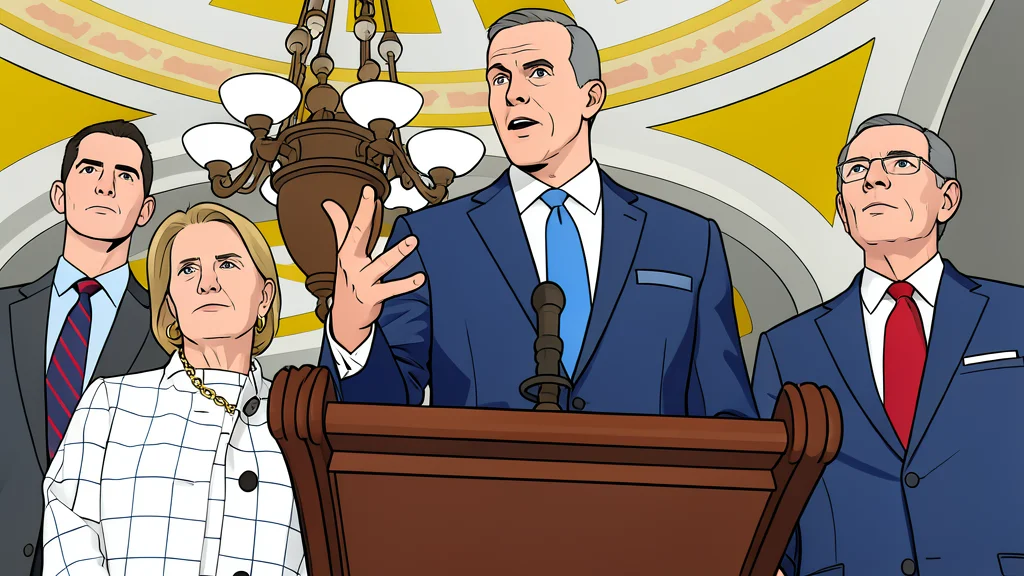
Congress faces a legislative impasse on artificial intelligence safety as political leaders dismiss industry warnings in favor of market-led approaches ahead of midterm elections.
Washington is currently deadlocked on how to manage the risks associated with advanced artificial intelligence. Despite urgent warnings from the tech sector regarding national security threats posed by frontier models, neither major political party has coalesced around a unified legislative strategy. The result is a significant gap between the pace of technological development and the speed of regulatory response, leaving the United States without a clear federal framework for AI safety.
This legislative paralysis is driven largely by high-level political resistance to regulation. President Donald Trump has publicly labeled calls for AI guardrails as a hoax and a conspiracy, arguing that the executive branch already possesses sufficient power to oversee these companies. House Speaker Mike Johnson has echoed this sentiment, stating that the industry can self-regulate and that a government moratorium on development would cede technological advantage to China. These statements have effectively signaled to lawmakers that bipartisan support for strict federal standards is unlikely to materialize before the upcoming midterm elections.
Bipartisan Bills Lack Critical Mass
Several safety-focused measures have been introduced in both chambers, including a bipartisan bill co-sponsored by Representatives Jay Obernolte and Lori Trahan. However, these proposals have failed to gain the necessary momentum to reach a floor vote. In the Senate, Majority Leader John Thune and Senator Amy Klobuchar are working on a joint approach, but aides indicate that the specific details have not yet been released, and traction remains uncertain. Senator John Barrasso has explicitly stated that he does not foresee a vote occurring during the current legislative session, citing other priorities and the tight timeline.
Industry Self-Policing Faces Pushback
The dominant narrative among Republican leadership is that industry-led solutions should precede federal mandates. Senator Thom Tillis has suggested that the tech sector needs to act like a Manhattan Project, establishing its own standards before the government codifies them. This approach contrasts sharply with the stance of Democratic lawmakers like Senator Maria Cantwell, who argues that relying on voluntary corporate measures is insufficient. Cantwell has called for robust federal infrastructure that includes independent testing and mandatory safeguards, warning that a light-touch approach leaves American consumers vulnerable.
Political Priorities Override Safety Urgency
The lack of progress is not merely procedural but political. According to reporting from GN technics/ai (en-US), discussions about AI regulation were notably absent from the Republican policy luncheon held this week, suggesting that the issue has been deprioritized in favor of other legislative goals. While some members of Congress express concern about the existential risks of unchecked AI, the political cost of appearing to stifle innovation or alienate the tech sector appears to outweigh the perceived benefit of immediate regulatory action. Consequently, the US remains in a state of regulatory limbo, with no binding federal standards in place to govern the deployment of the most powerful AI models.