US Electric Vehicle Battery Expansion Collapses
Thousands of industrial jobs are at risk as policy shifts undermine the rapid growth of the American electric vehicle sector.
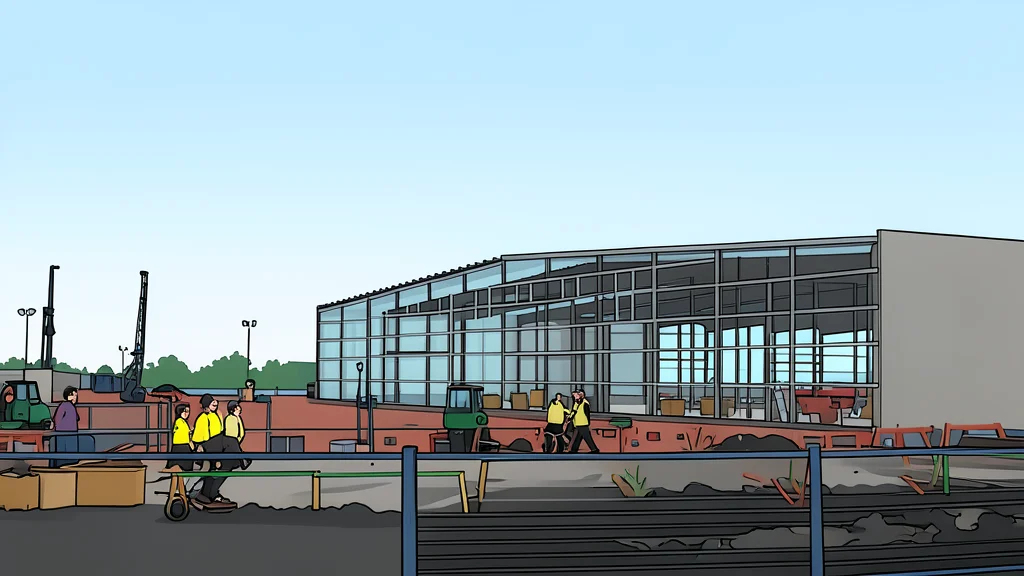
Workers in Ohio and Kentucky are facing prolonged unemployment as major battery plants halt operations. These facilities were central to a massive industrial expansion aimed at reducing US dependence on foreign supply chains, but they are now sitting idle due to a sharp decline in consumer demand.
The situation has escalated from temporary slowdowns to indefinite layoffs at joint ventures like Ultium Cells. This reversal marks a significant break in the momentum of the American auto industry's transition toward electric transportation, leaving thousands of families without income.
Policy Shifts Drive Demand Down
The immediate trigger for these cuts was the elimination of the $7,500 tax credit for electric vehicle buyers. This incentive, removed by President Trump and congressional Republicans, was designed to stimulate sales. Its expiration led to a precipitous drop in US EV sales, which executives cite as the primary reason for halting production and laying off staff.
Ford CEO Jim Farley explicitly linked the company's reconsideration of large-scale EV investments to the sales slump following the credit's removal. While the White House argues that reducing bureaucratic barriers and taxes will attract new industrial investment, industry leaders maintain that the removal of demand-side support has destabilized their financial models.
Industrial Jobs Face Uncertainty
The impact is concentrated in the so-called Battery Belt, a region stretching from Georgia to Indiana where 87% of announced EV manufacturing investments were located. These states, which largely supported the current administration in the 2024 election, are now witnessing the cancellation or revision of major projects. This places tens of thousands of industrial jobs in jeopardy across key manufacturing states.
For workers in Lordstown, Ohio, the shutdown of the $2.3 billion facility is devastating. The plant was built during a period of unprecedented investment in the US auto industry, intended to create a self-sufficient manufacturing base. Now, the promise of a new industrial revival is losing momentum as trade restrictions and subsidy changes undermine the projects they were meant to support.
Strategic Goals Lose Traction
The original strategy relied on federal subsidies and trade restrictions to ensure that the transition to electric vehicles was powered by American factories. The goal was to counter China's dominance in the sector and its supply chains. However, the combination of high prices, range concerns, and the removal of buyer incentives has slowed adoption faster than automakers anticipated.
As noted by GN auto tech/ev: electric vehicle, the shift from investment to cutbacks represents a fundamental change in the landscape. The trade-off is clear: while the administration seeks to reduce regulatory burdens, the resulting uncertainty has already cost thousands of jobs and stalled the expansion of the domestic battery supply chain.