FusionLayer Secures Finnish Patent for Secure Cloud Routing

A new Finnish patent protects traffic separation on shared cloud platforms, a critical step for securing AI agents and dedicated services.
Key points
- FusionLayer received Finnish patent FI 132201 B1 for securely routing traffic on shared cloud platforms.
- The technology enables strict separation for dedicated services used by organizations and AI agents.
- The patent is part of a broader portfolio currently involved in legal proceedings against major tech firms.
FusionLayer Group has received a new Finnish patent for a method that securely routes service traffic on shared cloud platforms. The grant, designated FI 132201 B1, addresses a core challenge in modern infrastructure: ensuring that data reaches the correct dedicated service without leaking into other tenants' environments. As reported by AiThority, this technology is designed to strengthen the boundaries between public gateways and private services.
The innovation is particularly relevant as cloud computing shifts from standard software-as-a-service models to open API fabrics used by autonomous AI agents. In these dynamic architectures, security relies on precise separation. The patented method allows organizations, devices, and AI agents to operate on shared hardware while maintaining strict isolation, a requirement that becomes more difficult to meet as system complexity grows.
Securing boundaries in multi-tenant clouds
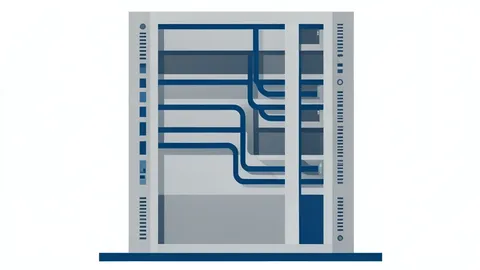
Modern cloud networks often mix traffic from many different users on the same physical infrastructure. This setup is efficient but risky if the boundaries between users are weak. The new patent provides a structural solution for routing traffic accurately from the public internet through shared gateways to specific dedicated environments. This ensures that one user's data does not inadvertently cross paths with another's, preserving both privacy and system stability.
The trade-off in implementing such separation is often a loss of flexibility or speed. However, FusionLayer claims its method maintains scalability while enforcing strict security rules. This is crucial for enterprises that need dedicated environments for sensitive operations but still want the cost benefits of shared cloud resources. The technology acts as a digital wall that is permeable only to authorized traffic.
Part of a broader legal strategy
This latest grant is not an isolated event but part of a larger patent program that includes approximately six distinct patent families. FusionLayer has been active in this field since 2006, and its portfolio is currently involved in infringement proceedings against major industry players like Infoblox and Amazon Web Services. These legal actions focus on DNS security and cloud-networking innovations, highlighting the company's aggressive approach to protecting its intellectual property.
Juha Holkkola, the company's CEO and Chief Technologist, noted that this is his forty-fifth granted patent. He emphasized that the future of cloud computing will increasingly consist of dedicated environments for organizations and AI agents. The company views this patent as a foundational block for intelligent networking in the coming decade, aiming to balance security with the evolving needs of autonomous systems.
Implications for future AI infrastructure
As AI agents become more prevalent in enterprise environments, the need for secure, isolated communication channels grows. The patented method supports this transition by providing a reliable way to manage traffic in open API fabrics. This allows companies to deploy AI agents without exposing their internal networks to unauthorized access or data leakage.
However, the complexity of managing these dedicated environments remains a significant challenge. Organizations must ensure that their security policies are consistently applied across all shared platforms. The availability of such patented tools may influence how cloud providers design their next-generation infrastructure, potentially leading to stricter separation standards across the industry.