Microsoft Opens Fourth India Cloud Region in Hyderabad
Microsoft activates its Hyderabad data center to meet rising AI demand, adding to its growing network across the country.
Key points
- Microsoft launches its fourth India cloud region in Hyderabad to support growing AI and cloud demand.
- The facility uses zero-water mechanical cooling and aligns with local data sovereignty and compliance rules.
- The move is part of a $20.5 billion investment commitment, with major banks and firms as early customers.
Microsoft has officially launched its fourth cloud region in India, located in Hyderabad. This new infrastructure point joins existing hubs in Pune, Chennai, and Mumbai, significantly expanding the company's physical footprint in the country to handle a surge in cloud and artificial intelligence workloads.
The move is part of a broader $20.5 billion investment commitment Microsoft has made to India. By establishing this new node, the company aims to provide local organizations with the necessary computing power for advanced AI applications while addressing specific data residency requirements that are becoming increasingly critical for businesses operating in the region.
New Hub Serves Asia and Global South
Microsoft has designated the Hyderabad region, known as India South Central, as a strategic hub for Asia and the Global South. The facility features a three-zone architecture designed for resilience, allowing the company to expand capacity further as demand grows. According to Techcircle, this region is intended to support organizations that need to keep sensitive workloads within India, aligning with local data protection guidelines and cybersecurity frameworks.
The company emphasizes that this infrastructure is built to meet specific compliance needs, including those set by the Reserve Bank of India and CERT-In. By keeping data local, Microsoft addresses the growing concern among enterprises about data sovereignty, ensuring that sensitive information remains under jurisdictional control while still benefiting from advanced cloud capabilities.
AI-Ready Hardware and Cooling Systems
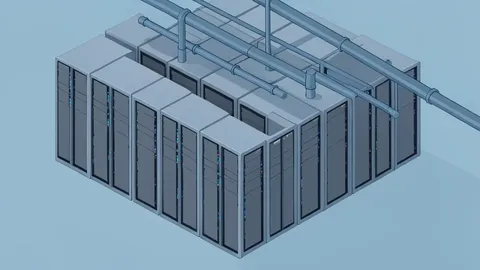
The new region is equipped with AI-capable hardware and high-efficiency cooling systems from the start. Microsoft states that the design supports advanced AI workloads, which require significant processing power. This proactive approach ensures that the infrastructure can handle the intensive demands of generative and enterprise AI, which are driving a substantial increase in computing requirements across the industry.
A notable feature of the Hyderabad site is its cooling mechanism, which uses high-efficiency mechanical cooling that requires effectively zero water. This trade-off prioritizes water conservation, a critical consideration in a region where water scarcity is a significant environmental and operational challenge. While this reduces water usage, it may require different maintenance and energy profiles compared to traditional water-cooled systems.
Major Banks and Firms Sign Up
Several major organizations have already signed up for the new Hyderabad region, including Adani Group, Bajaj Finserv, HDFC Bank, and PB Pay. These early adopters signal strong market confidence in the new infrastructure, suggesting that the region will play a key role in the country's digital transformation.
As India expands its data-center capacity, industry estimates suggest the build-out could generate between $140 billion and $200 billion in economic output by 2030. Microsoft’s expansion positions it to capture a significant share of this growth, providing local infrastructure for workloads that require high performance, data residency, and resilience in an increasingly competitive digital landscape.