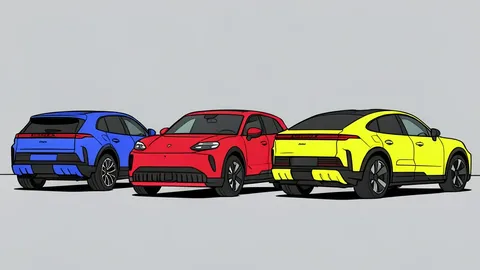
BYD Recalls 183,000 Vehicles in China for Brake Pedal Defect
A manufacturing flaw in brake pedal buffers forces BYD to fix 183,000 cars, posing a risk of misleading other drivers with stuck lights.
Key points
- BYD is recalling 183,000 Qin and Tang models in China due to a brake pedal buffer defect.
- The defect can cause brake lights to remain on without pedal input, misleading other drivers.
- Owners will receive free component replacements at authorized dealers to resolve the safety risk.
BYD has announced a recall of 183,000 vehicles in China to address a safety defect in the brake pedal mechanism. The State Administration for Market Regulation (SAMR) ordered the action after identifying a manufacturing flaw in a specific batch of stop buffers used in the Qin and Tang model ranges produced between 2014 and 2022.
According to reports from electrive.com, the core issue is that these internal components may tear or detach over time due to wear. While the brake itself remains functional, the failure can cause the brake lights to stay illuminated even when the driver is not pressing the pedal. This creates a confusing situation for following traffic, who may misinterpret the constant light as an emergency stop, prompting the regulator to classify it as a safety risk.
The hidden cost of a minor defect
The trade-off for owners is a mandatory visit to an authorized dealer for a free component replacement. The recall is necessary because the defect is not immediately visible to the driver during normal operation. It only manifests under specific conditions that lead to the false signal, meaning many drivers might unknowingly pose a hazard to others on the road until the part is swapped.
This move follows a broader trend of regulatory scrutiny in the Chinese automotive sector. Just weeks earlier, the SAMR issued recalls affecting over four million vehicles from eleven different manufacturers, including Tesla and Xiaomi. Those earlier actions focused on door release mechanisms, whereas the BYD issue is distinct, highlighting that quality control challenges persist across different parts of the electric vehicle supply chain.
Recall arrives amid strong sales growth
The safety intervention comes at a critical moment for BYD’s market position. The company recently reported a significant rebound in sales, with worldwide new energy vehicle deliveries reaching over 440,000 units in August. This marked a milestone for the brand, as it sold more than 250,000 battery-electric passenger cars in a single month for the first time, driven largely by strong export performance.
Despite the positive sales figures, the recall serves as a reminder of the physical risks inherent in mechanical components. In parallel with the BYD action, regulators also flagged a smaller issue with Nio’s Firefly models, where a steering system defect could potentially disable power assist. These concurrent announcements underscore the ongoing pressure on manufacturers to ensure long-term reliability in their rapidly expanding fleets.