Hyundai Ioniq v Launches in China at $17,770
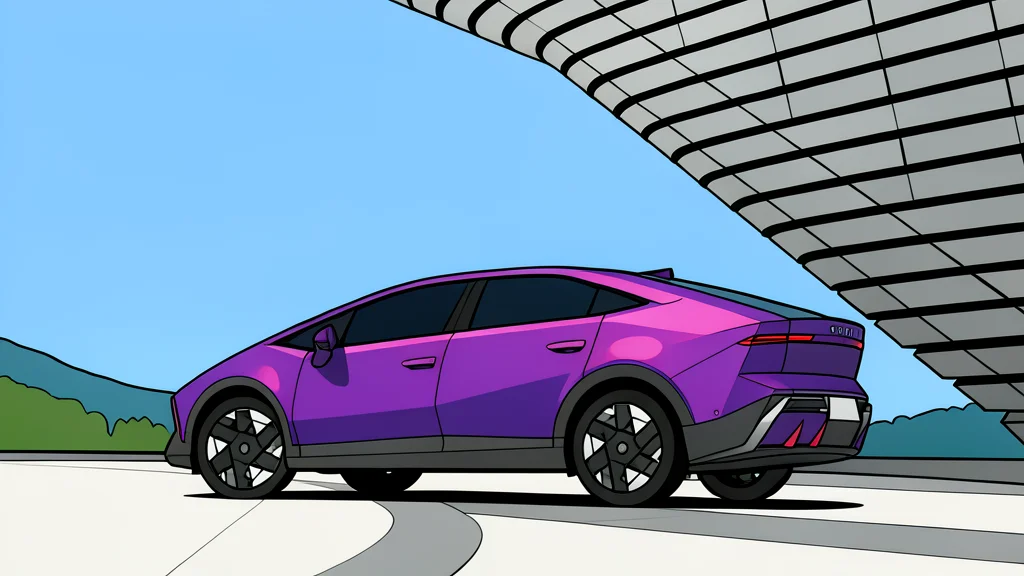
Hyundai's first China-tailored electric sedan debuts September 29 with a sub-$18,000 price point and local software integrations.
Key points
- The Ioniq V starts at 119,900 yuan ($17,770) and launches in China on September 29.
- It features CATL LFP batteries with a 520-650 km range and 800-volt fast charging.
- The car integrates AI models from Baidu and ByteDance alongside Momenta driver assistance.
Hyundai is preparing to launch its first electric sedan designed specifically for the Chinese market on September 29. The Ioniq V enters a highly competitive segment with a starting price of 119,900 yuan, roughly $17,770, signaling a significant shift in the company's local strategy.
This model marks the first mass-produced vehicle under Hyundai's Ioniq brand in China. Developed entirely by a local design team, the car is tailored for regional preferences but is also intended for global export, representing the opening move in Hyundai's broader counteroffensive in the world's largest EV market.
Local design drives global strategy
The Ioniq V is the production version of the Venus Concept unveiled earlier this year. It features a fastback silhouette, frameless doors, and dimensions that place it in the mid-size category. The vehicle measures 4,900 mm in length with a wheelbase of 2,900 mm, offering a sleeker profile than many of its competitors.
According to cnevpost.com, the development process was led by Hyundai's China design center. This approach allows the company to respond more quickly to local consumer demands while leveraging the model as a global export product. The strategy relies on faster local development cycles to compete with domestic Chinese brands.
Specs favor range and speed
Built on the E-GMP platform, the sedan offers two single-motor options with outputs of 140 kW and 168 kW. The batteries are supplied by CATL and use lithium iron phosphate chemistry, which is known for stability and lower cost. Capacities range from 53.5 kWh to 66.8 kWh, delivering a CLTC range between 520 km and 650 km.
The vehicle supports 800-volt high-voltage fast charging, a feature that reduces downtime during long trips. While the performance specs are competitive, the trade-off is the reliance on LFP batteries, which generally offer slightly lower energy density than nickel-based alternatives. This choice prioritizes cost efficiency and safety over maximum range per kilogram.
Software integrates local AI tools
Hyundai has integrated software from major Chinese tech firms to enhance the user experience. The infotainment system includes AI large language models from Baidu and ByteDance, alongside a 27-inch 4K central screen powered by a Snapdragon 8295 chip. This focus on smart features aims to close the gap with local rivals who excel in digital connectivity.
Driver assistance is handled by a system jointly developed with Momenta, providing L2+ level automation on highways. This collaboration highlights Hyundai's strategy of adopting local technology solutions to improve competitiveness. The launch serves as a critical test of whether this localized approach can help Hyundai achieve its goal of selling 500,000 vehicles in China by 2030.