KAIST Team Uses Nanotubes to Stabilize Anode-Free EV Batteries
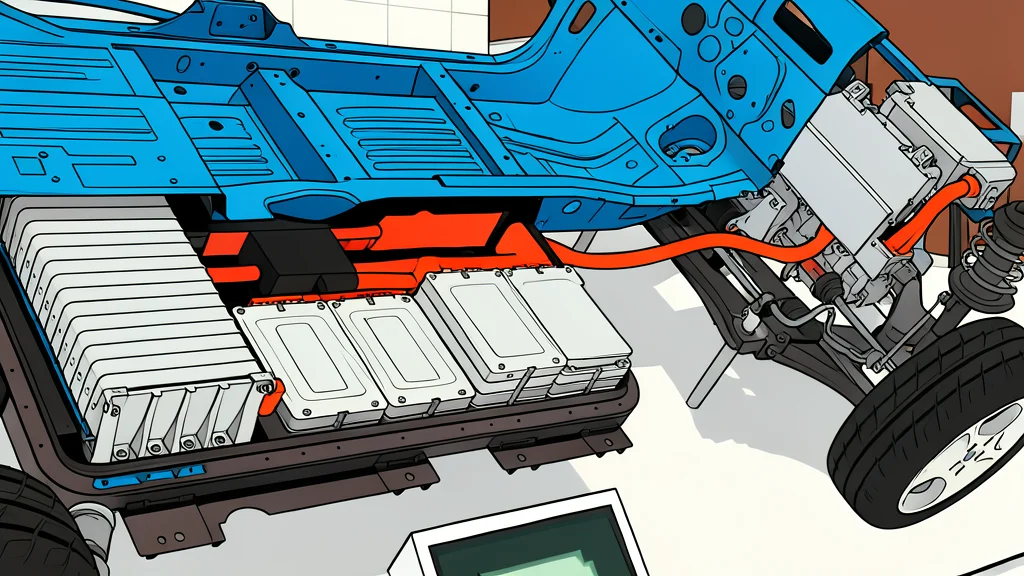
New nanoscale copper structures guide lithium deposition to prevent dendrites, potentially increasing EV range without adding weight.
Key points
- KAIST researchers used semiconductor lithography to create nanoscale tubes on copper foil, guiding lithium deposition to prevent dendrites.
- The design removes the graphite anode, potentially reducing battery weight and increasing energy density for electric vehicles.
- A 10-nanometer MXene coating acts as a primer to form a stable protective layer, reducing unwanted reactions with the electrolyte.
Researchers at Korea Advanced Institute of Science and Technology (KAIST) have developed a method to make anode-free electric vehicle batteries more durable. By applying semiconductor fabrication techniques to the battery's copper foil, the team aims to solve the instability that has previously prevented these high-density designs from reaching commercial scale.
Anode-free batteries remove the traditional graphite anode, allowing lithium to deposit directly onto a thin metal collector. This design frees up space and reduces weight, which could translate to lighter battery packs or longer driving ranges for consumers. However, without a guiding structure, lithium tends to pile up unevenly, forming sharp spikes known as dendrites that damage the cell and reduce its lifespan.
Nanotubes guide lithium deposition
The KAIST-led team used secondary sputtering lithography to etch regularly spaced tube-shaped structures into the copper surface. These microscopic features measure about 300 nanometers across and 150 nanometers high, creating defined sites where lithium can settle. This arrangement increases the available surface area for deposition to four times that of flat foil, helping the metal spread out rather than accumulating in isolated clumps.
This approach replaces earlier solutions that added extra lithium or thick protective coatings, both of which increased battery size and weight. By directing the flow of lithium at a microscopic level, the new design minimizes the concentrated growth that leads to dendrite formation, addressing a core engineering obstacle in the field.
Ultrathin coating acts as primer
To further stabilize the electrode, the researchers applied an MXene layer only 10 nanometers thick. Unlike a rigid barrier, this ultrathin coating functions as a primer that encourages the formation of a uniform protective layer rich in lithium fluoride during operation. This layer reduces unwanted chemical reactions between the lithium and the electrolyte, which typically degrade battery performance over time.
According to Interesting Engineering, the study demonstrates how ultrafine fabrication techniques from semiconductor manufacturing can create both uniform deposition sites and a stable protective interface. Professor Jinwoo Lee noted that this method does not require changing the bulk electrolyte formulation or adding excess lithium, making it a more efficient path toward practical anode-free batteries.
Trade-offs in battery density
While anode-free designs promise higher energy density, they have historically suffered from rapid performance decline due to unstable lithium deposits. The new nanoscale architecture aims to mitigate these issues without the penalty of added weight. The research, published in Advanced Functional Materials, suggests that precision engineering at the nanometer scale is key to making these efficient battery designs viable for widespread automotive use.