PSU Wire Colors Remain Unchanged Since the 1990s
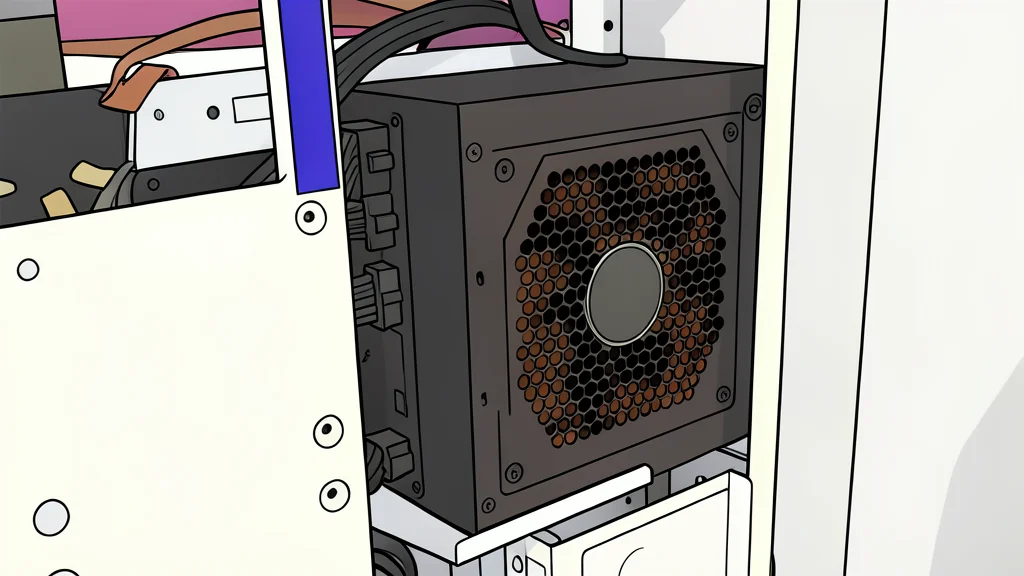
PC power supply wire colors have stayed static for three decades to ensure safety and simplify troubleshooting for technicians.
Key points
- PSU wire colors have remained unchanged since the 1995 ATX standard update to maintain safety and consistency.
- The colors help technicians and hobbyists identify voltage rails during troubleshooting and hardware repurposing.
- Changing the color codes would incur significant training and documentation costs without providing any technical benefit.
The color-coded wires connecting your power supply to the motherboard have not changed in over thirty years. This consistency is not due to industry stagnation, but rather a deliberate choice to maintain a stable safety standard that has proven effective since the mid-1990s.
While modern computers have far more complex hardware than those of the 1980s and 90s, the basic voltage rails and their corresponding colors remain identical. This continuity allows technicians and hobbyists to rely on a universal visual code that has survived multiple generations of computer architecture.
Evolution from the AT standard
The current ATX standard evolved from the older AT system introduced by IBM in 1984. In that earlier era, plugging power connectors backwards could instantly destroy a motherboard, making visual identification critical. When Intel updated the standard in 1995, it retained the original black, red, yellow, and blue wires while adding new colors for additional voltage rails required by modern CPUs.
New colors like orange, purple, green, and gray were introduced to handle standby power and system signaling. This additive approach meant that the foundational color codes for the most common voltages never needed to be retired, creating a legacy system that modern builders still recognize without prior training.
Safety and practical utility
For most users, these colors are invisible in daily use, especially with modern modular cables that hide the internal wiring. However, the standard remains vital for diagnostics and repurposing old hardware. If you are using a multimeter to check a dead PC or converting an old PSU into a bench supply, knowing which color corresponds to which voltage prevents accidental shorts and damage.
As noted by XDA Developers, this system serves as a safety net for those performing out-of-the-ordinary tasks. The connector shapes often guide the plug, but the colors provide a secondary verification layer. This redundancy is particularly useful when working with non-standard connectors or older peripherals that may not have clear labeling.
Why change is avoided
There is no physical reason to alter the color codes because the underlying voltages have remained constant. Changing them would require retraining technicians, updating manuals, and educating consumers, all for no functional gain. This industry inertia is a rational response to a system that already meets its core purpose of clarity and safety.
While some manufacturers occasionally deviate from the standard, the vast majority adhere to it strictly. The cost of changing the convention far outweighs any potential benefit, making the 30-year-old color code a permanent fixture of PC building. It is a rare example of a technical standard that has aged well simply by staying the same.