Tesla Expands Texas Logistics Near Austin
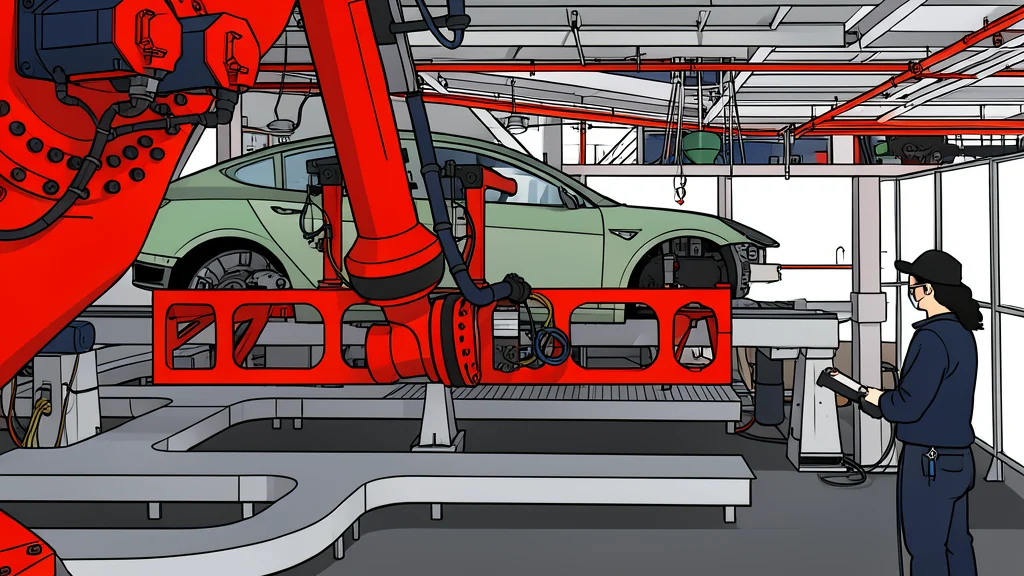
Tesla is planning a large distribution center in Central Texas to support its growing manufacturing needs. The move aims to streamline supply chains and address production bottlenecks, though the facility's specific role remains undefined in public filings.
Tesla is preparing to build out a massive distribution space near Austin, adding a new layer to its expanding physical footprint in Central Texas. The project involves leasing and renovating over 538,000 square feet of existing industrial space, a move that signals the company’s urgent need to manage the flow of parts and products as vehicle production accelerates.
According to state filings, the company plans to invest approximately $1.44 million in construction work, which is scheduled to wrap up by late 2028. While the financial commitment is modest relative to the scale of the space, the location is strategically significant, sitting close to the company’s headquarters and its primary manufacturing hub.
Strategic Location Near Manufacturing Hub
The new facility will be located at the Mustang Ridge Distribution Center, a site that allows Tesla to keep logistics tightly integrated with its production lines. This proximity is critical for an automaker that relies on a just-in-time inventory system, where delays in receiving components can halt entire assembly lines. By storing goods closer to the factory, Tesla aims to reduce the friction in its supply chain.
However, the state filing does not specify exactly what goods will be stored or how many workers the site will employ. This lack of detail leaves open questions about whether the center will primarily handle incoming raw materials, outgoing finished vehicles, or a mix of both. The ambiguity reflects a broader trend where companies expand infrastructure before fully defining its operational scope.
Addressing Production Constraints
The expansion comes at a time when Tesla is facing significant pressure to increase output. Recent financial reports show revenue growth, but executives have acknowledged that battery availability and electronic components remain key bottlenecks. A larger distribution center could help mitigate these issues by allowing for better buffer stock management, ensuring that production lines have the necessary parts even when suppliers face disruptions.
The company is also preparing to ramp up production of its electric semi-truck, a move that will further strain its logistics capabilities. As Tesla invests heavily in manufacturing capacity, with capital expenditures expected to exceed $25 billion this year, the need for efficient storage and distribution becomes a critical operational lever. The new facility is a tangible step in that effort, though its ultimate impact will depend on how effectively it is integrated into the broader supply network.
Cross-Border Supply Chain Dynamics
The location also plays a role in the complex web of cross-border trade between the United States and Mexico. Tesla relies heavily on a network of suppliers in Mexico, with components being shipped north to the Texas factory. A distribution center in this region could serve as a crucial checkpoint for quality control and staging, potentially reducing delays at the border. However, the filing does not identify specific suppliers or freight lanes, leaving the exact nature of this cross-border interaction unclear.
According to FreightWaves, this expansion is part of a broader trend of automotive companies strengthening their North American supply chains. The move underscores the importance of physical infrastructure in a sector where digital efficiency alone is not enough to overcome logistical challenges. As the industry continues to evolve, the ability to manage physical flow of goods will remain a decisive factor in competitive positioning.