Relic Admits Company of Heroes 3 Campaign Was Overambitious
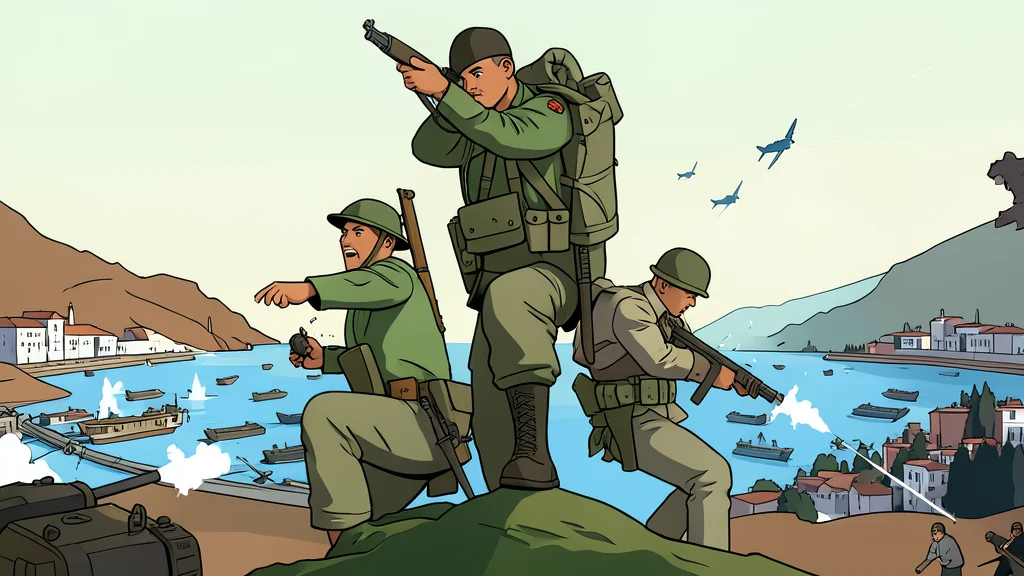
The developer behind Company of Heroes 3 admits the game's dynamic campaign failed to deliver on its promise, citing a lack of polish and an overly ambitious scope that outpaced the team's capabilities.
Relic Entertainment has candidly acknowledged that the dynamic campaign in Company of Heroes 3 was an overreach for their development team. While the initial concept of a sprawling, reactive Italian campaign held significant appeal, the final product struggled to maintain the promised level of interactivity. The developer states that they attempted to pack too many features into the launch window, resulting in a experience that felt static rather than the dynamic war effort it was designed to be.
The disconnect between the vision and the execution was evident to players early on. Reviews noted that while the core real-time strategy battles remained strong, the overarching narrative lacked the necessary enemy aggression. The AI-controlled forces often failed to mount meaningful counterattacks, leaving players to advance through Italy with minimal resistance. This fundamental flaw in the campaign's logic undermined the central selling point of the game, leading to mixed reception on major platforms despite the high quality of the individual combat mechanics.
Scope exceeded development capacity
Justin Dowdeswell, CEO of Relic, described the situation as biting off more than the team could chew. The studio aimed to deliver the largest entry in the franchise, featuring multiple factions and two distinct campaigns at launch. However, this ambition created a bottleneck in the development process. The team believed that the complex systems would eventually coalesce into a cohesive whole, a common assumption in the industry that things will come together late in the project. In this case, that belief proved incorrect, leaving the game with unresolved structural issues at the time of release.
The trade-off for prioritizing sheer volume of content was a noticeable drop in polish. Players encountered bugs and a lack of refinement that detracted from the otherwise engaging tactical gameplay. Relic admits that the decision to include such a vast amount of new material, including the ambitious dynamic campaign, stretched their resources too thin. The result was a product that felt rushed in its most critical narrative sections, even if the underlying combat engine remained robust. This imbalance between feature set and execution quality was the primary driver of the game's initial critical and commercial reception.
Community feedback came too late
Relic attempted to mitigate these risks by engaging with the community early, inviting modders, content creators, and competitive players to provide feedback. However, Dowdeswell notes that by the time the team was ready to share playable builds, many foundational architectural decisions had already been locked in. It was too late to reverse the core design choices that contributed to the campaign's stagnation. The window for meaningful course correction had closed, forcing the studio to release a product that did not fully align with its internal benchmarks for quality.
This scenario highlights a common challenge in modern game development: the difficulty of pivoting late in the cycle when scope has already expanded. The studio's reliance on late-stage feedback was insufficient to address systemic issues that required earlier architectural changes. Consequently, the game launched with a known set of limitations that could not be patched away easily. The experience serves as a cautionary tale for other developers about the risks of expanding scope without a corresponding increase in development time or team size.
Post-launch focus on long-term support
Despite the initial stumble, Relic has not abandoned the title. According to GN technics/gaming (en-US), the studio has shifted its focus to long-term support, releasing significant updates that address many of the launch-day complaints. The second anniversary update included free improvements and new content, aiming to rebuild player trust. This strategy reflects a broader industry trend where games are treated as services rather than finished products, with ongoing updates serving as the primary vehicle for quality improvement.
The commitment to continued development signals that Relic views Company of Heroes 3 as a long-term investment. While the initial dynamic campaign did not meet its ambitious goals, the studio is working to enhance the game's overall experience through iterative updates. This approach allows them to address specific pain points identified by players, such as AI behavior and campaign pacing, without the constraints of a launch window. The ultimate goal is to transform the mixed reception into a positive long-term legacy for the franchise.