Returnal Turns PS5 Exclusivity into a Narrative Strength
Six years after launch, the PlayStation 5 still has fewer exclusive titles than many rivals, but Housemarque’s Returnal proves that a limited library can hide a masterpiece. By weaving the mechanics of death directly into the plot, this shooter offers a depth that pure quantity cannot match.
The PlayStation 5 has been on the market for six years, yet its exclusive lineup remains modest compared to competitors. While some gamers express frustration over the lack of volume, this scarcity has allowed titles like Returnal to stand out as essential experiences. Developed by Housemarque, the game launched in 2021 as a PS5 exclusive before eventually arriving on PC, proving that a small number of high-quality releases can still define a console’s identity.
Death becomes the central narrative engine
In most action games, dying is a minor inconvenience that resets progress by a few minutes. Returnal flips this dynamic by making the cycle of death and reawakening the core of its story. The protagonist, Selene Vassos, crash-lands on an alien world and must repeatedly attempt to find a distress beacon. Each failure does not just restart the level; it advances the mystery, turning frustration into a narrative device that deepens the player’s connection to the character.
This approach addresses a common weakness in roguelike games, where constant resets can dilute emotional investment. By embedding the loop into the plot, the game ensures that every run feels meaningful. The trade-off is a demanding difficulty curve, as the planet’s hostile environment refuses to let players succeed easily, requiring precision and patience rather than brute force.
Tight controls balance speed and challenge
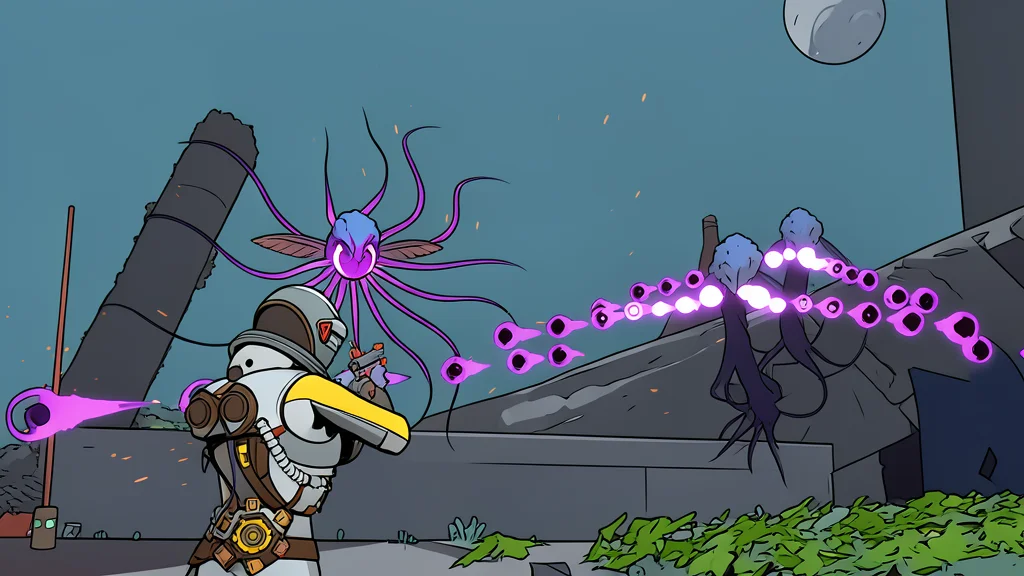
The gameplay loop combines fast-paced shooting with precise dodging, creating a rhythm that feels responsive and fluid. Players navigate through dense alien jungles and ancient ruins, engaging in combat that demands quick reflexes. The controls are designed to be tight, allowing for rapid movement and weapon swaps that keep the action intense without feeling chaotic.
This design choice creates a specific type of engagement. The game rewards experimentation with different weapons and abilities, as no two runs are identical. However, the high skill ceiling means that progress can be slow for less experienced players. The catch is that while the game is highly accessible in its mechanics, its difficulty and narrative complexity demand a significant time commitment to fully appreciate.
A benchmark for console exclusivity
According to coverage from GN technics/gaming, Returnal stands as a prime example of why exclusive titles, even in limited numbers, matter to a console’s legacy. It demonstrates that a single well-crafted game can capture the essence of a platform better than a dozen mediocre ones. For players seeking depth over breadth, this title remains a critical recommendation.
The game’s success lies in its ability to merge mechanical challenge with emotional storytelling. It does not just ask players to survive; it asks them to understand why survival is so difficult. In a landscape where exclusivity is often defined by quantity, Returnal proves that quality can still be the defining feature of a gaming platform.