Upcoming Co-Op Games Prioritize Chaos over Competition
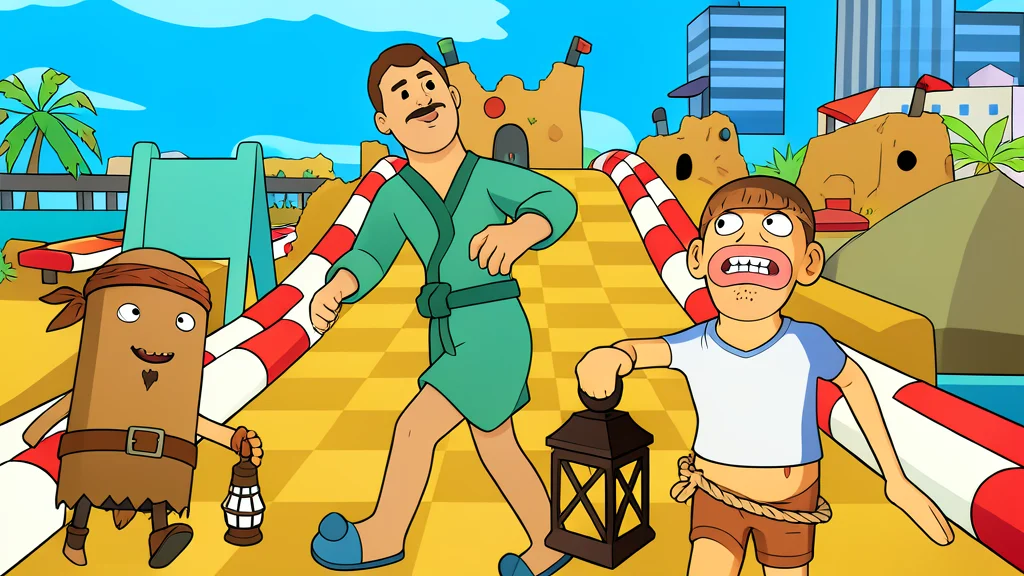
A wave of new multiplayer titles is shifting focus from competitive brawling to collaborative chaos, offering players a chance to fail together in humorous and physics-driven scenarios.
The gaming landscape is seeing a distinct rise in what is commonly referred to as friendslop, a genre defined by low barriers to entry and high potential for accidental comedy. Rather than focusing on outperforming other players, these titles emphasize the shared experience of managing simple systems that become complex when multiple people try to control them simultaneously. This shift moves the appeal away from skill-based dominance and toward the narrative of collective mishaps.
According to reporting from GN technics/gaming (en-US), several upcoming releases are capitalizing on this trend by integrating realistic communication tools and chaotic physics. The core value of these games lies not in victory, but in the spontaneous interactions that occur when friends attempt to coordinate their actions under pressure. This approach ensures that even failure becomes a memorable social event rather than a source of frustration.
Collaborative Chaos Defines New Genre
Traditionally, multiplayer games have been dominated by combat mechanics where the goal is to defeat opponents. However, a growing segment of the market is rejecting this model in favor of cooperative simulation. In these titles, the challenge is not to kill an enemy, but to navigate a shared environment without causing catastrophic errors. The fun emerges from the unpredictability of human coordination, where simple tasks like carrying an object or following a map become sources of endless laughter.
This genre thrives on the idea that mistakes are features, not bugs. When a group of players struggles with a basic objective, the resulting chaos creates a shared narrative that is often more entertaining than a clean victory. This dynamic encourages players to engage deeply with their friends, as the best moments usually involve miscommunication or unexpected physical reactions from the game’s engine.
Voice Interaction Drives Gameplay
One notable entry in this space, Big Walk, leverages realistic proximity voice chat to enhance the social experience. Set in a wilderness environment, the game requires players to stay close to each other to maintain communication. This mechanic forces players to manage their spatial relationships carefully, adding a layer of tension and humor to what might otherwise be a simple hiking simulation. The goal is not to solve puzzles efficiently, but to observe how groups behave when constrained by physical distance and limited information.
Professional Simulations Become Farce
Another trend involves taking high-stakes professional roles and stripping them of their seriousness. Games like Dear Passengers place players in the role of airline crew, tasked with managing flights, serving passengers, and handling emergencies. The humor arises from the contrast between the gravity of the situation and the incompetence of the players. Similarly, Totally Secure Airport focuses on baggage security, where the rush to inspect luggage leads to chaotic outcomes and the discovery of absurd contraband.
These titles trade off realism for comedy, accepting that the primary goal is entertainment rather than accurate simulation. By introducing ludicrous problems and unsolvable issues, developers ensure that the gameplay remains light-hearted. The catch is that these games rely heavily on the presence of other players; without a group, the chaotic potential is significantly reduced, making them strictly social experiences rather than solo pursuits.