ASUS and NVIDIA Aim to Bring Local AI Power to Creative Laptops
At IFA 2026, ASUS unveiled new hardware that runs AI models locally, promising faster workflows but requiring significant computational resources.
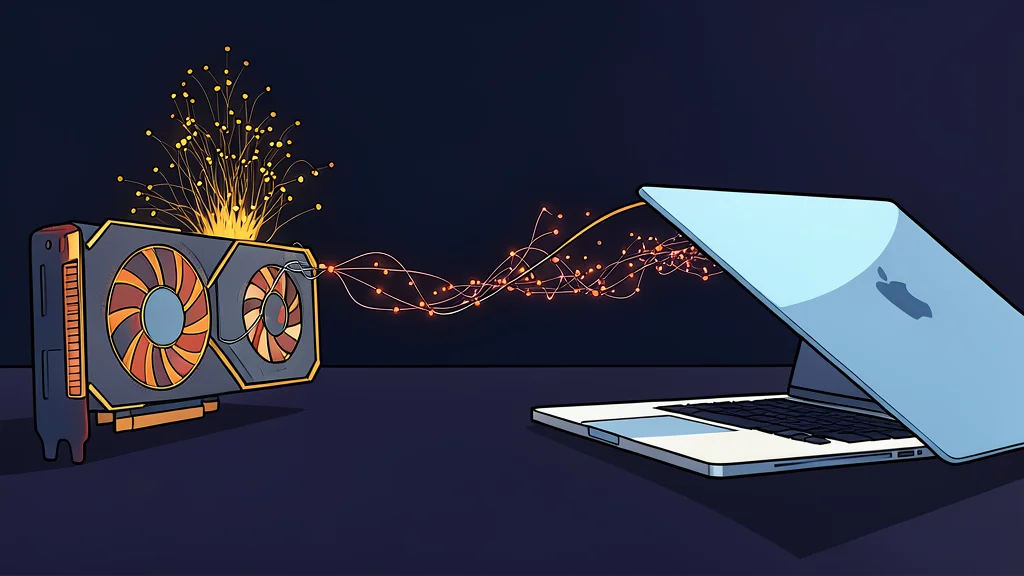
At IFA 2026 in Berlin, ASUS shifted its focus from general consumer hardware to specialized creative tools. The company announced a new lineup of ProArt devices built around NVIDIA’s RTX Spark platform. This technology allows creators to run advanced artificial intelligence models directly on their laptops and desktops rather than relying on cloud servers. The move is designed to streamline tasks like video editing and 3D rendering by keeping processing power local.
According to GN technics/ai (en-US), this approach prioritizes privacy and control over constant internet connectivity. By processing data on the device, creators can manage sensitive projects without sending files to external servers. However, this convenience comes with a trade-off: the hardware must be powerful enough to handle complex AI workloads, which typically increases the cost and physical size of the machines compared to standard ultrabooks.
New hardware targets mobile creators
The new ProArt lineup includes three key devices: the P16, the P14, and the compact GR1X. These machines are equipped with RTX Spark performance to support local AI tasks. The P16 and P14 are designed for users who need to move between locations, offering a balance between portability and processing power. The GR1X focuses on compact workstation-class performance, aimed at users who require robust local AI capabilities in a smaller form factor.
Each device is intended to handle ideation, content generation, and production without needing a high-speed internet connection. This setup allows creators to work in environments with limited connectivity, such as on-site shoots or remote locations. The integration of NVIDIA’s platform ensures that these laptops can accelerate creative applications, making complex workflows more manageable on the go.
Agentic AI demands higher resources
Sascha Krohn, ASUS Director of Technical Marketing, explained that the industry is moving from passive software tools to active AI agents. These agents can understand user intent, plan tasks, and execute workflows independently. While this automation reduces manual effort, it places a heavy load on computing resources. The systems require larger memory capacity and more powerful local processing to function effectively.
This shift means that standard consumer laptops may not be sufficient for the next generation of creative workflows. ASUS is addressing this by designing hardware specifically for personal AI computing. The goal is to provide the necessary muscle for these intelligent systems to operate smoothly, ensuring that the automation benefits do not come at the cost of system stability or speed.
Integrated software simplifies complex workflows
To make these powerful tools accessible, ASUS demonstrated a suite of integrated software solutions. These include Zenni Claw, an AI agent platform that simplifies setup and offers built-in safety protections. Other tools like StoryCube and MuseTree help organize digital assets and generate images locally. This ecosystem aims to connect ideation, editing, and asset management into a cohesive process.
The software also emphasizes flexibility, allowing users to route tasks between local hardware and cloud services as needed. Collaborations with Google and Adobe provide bundled creative services, further integrating these tools into existing professional pipelines. While this integration reduces the learning curve, it also ties users into specific software ecosystems, potentially limiting interoperability with third-party applications.