More Router Antennas Do Not Always Mean Better Speed
Modern routers feature increasingly complex antenna arrays, but extra hardware does not guarantee a faster or more reliable home network for the average user.
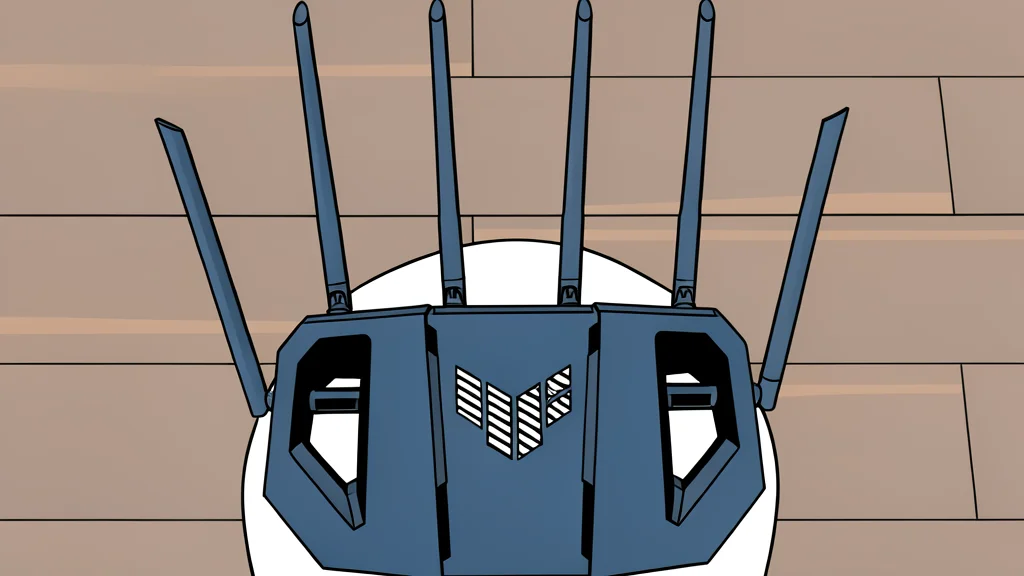
Modern home routers often resemble technological insects, with multiple vertical antennas rising from their plastic casings. As internet speeds increase and households fill with more connected devices, these antenna counts have risen from one to as many as eight. While this growth might look like aggressive marketing, there is a genuine technical reason behind the shift away from the simple single-antenna units of the past.
However, having more antennas does not automatically translate to better performance for every user. As noted by Engadget, the value of these extra components depends entirely on the specific technology inside the device and the unique layout of the home. For most average households, a router with an excessive number of antennas may be unnecessary overhead rather than a performance boost.
Antennas Enable Parallel Data Flow
The primary function of multiple antennas is to facilitate a technology known as MIMO, or multiple-input, multiple-output. This allows a router to handle several data streams simultaneously, similar to how a highway with multiple lanes accommodates more traffic than a single road. Without this specific internal architecture, adding antennas would actually cause interference rather than improve speed. The hardware must be designed to separate these streams into distinct paths to be effective.
Beyond raw speed, multiple antennas improve signal direction. This process, called beamforming, allows the router to detect the location of a device and focus its signal directly on it. By coordinating the output of several antennas, the router creates a stronger signal at the user's location while minimizing wasted energy elsewhere. A single antenna lacks the ability to coordinate with other signals, making this targeted approach impossible.
Reliability in Complex Indoor Environments
Wi-Fi signals rarely travel in straight lines within a home. They bounce off walls, furniture, and even people, creating a complex web of reflections. Multiple spaced-apart antennas provide a form of diversity, ensuring that at least one antenna maintains a clear path to the device even if others are blocked. This redundancy helps maintain a stable connection in environments where obstacles are unavoidable.
These antennas also support simultaneous communication with multiple devices. Older routers served one device at a time, rapidly cycling between them. Modern multi-antenna systems can split their resources to talk to several devices at once, reducing wait times for each connected gadget. This is particularly useful in homes with many users streaming or gaming simultaneously.
Hardware Count Is Not the Only Factor
For the average consumer, a router with eight antennas is often overkill. A unit with two to four antennas is typically sufficient for standard residential use. The overall performance of a network is influenced significantly by the Wi-Fi standard it supports and the quality of its software, not just the number of physical antennas attached to the casing.
If the main issue is coverage rather than speed, adding more antennas may not be the most effective solution. Expanding the network with a mesh system is often a more reliable way to eliminate dead zones. High-antenna routers are better suited for high-density environments like offices or cafes, where the sheer volume of simultaneous connections justifies the complex hardware. For most homes, simplicity and software efficiency matter more than antenna quantity.