Nvidia's PC Chip Launch Shakes Intel and AMD Markets
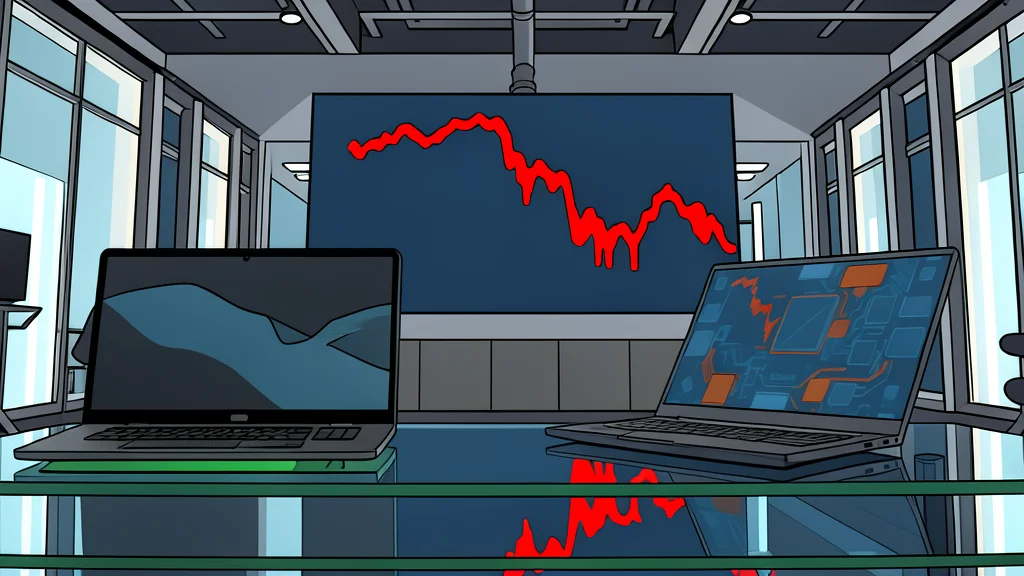
Nvidia's entry into the PC processor market has triggered a sharp sell-off in Intel and AMD stocks, signaling a potential shift in the industry's long-standing duopoly.
Intel and AMD shares fell by approximately 4.2% in premarket trading on Monday, a direct reaction to Nvidia’s announcement of its first general-purpose PC processor. The move marks a significant intrusion by the graphics giant into the core territory that the two rivals have dominated for decades. This price adjustment reflects investor concern that Nvidia’s new entry could disrupt the established supply chains for personal computers.
The announcement was made during the Computex 2026 keynote in Taipei, where Nvidia revealed the N1X chip in partnership with Microsoft. While Intel attempted to counter with its own data-center CPU launch, market attention remained firmly fixed on Nvidia’s strategic pivot. The immediate financial impact underscores how quickly the market is pricing in the risk of a new competitor challenging the existing x86 architecture standard.
Nvidia Enters the PC Processor Arena
For years, Nvidia has focused on graphics cards and AI accelerators, but the N1X represents its first foray into the central processing unit role of a standard Windows PC. This is not a minor accessory; it is a component intended to sit at the heart of consumer laptops. By partnering directly with Microsoft, Nvidia has aligned itself with the operating system controller, ensuring that its new silicon receives first-class software support.
This partnership extends Microsoft’s recent efforts to diversify away from Intel and AMD, a strategy previously seen with Arm-based chips. The catch for Intel and AMD is that they lack Nvidia’s deep ecosystem of AI acceleration tools. For PC manufacturers, the presence of a chip that combines strong general-purpose computing with superior graphics and AI capabilities changes the calculus for future hardware decisions.
Market Reaction to the New Threat
The 4.2% drop in share prices is a signal rather than just a one-day trading event. It indicates that investors view Nvidia’s entry as a structural threat to the revenue models of both Intel and AMD. Intel’s own announcement of the Xeon 6+ CPU was overshadowed, highlighting how difficult it is to maintain narrative control when a competitor launches a product that redefines the category.
AMD’s decline occurred without the company having a specific product launch that day, reinforcing the idea that the threat is broad. The market is worried that Nvidia’s scale in graphics and AI will give it an unfair advantage in the PC space. This shift could force Intel and AMD to accelerate their own AI integration strategies or face a gradual erosion of their market share.
Implications for Consumer Hardware Buyers
For consumers, the immediate impact will be a wider choice of processors in the coming year. The N1X is set to ship within a platform called RTX Spark, aimed at retail machines this fall. However, detailed specifications regarding core counts and performance benchmarks remain limited. Buyers should be aware that this is a new ecosystem, and while the partnership with Microsoft suggests good software compatibility, long-term reliability and driver support are still unproven compared to decades-old Intel and AMD standards.
According to GN technics/hardware, the situation highlights a trade-off: Nvidia brings powerful AI and graphics integration, but it is new to the general-purpose PC CPU role. Intel and AMD have the advantage of maturity and a vast existing software library. The coming months will determine whether Nvidia can translate its AI dominance into PC market share or if it remains a niche alternative for specific professional users.