Qualcomm Moves High-Speed Memory Tech to Phones

Qualcomm announced HBC technology for mobile devices, promising faster AI processing and lower power use in upcoming smartphones.
Key points
- Qualcomm brought High Bandwidth Compute technology from data centers to its mobile platform.
- HBC offers six times the bandwidth of HBM at the same power consumption level.
- Samsung and SK hynix will stack the memory chips while Qualcomm designs the compute die.
Qualcomm introduced High Bandwidth Compute (HBC) for smartphones. The announcement happened at Snapdragon Summit in Maui on Sept. 22. This technology adapts data center components for mobile use.
CEO Cristiano Amon described the system as a coprocessor. It brings memory and AI computing closer together. The goal is to support next-generation AI phones with better speed and efficiency.
Vertical Stacking Improves Data Speed
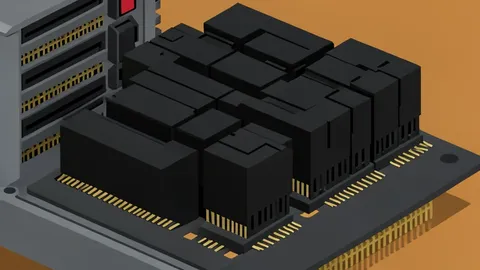
HBC stacks memory chips vertically on top of a processor. This uses through-silicon vias to connect the layers. It resembles high-bandwidth memory used in servers but targets mobile efficiency.
This design allows data transfer at hundreds of terabytes per second. Recent AI accelerators using HBM reach 21 to 24 terabytes per second. HBC offers six times the bandwidth of HBM at the same power level.
The architecture reduces bottlenecks in AI inference tasks. It provides six times the token-throughput efficiency of HBM. Compared to conventional GPU systems, it delivers up to eight times the token throughput.
Power Efficiency Suits Mobile Devices
Smartphones require compact size and minimal heat generation. Users expect long battery life and cool handling. HBC helps process complex AI tasks without excessive energy consumption.
Amon stated future devices may process one million tokens daily. This capability allows all-day availability for agentic AI applications. The technology supports on-device processing without cloud reliance.
Qualcomm integrates HBC with its Hexagon neural processing unit. This combines dedicated units for specific workloads. The system optimizes power usage for efficient AI computing in phones.
Partners Handle Chip Manufacturing Roles
Qualcomm designs the compute die and provides the via design. It does not manufacture the memory chips itself. Samsung Electronics and SK hynix handle the DRAM stacking process.