Smartphones Now Guide Breast Reconstruction Surgery
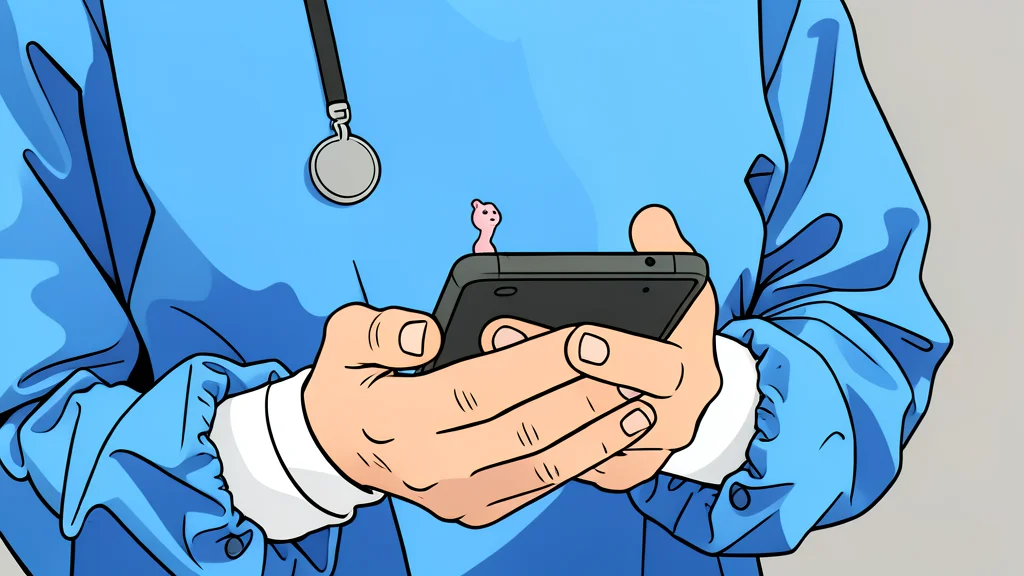
A new study shows that standard iPhones can create precise 3D templates for breast reconstruction, offering a cheaper and less invasive alternative to traditional CT scans.
Plastic surgeons are increasingly moving away from relying solely on visual estimation to shape breast tissue during reconstruction. A recent proof-of-concept study suggests that a consumer smartphone and a desktop 3D printer can now provide a physical, patient-specific template for these operations. This shift aims to replace complex, expensive imaging systems with tools already present in most clinics and homes.
The technique, detailed in BMC Plastic and Reconstructive Surgery, uses the depth-sensing camera found in iPhones to capture the geometry of a patient's healthy breast. This digital model is then mirrored, printed in flexible resin, and sterilized to serve as a guide in the operating room. The goal is to ensure symmetry and natural shape without the radiation exposure or high costs associated with computed tomography.
Simplicity Reduces Infrastructure Costs
Previous methods for 3D-printed surgical guides often required dedicated surface-imaging platforms or CT angiography data. These systems demand significant infrastructure and specialized expertise for image segmentation, which many medical centers lack. Additionally, CT scans expose patients to unnecessary radiation if imaging has not already been performed for other reasons.
The new approach eliminates these barriers by using the structured-light TrueDepth camera built into standard iPhones. As reported by GN technics/mobile, the scan takes only minutes during a routine outpatient visit. This accessibility makes the technology viable for a wider range of hospitals, particularly those without high-end imaging suites.
Accuracy Beats Professional Cameras
Before testing on humans, the research team validated the smartphone's accuracy against a professional digital single-lens reflex camera setup. They scanned a rigid breast phantom using both an iPhone 12 and a Canon DSLR with photogrammetry software. The results showed that the smartphone scans were actually more precise than the professional camera system.
The iPhone scans exhibited a mean deviation of just 0.033 millimeters, outperforming the DSLR reconstruction. This sub-millimeter accuracy suggests that consumer electronics are now capable of meeting the rigorous standards required for surgical planning, challenging the assumption that specialized equipment is necessary for high-precision medical modeling.
Patient-Specific Templates Guide Surgeons
In a prospective trial, three patients undergoing breast reconstruction after mastectomy used this workflow. Their native breasts were scanned in an upright position, and the data was mirrored to create a template for the missing side. The 3D-printed guide was placed over the surgical flap to help the surgeon shape the tissue correctly.
However, there is a trade-off. Because breast tissue is deformable and changes shape depending on body position, the mirrored upright scan serves only as a reference point. It is not a perfect replica of the pre-mastectomy state in all conditions. Surgeons must still use their clinical judgment, but the template provides a tangible baseline for symmetry that was previously unavailable.