China's Robot Dancers Face Technical Limits in AGT Final
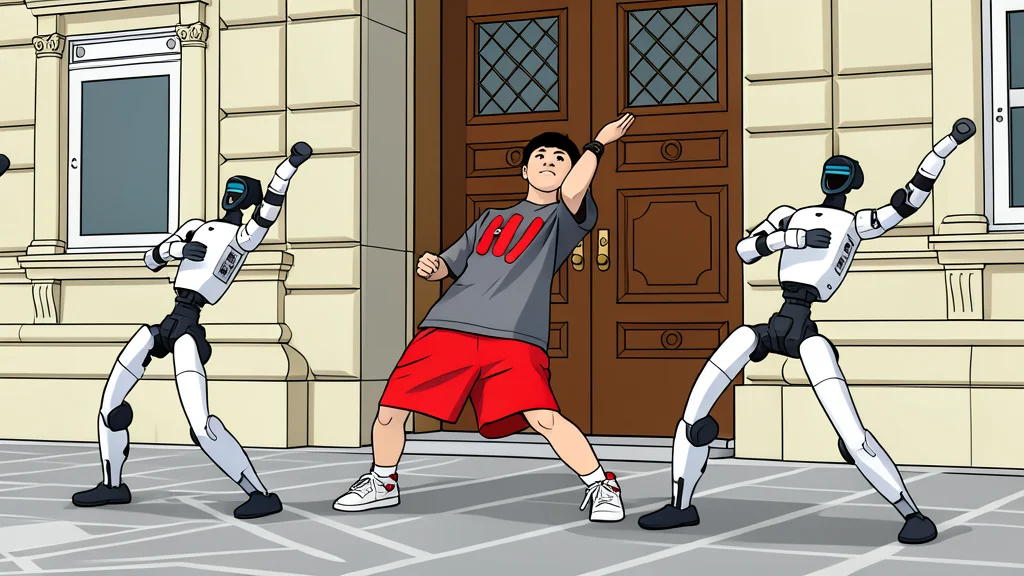
Chinese dancers partnered with Unitree robots for America's Got Talent, facing challenges in flexibility and improvisation.
Key points
- Wu Yufei and Unitree robots reached the America's Got Talent final, showcasing scripted robotic choreography.
- Robot dancing requires days of engineering for short routines and cannot improvise to music changes.
- China’s humanoid robot market is valued at $2 billion, but companies struggle to find uses beyond entertainment.
Chinese street dancer Wu Yufei has reached the finals of America's Got Talent, performing alongside a crew of humanoid robots built by Unitree. This is not a standard dance act; it is a high-stakes demonstration of robotic capability where human choreography meets mechanical limitation.
The partnership highlights a growing trend in China, where robot dancing has moved from niche entertainment to a major commercial sector. However, the performance reveals significant trade-offs: while robots can execute powerful, precise moves, they lack the flexibility and real-time adaptability of human dancers.
Robotic choreography demands rigorous engineering
Training these machines is not simply about recording a video. It involves capturing human motion, running complex simulations, and transferring data to the robot’s motor system. Industry insiders describe the process as creating a 'soul' for the machine, requiring extensive fine-tuning by engineers who troubleshoot issues in real-time.
A routine that lasts only 30 seconds can take days or even weeks to perfect. The catch is that the system is highly scripted. If a dancer makes a mistake or the music shifts unexpectedly, the robot cannot improvise. It relies on pre-programmed playback, meaning any deviation from the planned choreography results in a visible error rather than a creative adjustment.
Mechanical limits restrict dance styles
Choreographers must design routines that fit the robot's physical capabilities. Moves involving high torque, such as spins or 'power moves,' are technically easier to program because they rely on straightforward motor adjustments. In contrast, routines requiring body flexibility or subtle weight shifts are often impossible for current humanoid designs.
This constraint forces a compromise in artistic expression. Dancers must avoid movements that might look like the robot is malfunctioning. The result is a performance that prioritizes precision and visual spectacle over organic flow, a trade-off that audiences may not immediately notice but that fundamentally shapes the art form.
Entertainment masks commercial viability struggles
While the public views these performances as entertainment, the industry sees them as a crucial proof of concept. Companies are using dance to demonstrate reliability and design quality to investors. According to a Bangkok Post report, China’s humanoid robotics market is projected to reach two billion US dollars this year, accounting for over 97% of global shipments in the first half of 2026.
However, the sector faces scrutiny. Many companies are struggling to find commercial uses beyond stage performances. The ability to dance well does not automatically translate to utility in logistics, manufacturing, or other industrial settings. The hype surrounding these robots may be outpacing their actual functional readiness for broader economic integration.