Humanoid Robots Begin Real-World Industrial Deployment
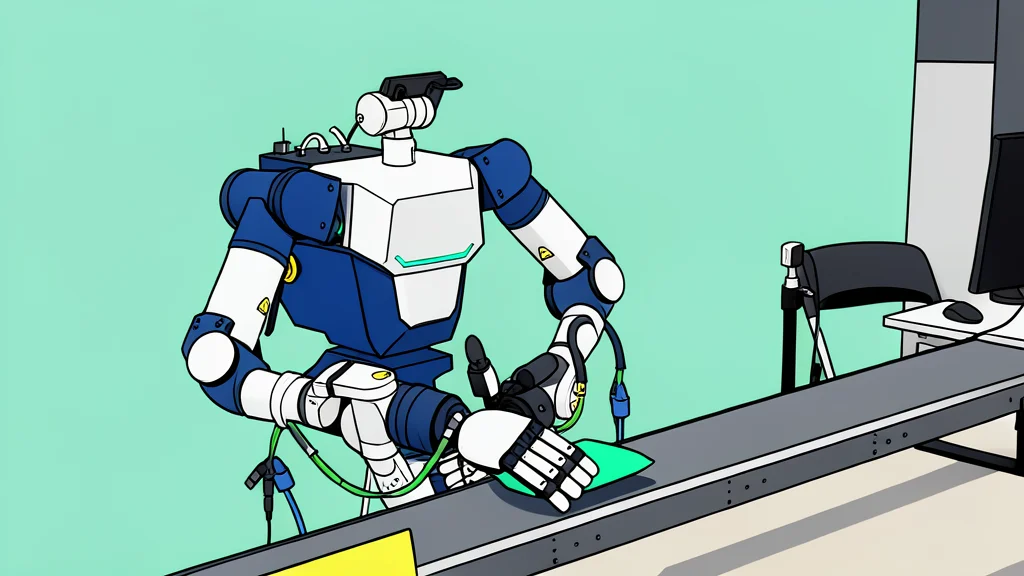
South Korean and US firms are shifting focus from stage demos to live factory operations, prioritizing safety and data collection over spectacle.
Key points
- RLWRLD demonstrated a robot sorting mixed cargo on a conveyor belt at the Humanoid Summit Seoul.
- PersonaAI has started autonomous welding tests at customer sites in partnership with HD Hyundai and POSCO.
- FieldAI claims a virtuous cycle where more on-site deployments lead to better data and improved AI models.
The era of humanoid robots performing choreographed tricks for audiences is fading, replaced by a new priority: steady, on-site work in industrial environments. At a recent summit in Seoul, industry leaders from both South Korea and the United States signaled that the competitive advantage in robotics is no longer about impressive demonstrations. Instead, the focus has shifted to proving safety and productivity by placing machines directly on factory floors where they must handle real-world variables.
This transition marks a significant change in how physical AI companies measure success. According to reports from chosun.com, the industry is moving away from static showcases toward active deployment. The goal is to generate value by integrating robots into existing workflows, such as logistics and heavy industry, rather than keeping them in controlled lab settings or exhibition halls.
Precision Grip Testing on Conveyor Lines
During the Humanoid Summit Seoul, held at the COEX Grand Ballroom, a robot developed by RLWRLD demonstrated its ability to sort mixed cargo. The machine used a camera to identify the type and position of items moving along a conveyor belt, including dolls, water bottles, and boxes. It then adjusted its grip strength based on the weight and material of each object, using five-fingered joints to lift items without dropping them.
Ryu Jung-hee, CEO of RLWRLD, stated that the company is currently collecting training data and verifying performance at more than twenty enterprise sites. This hands-on approach allows the robot to learn from actual manufacturing conditions, which is a critical step for any AI system that must operate reliably outside of a simulation environment.
US Firms Prioritize Live Site Integration
International players are following a similar trajectory. Michael Perry, head of PersonaAI, noted that the company has begun autonomous welding tests at customer sites in collaboration with South Korean industrial giants like HD Hyundai and POSCO. The objective is to create robots that work alongside human teams in current environments, generating tangible economic value rather than just visual impact.
FieldAI, another US-based physical AI company, applies its technology to a wide range of hardware, including humanoids and wheeled robots. These machines are already deployed in mines, shipyards, and high-altitude areas. Ali Agha, CEO of FieldAI, explained that the more robots deployed, the more data is collected, which in turn improves the AI models, creating a continuous cycle of enhancement.
The Trade-Off Between Data and Risk
While on-site deployment offers a clearer path to commercial viability, it introduces new challenges. Unlike controlled demonstrations, real-world factories present unpredictable obstacles, safety risks, and varying light conditions. Companies must balance the immediate benefit of collecting high-quality operational data against the potential for costly errors or downtime. The shift to live deployment means that reliability and safety protocols are now as important as the robot's physical capabilities.