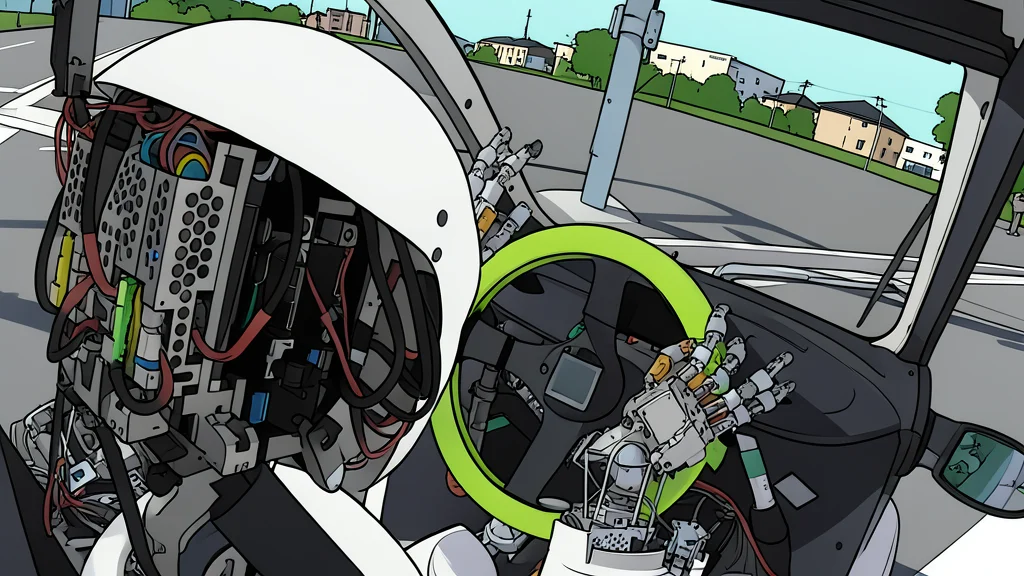
ETH Robot Swings Across Monkey Bars Using Raw LiDAR
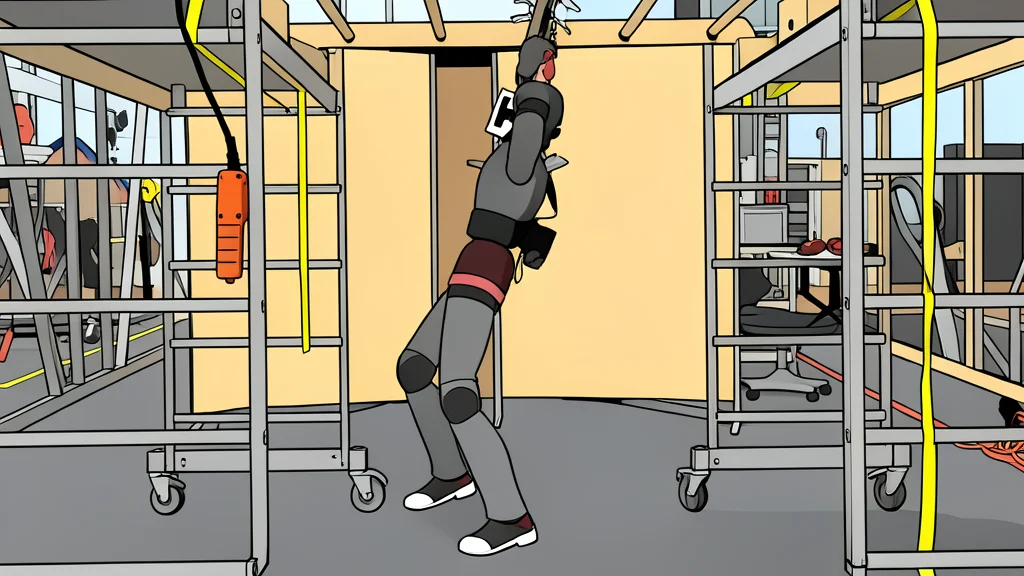
A humanoid robot from ETH Zürich has successfully navigated a sparse overhead ladder, demonstrating advanced motion control and perception capabilities in a physical environment.
Researchers at ETH Zürich have demonstrated that a humanoid robot can navigate a sparse overhead ladder structure, a task that requires precise timing and spatial awareness. The EngineAI PM-01 robot performed a sequence of jumping onto thin rungs, swinging hand over hand, and dropping to the floor without human intervention. This achievement highlights significant progress in how machines perceive and interact with complex, three-dimensional environments that are not rigidly fixed in place.
The experiment serves as a rigorous test of a robot's ability to process raw sensor data and translate it into fluid, full-body movements. Unlike static tasks, swinging on monkey bars requires the robot to constantly adjust its grip and body position while in motion. The success of this trial suggests that current robotic systems are moving closer to handling dynamic, unpredictable physical challenges with a level of agility previously reserved for human operators.
High success rate in physical trials
In the hardware tests, the robot completed the entire traversal sequence in fourteen out of fifteen attempts across three different bar configurations. The bars were positioned at heights between 1.69 and 1.75 meters, with spacings ranging from 0.26 to 0.33 meters. The robot achieved swing speeds of up to 0.5 meters per second, a pace comparable to that of humans using the same equipment. Notably, the system remained stable even when the support frame began to tremble under the robot's weight, indicating robust control mechanisms that can handle external disturbances.
The control system also demonstrated versatility by allowing a separately trained policy to duck beneath narrow overhead slats. With only two centimeters of clearance on each side, the robot had to execute precise body movements to avoid collision and then recover to a stable standing position. This flexibility shows that the underlying software architecture can adapt to various spatial constraints, not just the specific task of brachiation. The ability to switch between different movement policies seamlessly is a key feature for general-purpose humanoid robots.
Sensing thin structures with LiDAR
The robot relies on a head-mounted solid-state LiDAR sensor to perceive its environment. This device generates raw point cloud data, which is processed directly by the controller without intermediate processing steps. The system uses an attention-based encoder to interpret the sparse data, focusing on local features that are critical for identifying the position of the bars. A memory mechanism tracks the location of the bars even when they are temporarily out of view, ensuring continuous awareness during the swing.
The perception system provides joint position targets at a high frequency, allowing for rapid adjustments to the robot's posture. An auxiliary component estimates the centerline of the ladder, providing additional guidance for the movement planner. By using raw sensor data, the system avoids the latency associated with higher-level processing, which is crucial for maintaining balance during dynamic maneuvers. This direct pipeline from sensor to actuator contributes to the smoothness and reliability of the robot's movements.
Training through simulation and distillation
The development process involved creating specialized policies for each phase of the traversal: jumping up, swinging, and jumping down. These expert policies were initially trained with full knowledge of the bar positions. Through a process called distillation, these specialists were combined into a single student policy that learned to perform the entire sequence based on sensory input alone. This approach allows the final system to operate without explicit knowledge of the environment's geometry, relying instead on learned patterns.
The training was conducted in a simulated environment that included extensive domain randomization. Variables such as bar radius, friction, and sensor noise were varied to ensure the robot could handle real-world imperfections. The simulation also modeled hardware limitations, including actuator heat limits and battery voltage sag. This rigorous training process helps bridge the gap between simulation and physical reality, resulting in a system that performs reliably on the actual hardware. The use of passive hooks for gripping also simplifies the contact mechanics, making the simulation more accurate and the physical execution more robust.