High School Students Test Humanoid AI in Classroom
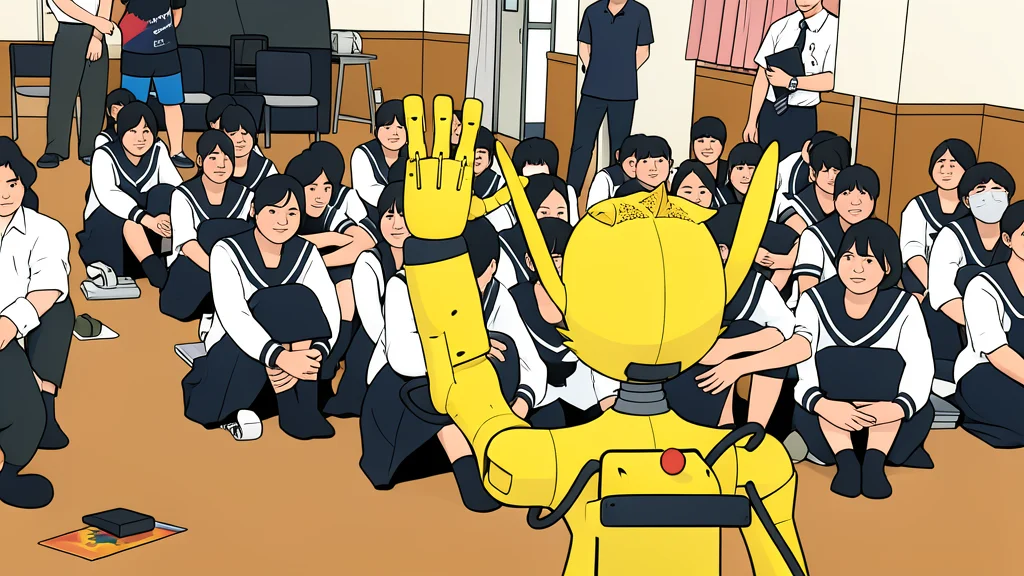
Students in Shizuoka prefecture engaged a humanoid robot to explore the practical realities and social implications of sharing space with generative AI systems.
In a high school classroom in Mishima, Shizuoka Prefecture, students recently spent a lesson interacting with Miroki, a humanoid robot powered by generative artificial intelligence. The session, held on September 11, was not a technology demo but a structured part of the compulsory 'Public' curriculum, designed to help second-year students think critically about how humans and AI might coexist in the near future.
The robot uses a camera to track facial expressions and processes natural language to hold conversations. While many students already use text-based AI tools in their daily lives, seeing the technology embodied in a physical form shifted the focus from utility to social dynamics. They tested its conversational limits, asking personal questions to see how the system navigates emotional nuance.
Physical Presence Changes Perception
For students accustomed to typing into apps, the robot’s ability to read expressions and respond in real time introduced a different layer of interaction. One student noted that living alongside such machines does not feel like a distant sci-fi concept but a probable reality where humans and machines support each other. Another highlighted the potential for these systems to assist in medical settings, suggesting that the physical form factor makes the technology feel more approachable and less abstract.
Curriculum Focuses on Coexistence
This lesson is part of a broader educational push to include AI literacy in standard subjects, as reported by GN auto tech/robotics. The goal is not just to teach students how to use AI, but how to manage the social and ethical relationships it creates. By placing the robot in a peer-like setting, educators aim to make the abstract concepts of data privacy and algorithmic bias tangible.
The Limits of Machine Empathy
However, the trade-off of using generative AI in social settings is the risk of attributing genuine understanding to a system that is statistically predicting responses. The students are now tasked with examining whether AI can truly have a mind or if it is merely mimicking one. This critical analysis is crucial, as the technology’s persuasive nature can blur the line between helpful assistance and manipulative influence, a distinction that becomes harder to maintain when the interface is human-like.