Toyota Plans 400,000 Robots in Factories, Citing $6.4B Annual Cost
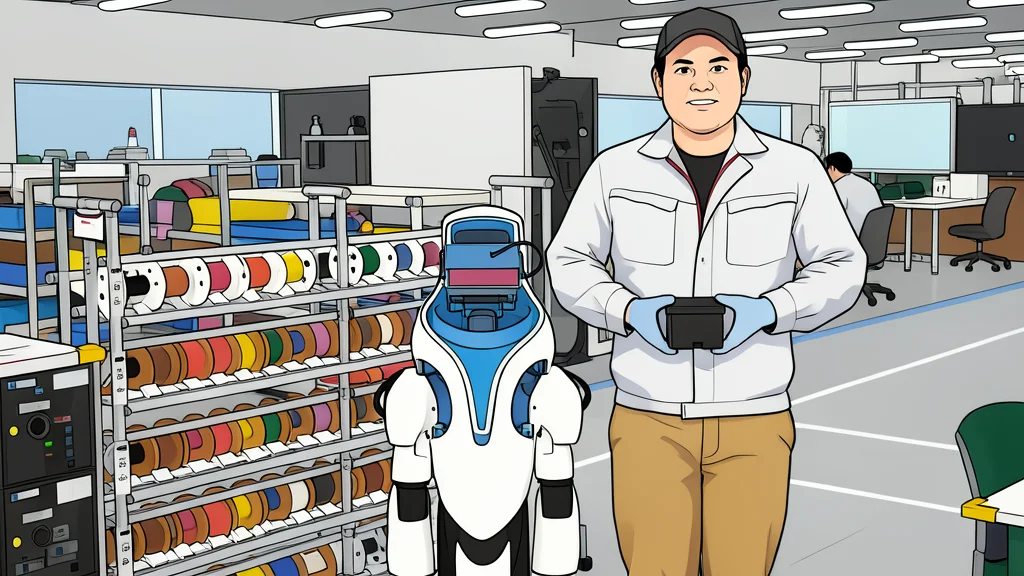
Toyota aims to deploy 400,000 robots by 2028, a move costing up to $6.4 billion annually while promising to retain human roles.
Key points
- Toyota plans to deploy 400,000 robots across its manufacturing network, including 150,000 in its own factories.
- The annual cost of this automation effort is estimated at 1 trillion yen, or approximately $6.4 billion, starting in 2028.
- The company states that robots will learn tasks from human workers to preserve institutional knowledge rather than replace staff.
Toyota is preparing to scale its factory automation to an unprecedented level, planning to deploy approximately 400,000 robots across its global manufacturing network. This massive expansion extends beyond traditional assembly line arms to include wheeled units and advanced logistics machinery intended to work directly alongside human employees.
The financial commitment is substantial, with annual costs potentially reaching 1 trillion yen, or roughly $6.4 billion, starting in 2028. According to Yahoo Finance, this investment covers both the replacement of existing equipment and the installation of new systems across Toyota’s own facilities and those of its major suppliers.
Scale of the robotic deployment
The total figure of 400,000 units represents a significant shift in how the company views its production capacity. About 150,000 of these machines are expected to operate within Toyota’s own factories, while the remaining 250,000 will be distributed among group companies and key suppliers. This distribution highlights that the automation drive is not isolated to a single brand but is a broader supply chain transformation.
It is important to note that these figures are currently estimates rather than fixed commitments. Toyota has not confirmed whether the full $6.4 billion annual spend will be realized or defined the exact timeline for the program. However, the sheer volume of planned hardware indicates a long-term strategic pivot toward heavy mechanization.
Learning from human workers
A central part of this strategy involves using humans as teachers for the machines. One specific robot model, named Eley, is designed with articulated two-fingered hands and wheels, allowing it to mimic manual dexterity. The plan is for experienced employees to demonstrate complex tasks repeatedly, generating training data that the robots can then absorb and replicate.
This approach addresses a critical issue in manufacturing: the loss of institutional knowledge. As veteran specialists retire, their techniques risk disappearing. By converting these skills into digital training material, Toyota aims to preserve high-level craftsmanship while enabling robots to perform tasks that previously required nuanced human judgment.
Impact on human employment
Despite the massive influx of machinery, Toyota maintains that this is not a plan to replace its workforce. The company argues that the robots are intended to handle repetitive or physically demanding tasks, thereby freeing up humans for more complex roles. This distinction is crucial for understanding the company's long-term labor strategy.
However, the trade-off remains significant. While the company promises job security, the integration of such a large number of autonomous units will inevitably alter the nature of factory work. Employees will need to adapt to supervising and training machines rather than solely performing manual labor, a shift that requires substantial retraining and cultural change within the organization.