Unitree's Market Swing Highlights Humanoid Robot Reality

Unitree Robotics experienced a significant valuation drop shortly after its stock market debut, revealing the gap between investor hype and the current commercial limitations of humanoid technology.
Unitree Robotics saw its market value swing dramatically in the weeks following its listing on Shanghai's STAR Market. The stock initially surged, pushing the company's valuation above 440 billion yuan, before more than 230 billion yuan was erased within two weeks. This volatility highlights a growing disconnect between the excitement surrounding humanoid robots and the practical realities of their current commercial viability.
The initial price surge reflected high expectations embedded in the initial public offering, which carried a price-to-earnings ratio of nearly 93 times. However, as investors shifted from speculating on future potential to evaluating current performance, the correction was inevitable. The rapid decline serves as a reminder that share prices often outpace the technological and industrial maturity of the sector they represent.
Early Stage Industry Faces Cost Barriers
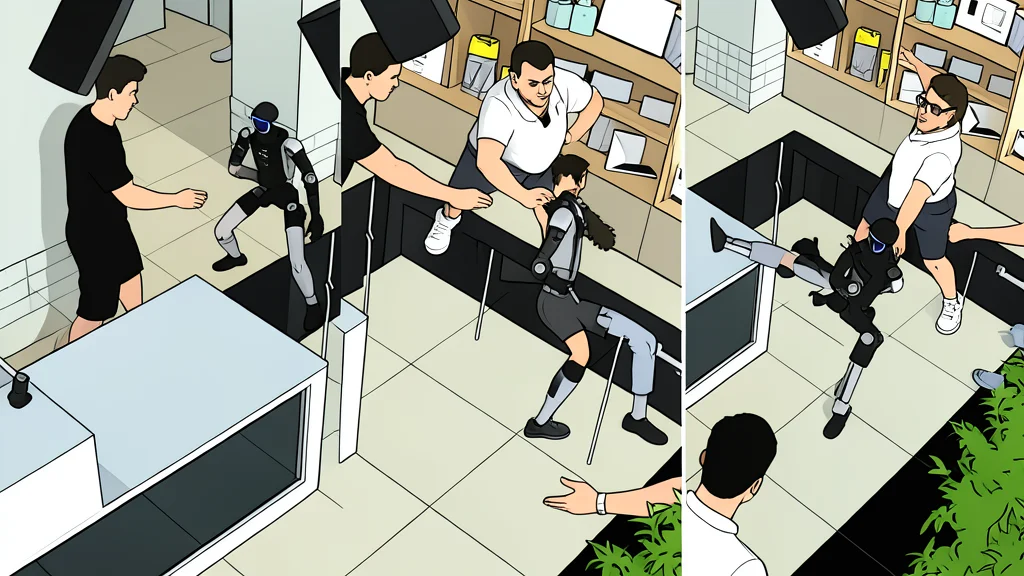
Humanoid robotics remains an early-stage field where the path to mass adoption is not yet clear. While robots can perform impressive feats in controlled demonstrations, they still struggle with reliability in mundane, long-duration tasks on factory floors. High production costs and limited useful applications continue to hinder widespread deployment, meaning the technology is not yet ready for large-scale economic integration.
Despite these challenges, Unitree distinguishes itself by reaching meaningful shipment scales while maintaining profitability. Unlike many competitors who are still burning capital to prove basic locomotion, the company has demonstrated strengths in supply chain management and rapid product iteration. This financial stability provides a more solid foundation for growth than pure cash-burning rivals.
Revenue Relies on Research Institutions
A significant portion of Unitree's revenue currently comes from universities and research institutes rather than end consumers. The company's revenue approached 1.7 billion yuan in 2025, driven largely by professional customers who need robots for experimentation and development. This customer base differs significantly from the general industrial or household markets that are essential for long-term profitability.
The transition to mass consumer and industrial adoption remains in pilot stages. For the industry to mature, robots must become reliable, cost-effective tools that businesses and families buy repeatedly for clear economic reasons. Until this shift occurs, the market will remain dependent on specialized buyers rather than broad commercial demand.
Future Success Depends on Reliability
As reported by GN auto tech/robotics, the next phase of the humanoid robot race will be judged by practical metrics rather than visual spectacle. Investors and manufacturers are increasingly focused on order volumes, deployment reliability, and repeat purchases. The ability to maintain performance over time will be the key differentiator in a crowded and competitive landscape.
The recent stock price correction serves as a benchmark for the industry. It signals that while the technology is promising, the market is demanding proof of commercial utility. Success will no longer be measured by how impressive a demonstration looks, but by how effectively these machines can integrate into daily economic life.