Unitree's Stock Drop Highlights Real Robotics Gaps

A recent market correction at Unitree Robotics reveals a critical disconnect between investor hype and the actual readiness of humanoid technology for daily use.
The recent trading history of Unitree Robotics offers a stark lesson in how quickly market sentiment can shift when reality collides with speculation. After its debut on Shanghai’s STAR Market, the company saw its valuation soar past 440 billion yuan, driven by intense excitement over humanoid robotics. However, this rally was short-lived. Within roughly two weeks, more than 230 billion yuan in value evaporated, exposing the fragility of a stock price built on high expectations rather than immediate, widespread consumer demand.
This financial volatility does not necessarily reflect a sudden collapse in the company’s operational health. Instead, it highlights a common pattern for newly listed tech firms with high growth premiums. Unitree’s initial pricing included a substantial margin for future success, meaning that once investors began scrutinizing the actual timeline for mass adoption, a correction was almost inevitable. The drop serves as a reminder that a stock chart is not the same thing as an industry’s fundamental progress.
Profitability Sets Unitree Apart
Despite the market turbulence, Unitree distinguishes itself in a sector where many competitors are still burning cash to prove basic functionality. According to reporting from GN auto tech and robotics, the company has achieved meaningful shipment volumes while remaining profitable. Its revenue approached 1.7 billion yuan in 2025, and its humanoid robot shipments rank among the highest globally. This financial discipline suggests that Unitree has successfully navigated the complex challenges of supply chain management and rapid product iteration, unlike many peers who are still struggling to keep their machines walking reliably.
Demonstration Versus Daily Reliability
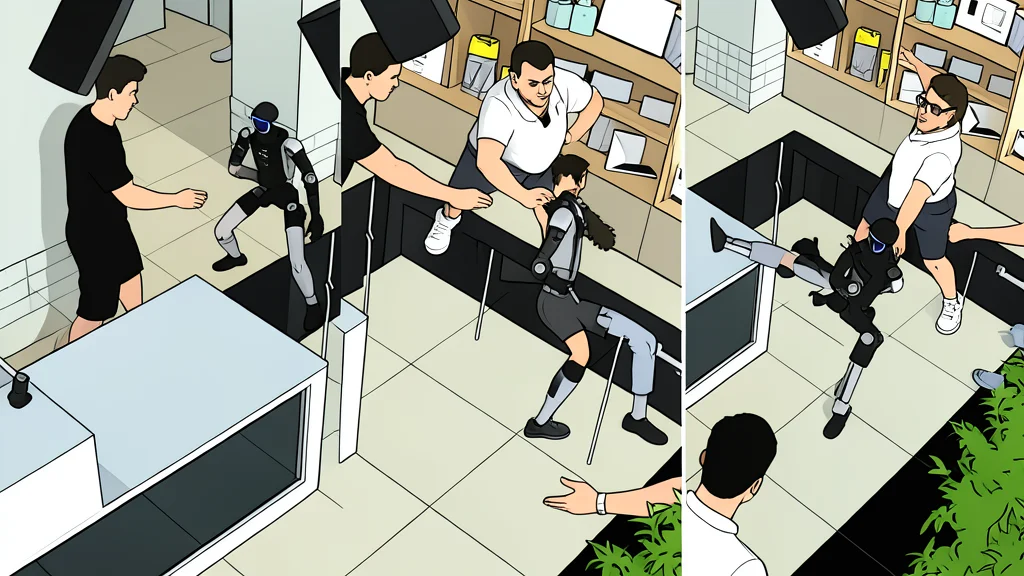
The core challenge facing the industry is the gap between impressive demos and practical utility. Humanoid robots that perform well in controlled environments often struggle to execute mundane tasks reliably over long shifts on a factory floor. Costs remain high, and the range of useful applications is still limited. For now, most of Unitree’s customers are universities and research institutes rather than general consumers or mass-market manufacturers. This indicates that while the technology is advancing, it has not yet reached the stage where it can be bought at scale for clear economic reasons in households or industrial settings.
Future Success Depends on Deployment
The next phase of the robotics race will be defined by less flashy metrics. Success will no longer be measured by how impressive a robot looks during a sprint or a stunt, but by its ability to maintain reliability, secure repeat orders, and achieve economies of scale. For now, the industry remains in an early stage, where the path to mass commercialization is still unclear. The current market correction serves as a sobering check, reminding stakeholders that the true value of these machines lies in their consistent, real-world performance rather than their potential to captivate an audience.