Biological Methods May Unlock Billions in Coal Ash
Researchers are exploring nature-inspired techniques to extract valuable rare earth elements from industrial waste, potentially reducing the need for new mining.
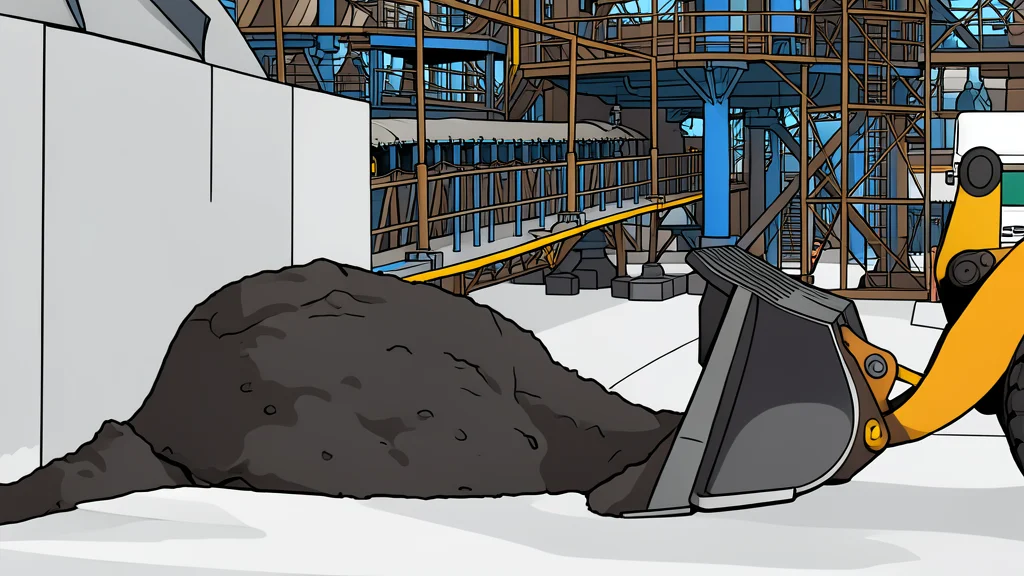
Massive piles of coal ash and other industrial waste in the United States may hold a hidden economic treasure. Scientists suggest that these discarded materials contain billions of dollars' worth of rare earth elements, which are essential for modern electronics and clean energy technologies. However, current methods for recovering these resources are energy-intensive and environmentally damaging, prompting a search for more sustainable alternatives.
A new research initiative aims to solve this problem by looking to biology rather than heavy chemistry. The project, funded by the National Science Foundation, proposes using biological processes to break down silica-rich waste. This approach could not only extract valuable minerals but also repurpose the remaining material, turning a significant waste management challenge into a resource opportunity.
Valuable Minerals Hidden in Waste
Industrial waste streams such as coal ash, red mud, and mine tailings are typically viewed as environmental liabilities. Yet, they are rich in silicon and critical minerals. One estimate indicates that the rare earth elements trapped in U.S. coal ash landfills alone are worth approximately $8.4 billion. This value is nearly eight times the nation's current domestic raw reserves, highlighting a significant gap in how the country manages its mineral resources.
The current industrial process for producing silicon-based materials requires high temperatures and harsh chemicals. This method generates vast amounts of waste that often end up in landfills or impoundments. The research team, led by Worcester Polytechnic Institute, seeks to change this dynamic by developing a process that uses the entire waste stream, separating strategic elements while converting the rest into useful products.
Nature Provides a Cleaner Blueprint
The proposed solution draws inspiration from organisms like diatoms, sea sponges, and certain plants. These biological systems use organic scaffolds to collect dissolved silicon and build complex structures under mild conditions. By mimicking these natural processes, researchers hope to create lower-energy methods for processing industrial waste. This bio-inspired approach aims to reduce the reliance on high-heat chemical treatments that currently dominate the industry.
The goal is twofold: to release trapped rare earth elements and to transform the silica itself into usable materials. As reported by ScienceDaily, this whole-material approach could fundamentally alter how industries handle waste. Instead of discarding silicon-rich byproducts, manufacturers could integrate them into new products, thereby closing the loop on resource consumption and reducing the environmental footprint of material production.
Computational Tools Accelerate Discovery
To identify the most effective biological strategies, the project employs advanced computational modeling and artificial intelligence. These tools allow researchers to design specialized biomolecules and predict their interactions with silicon-rich waste. This interdisciplinary effort combines expertise from biology, geochemistry, and materials science. By using data-driven design, the team can accelerate the discovery process and optimize the separation of critical minerals from complex waste matrices.
The five-year initiative involves multiple universities and focuses on a two-phase approach. While the primary aim is resource recovery, the broader impact lies in reducing energy consumption and chemical usage. This method offers a potential pathway to secure domestic supplies of critical minerals without the environmental costs associated with traditional mining and processing. The trade-off is a longer development timeline, but the potential for sustainable resource management is significant.