T. Rex Rib Reveals 66-Million-Year-Old Healing Injury
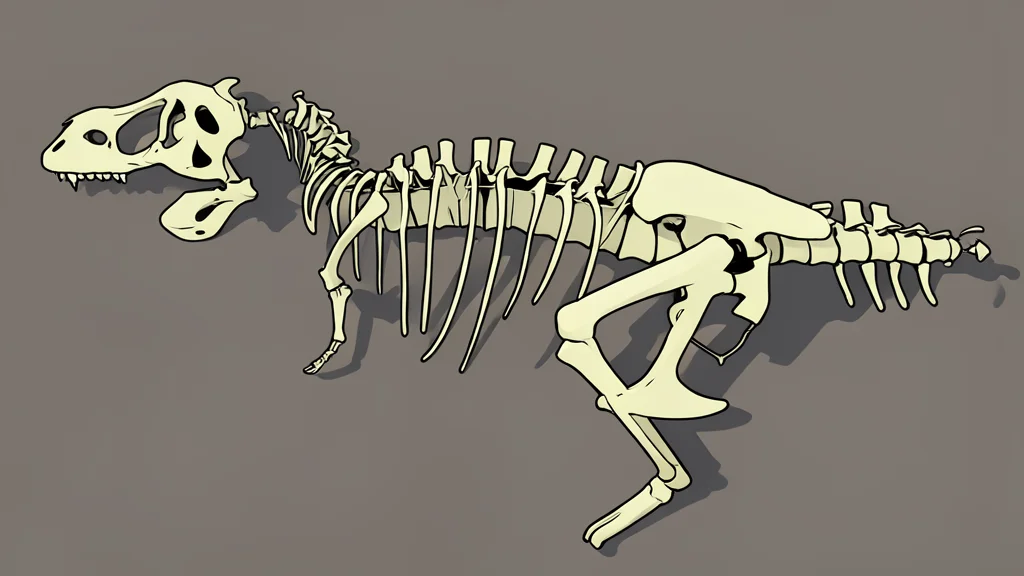
Scientists used neutron imaging to expose preserved blood vessels in a broken T. rex rib, offering rare insight into dinosaur biology.
Key points
- A broken rib from the largest known T. rex contains a preserved network of blood vessels.
- Neutron and X-ray imaging allowed scientists to view the internal structure without damaging the fossil.
- The preservation occurred because the dinosaur died in a salty marsh, which slowed decomposition.
Researchers at Oak Ridge National Laboratory have analyzed a broken rib from Scotty, the largest known T. rex skeleton. The bone, 66 million years old, contains a preserved network of blood vessels formed while the dinosaur was healing.
This discovery provides a rare glimpse into dinosaur biology. Most soft tissues decay before fossilization, making such internal details extremely difficult to find in the fossil record.
Preserved evidence of a healing injury
When the rib fractured, iron-rich blood entered the wound. New blood vessels formed as part of the natural healing process. Scotty died before the fracture fully repaired itself.
The dinosaur remained in a salty marsh, an environment that slowed decomposition. These conditions allowed the fragile vascular network to survive and become mineralized over millennia.
Mauricio Barbi, a physics professor at the University of Regina, described the find as a significant breakthrough. He noted that such a vast network of mineralized vessels has never been observed in fossils before.
Non-invasive imaging techniques reveal internal details
Scientists used neutron and X-ray imaging to examine the bone without cutting it. Neutrons detect light elements like hydrogen, while X-rays reveal heavier elements. This combination acts like a detailed scan of the bone's interior.
The work began in 2020 when Jerit Mitchell, then an undergraduate, detected vessel evidence. He used micro-CT scanning at the Canadian Light Source to confirm soft tissue. Later studies added synchrotron radiation and microscopy for cellular-level analysis.
Insights into prehistoric life and evolution
Scotty was found in Saskatchewan's Frenchman River Valley, a rich fossil site. The rocks there preserve life from just before the mass extinction that ended the age of nonavian dinosaurs.
Marcella Berg, an assistant professor of physics, emphasized the value of these clues. By studying such specimens, researchers understand past biological processes and how species might evolve in the future.