WindGroove's AirFi One Merges Fan, Light, and Audio in One Unit
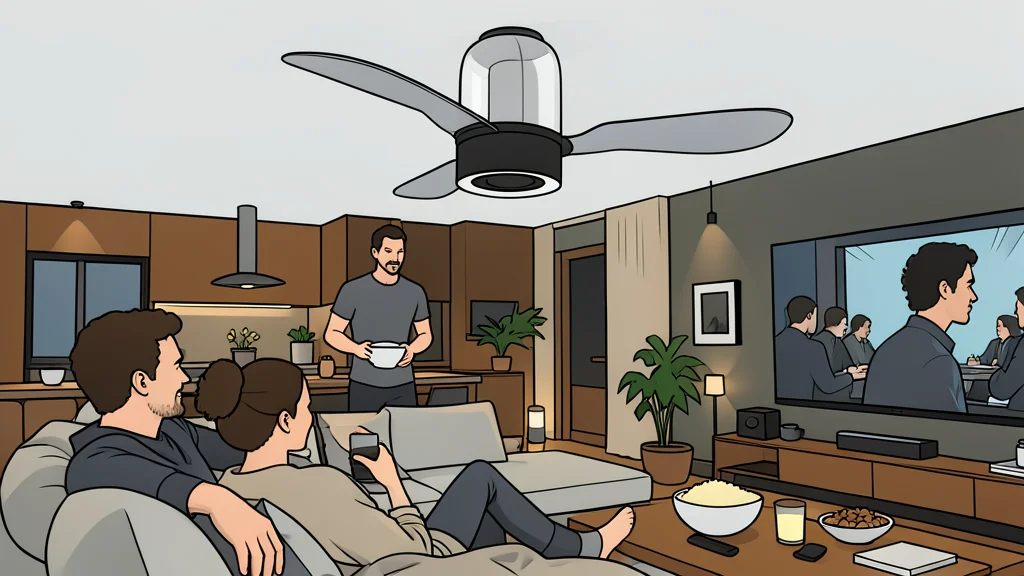
A new ceiling device aims to replace the clutter of separate smart home gadgets by combining airflow, lighting, and sound into a single overhead system.
Modern smart homes often suffer from a paradox: the more devices you add, the less convenient life becomes. Shelves are crowded with speakers, corners are occupied by smart lamps, and users are forced to navigate multiple applications to control basic functions. WindGroove is attempting to address this fragmentation with its AirFi One, a ceiling-mounted system that consolidates three distinct utilities into one physical unit.
According to reporting by XDA Developers, this device represents a shift away from the industry standard of adding more standalone gadgets. Instead of treating the ceiling as unused space for a single-purpose fixture, the AirFi One positions it as a central hub for environmental control. The goal is to reduce the visual and digital clutter that accumulates in a typical living room.
Consolidating home functions overhead
The core value proposition of the AirFi One is simplification. By integrating a fan, a lighting system, and a speaker into a single 48-inch diameter unit, it eliminates the need for three separate pieces of furniture or wall-mounted fixtures. Users can manage all three functions through a unified app, a remote, or voice commands, removing the friction of switching between different platforms or interfaces.
This approach addresses the common complaint that smart homes require constant coordination. When devices operate in silos, updating firmware or adjusting settings becomes a tedious chore. A combined system reduces the number of touchpoints required to change the room's atmosphere, allowing for smoother transitions between different modes of use.
Audio performance and acoustic design
The audio component is tuned in collaboration with Jamo, a manufacturer known for high-fidelity sound systems. The unit features a woofer and two mid-high drivers, covering a frequency range from 45Hz to 20kHz. This configuration is designed to provide sufficient bass depth and vocal clarity without requiring additional subwoofers or bookshelf speakers to occupy floor space.
Because the sound originates from the center of the ceiling, it distributes more evenly throughout the room compared to a speaker positioned on a shelf or table. This spatial advantage allows for a more immersive listening experience, particularly for music or ambient sound, as the audio is not blocked by furniture or directional toward a single listener.
Practical trade-offs and limitations
While the integration offers convenience, it comes with specific constraints. The device weighs 10 kilograms, which requires robust installation and may limit its placement to certain structural setups. Furthermore, combining functions means that the performance of each individual component may not match that of a dedicated, high-end specialist device.
Users seeking maximum audio fidelity or extreme airflow capacity might find a consolidated system less capable than a premium standalone fan or a dedicated high-resolution audio system. The AirFi One is best suited for those who prioritize a clean, uncluttered aesthetic and the convenience of centralized control over the peak performance of any single feature.