Europe's New Spacesuit Prototype Needs Significant Refinement
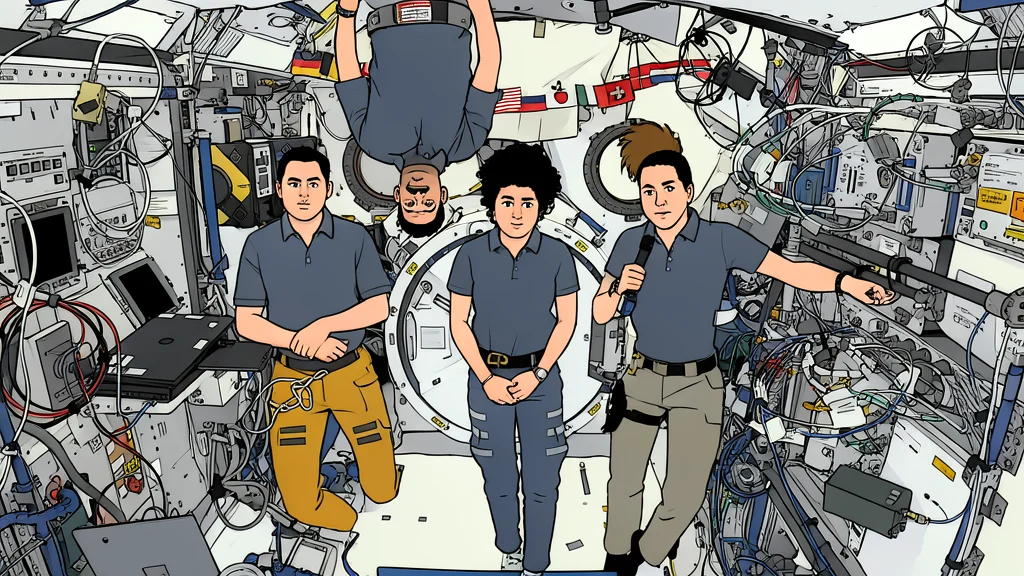
Astronaut Sophie Adenot reports that the EuroSuit prototype is far from ready for prime time, highlighting early challenges in fit and usability during its first on-orbit tests.
Europe’s newest prototype spacesuit has received a cautious reception from the crew on the International Space Station. Sophie Adenot, a French astronaut currently aboard the ISS, conducted the first fit and dexterity checks for the EuroSuit and indicated that substantial improvements are still required. The suit, designed for use inside spacecraft rather than for spacewalks, arrived on the station recently as part of a cargo mission, marking the first time European engineers have received direct feedback from an astronaut in orbit.
The primary goal of the EuroSuit is to allow astronauts to don the garment quickly, ideally in under two minutes, without assistance from a crewmate. This feature is critical for emergency scenarios, such as a sudden loss of cabin pressure, where speed is essential for survival. However, Adenot noted that the current iteration is still in the very early stages of its development journey, with many points needing improvement before it can be considered operational. As reported by GN auto tech/science: space discovery, this feedback is crucial for guiding the next phase of design and engineering.
Testing focus on ease of use
The on-orbit tests were not designed to evaluate full life-support capabilities but rather to assess the suit's ergonomics. Adenot’s tasks included putting the suit on and taking it off, as well as manipulating small objects and interacting with a touchscreen tablet. These actions simulate the fine motor skills required during critical phases of flight, such as launch and landing. The challenge lies in balancing protective rigidity with the flexibility needed for dexterity, a trade-off that defines the engineering of intravehicular activity suits.
Collaborative effort for European independence
The EuroSuit project represents a broader European ambition to become more autonomous in human spaceflight. Coordinated by the French Space Agency, the initiative brings together diverse expertise from aerospace, medicine, and sportswear sectors. Spartan Space handled the overall design, while the Institute of Space Medicine and Physiology contributed biomonitoring systems to track astronaut vital signs. Decathlon, a sports clothing brand, provided insight into textile ergonomics for extreme environments, highlighting a unique collaboration between commercial and public sectors.
This approach aims to reduce reliance on external partners for critical safety equipment. By developing its own intravehicular suits, Europe seeks to strengthen its position in the global space industry. However, the path to a final, operational product is incremental. The current prototype lacks key systems such as pressurization, atmospheric control, and communications, which will be integrated in future iterations. The feedback from the ISS tests will help technicians refine the architecture, ensuring that the final design meets the rigorous standards required for crew safety.
Early stage of long development
Adenot emphasized that the current suit is merely the first step in a long development process. Space systems are inherently complex, and refining the balance between protection and usability takes time. The trade-off for a suit that can be donned quickly is often increased complexity in the underlying mechanisms, which must be perfected to ensure reliability. As the team moves forward, the focus will shift from basic ergonomics to integrating the life-support and communication systems necessary for a fully functional suit.