NASA Launches Roman Telescope to Outpace Hubble

The Nancy Grace Roman Space Telescope has begun its journey to Lagrange 2, promising a field of view 100 times wider than Hubble.
Key points
- The Nancy Grace Roman Space Telescope launched on August 30, 2026, heading to the Sun-Earth Lagrange 2 point.
- Roman features a field of view 100 times larger than Hubble's, enabling surveys up to 1,000 times faster.
- NASA plans to release the telescope's first images in early 2027 following a three-month commissioning period.
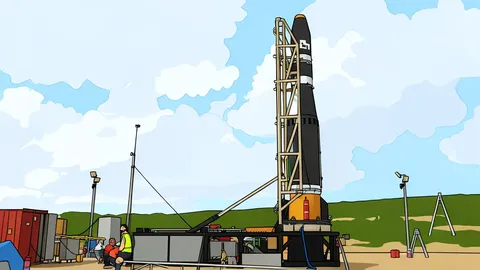
The Nancy Grace Roman Space Telescope has officially begun its journey into the deep cosmos, launching from Kennedy Space Center on August 30, 2026. This marks the start of a mission designed to survey vast stretches of the sky with a speed and scope that far exceeds its predecessor, Hubble.
As reported by amuedge.com, the telescope is now traveling nearly one million miles away from Earth. It is heading toward the Sun-Earth Lagrange 2 point, a stable gravitational spot where it will join other major observatories to begin scientific operations.
A massive leap in surveying speed
Roman is built to answer questions about dark energy, dark matter, and exoplanets. Its primary advantage is efficiency; it can capture a field of view at least 100 times larger than Hubble's. This allows astronomers to scan massive areas of the universe in a fraction of the time previously required.
The trade-off for this speed is not raw resolution, which remains comparable to Hubble, but rather the sheer volume of data generated. This capacity enables a wide-field survey approach that is ideal for studying subtle shifts in the universe's expansion and finding distant planetary systems.
Positioning at the Lagrange point
The telescope is currently en route to the L2 point, a location roughly four times farther from Earth than the Moon. This position provides a stable thermal and gravitational environment, which is critical for maintaining the precision of its instruments over long periods.
Upon arrival, Roman will enter a three-month commissioning period. During this phase, engineers will test its systems to ensure it is ready for full scientific operations. NASA expects to release the telescope's first official images in early 2027, marking the beginning of a new era in astronomical data collection.
Student groups witness the liftoff
The launch was closely followed by students from the American Public University System Analog Research Group and Students for the Exploration and Development of Space. Many watched the Falcon Heavy rocket ascend from Florida, noting the simultaneous landing of its side boosters as a significant technical achievement.
For these students, the event symbolized more than just a successful deployment. It represented a tangible connection between academic learning and the rapid evolution of spaceflight technology. The experience highlighted how modern launch capabilities have become routine, allowing for more ambitious and frequent missions into deep space.