Sophia Space Secures $300M Financing for 10-Satellite Array
Sophia Space and SLI outline a $300 million leasing deal to fund a 10-satellite orbital computing network, aiming to deploy by 2028 without diluting equity.
Key points
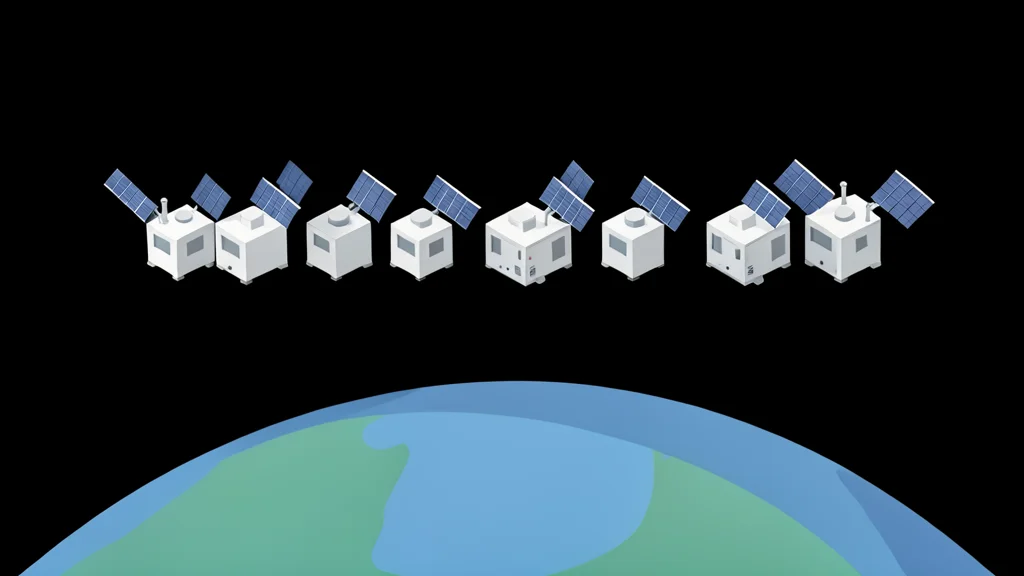
- Sophia Space and SLI have outlined a $300 million financing framework to fund a 10-satellite orbital computing constellation.
- The satellites are designed to provide computing capacity equivalent to 240 edge servers, processing data directly in orbit.
- The leasing model allows Sophia Space to expand its fleet without using dilutive equity financing, with launches targeted for 2028.
Sophia Space has outlined a $300 million asset financing framework with aerospace leasing firm SLI to fund a planned constellation of 10 satellites. The arrangement introduces a leasing model, common in aviation and energy sectors, to the emerging field of orbital computing, allowing the company to avoid relying solely on equity investment for expansion.
Under the proposed terms, SLI would purchase the satellites from Sophia Space and lease them to end users for fixed monthly or quarterly payments. This structure is designed to align financing costs with the revenue-generating lifespan of the spacecraft, preserving Sophia’s equity capital for continued technology development and operations.
Computing Power Moves To Orbit
The planned Sophia TILE satellites are designed to function as in-space data centers. Once deployed, the constellation is expected to provide aggregate computing capacity equivalent to 240 state-of-the-art edge servers. By processing data directly in orbit, the system reduces the need to transmit large volumes of raw data back to Earth, enabling faster responses for applications like weather analytics and disaster preparedness.
Sophia Space states that this approach supports mission-critical security workloads and supply-chain management. The technology aims to accelerate AI processing and edge computing in low Earth orbit, creating a new layer of digital infrastructure that operates independently of ground-based network congestion.
Leasing Model Mirrors Aviation
SLI, the aerospace subsidiary of Libra Group, brings over $15 billion in asset-financing experience from transportation industries. The firm was established in 2023 to provide financing solutions for satellites and ground stations. By applying mature terrestrial infrastructure-financing techniques to space, the partnership seeks to create a repeatable model for expanding satellite fleets without dilutive funding sources.
According to Sophia Space CEO Rob DeMillo, asset financing accelerated the growth of aviation and shipping, and the company aims to replicate that impact for orbital computing. SLI CEO Praveen Vetrivel noted that this framework provides Sophia with the capacity and flexibility needed to build the next layer of digital infrastructure, effectively lowering barriers to entry for other market participants.
Deployment Timeline And Risks
The agreement is currently outlined in a non-binding letter of support, with mission launches targeted for as early as 2028. While the model offers financial flexibility, it relies on the successful construction and deployment of the 10 spacecraft. The source, pulse2.com, notes that the framework is intended to support broader growth in orbital compute infrastructure as the market moves from demonstrations toward larger commercial deployments.
Investors and industry observers will watch whether this leasing structure can attract sufficient end-user demand to service the debt. The success of this model could determine if orbital computing becomes a scalable commercial sector or remains a niche technology dependent on specialized government contracts.