NASA Selects SpaceX for StarBurst Mission

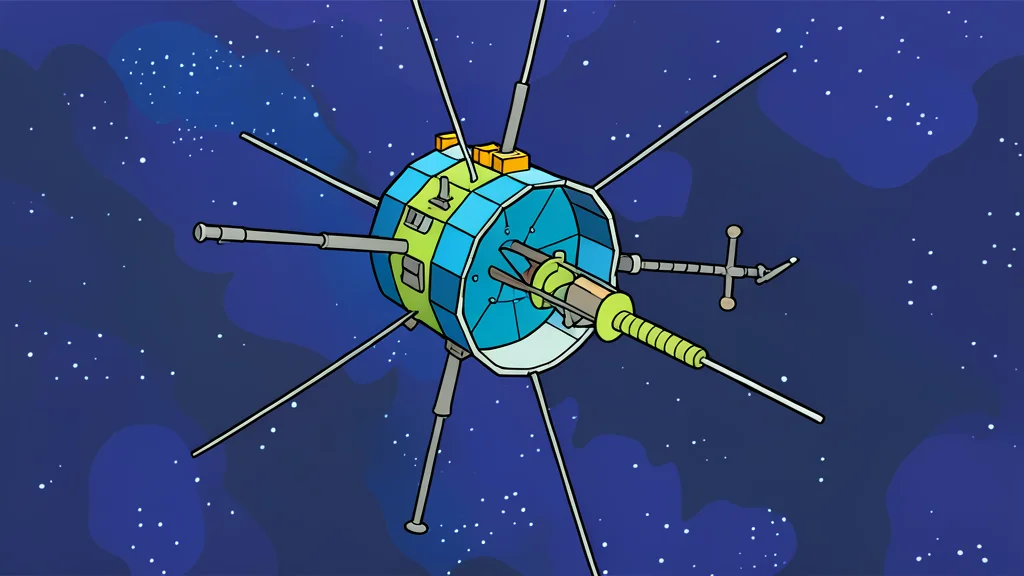
NASA has chosen SpaceX to launch the StarBurst observatory, a compact satellite designed to detect the violent collisions of neutron stars that produce some of the universe's most powerful flashes of light.
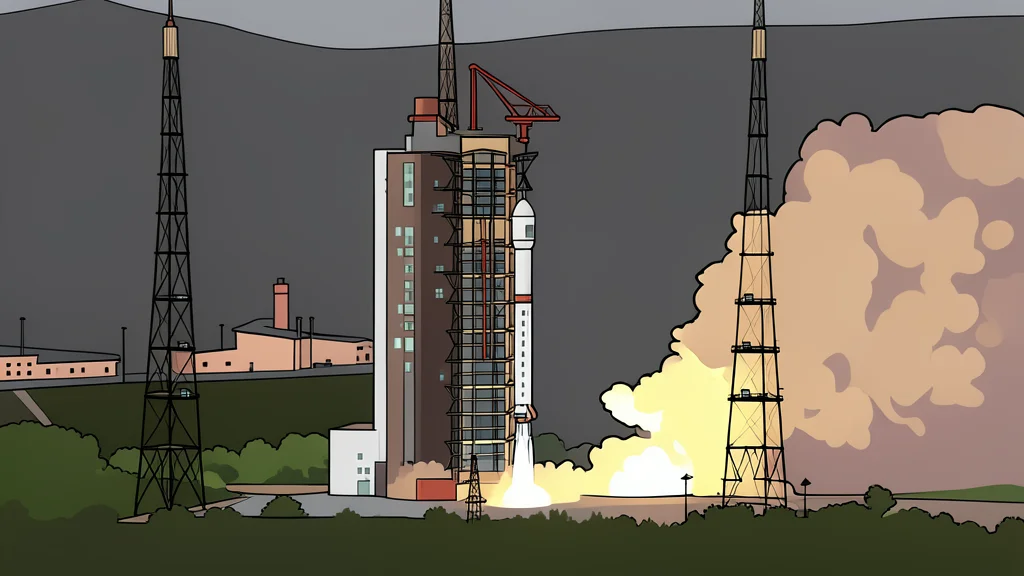
NASA has officially awarded SpaceX the contract to launch the StarBurst observatory, a dedicated instrument for tracking short gamma-ray bursts. This selection adds to SpaceX’s extensive portfolio of government missions, reinforcing its role as a primary provider for scientific payloads. The mission is scheduled to fly on a Falcon 9 rocket from Florida, aiming for a launch window no earlier than 2028. According to GN auto tech/space, this award fits within a broader $1 billion contract that allows NASA to order multiple rideshare launches over a decade. This move highlights the growing reliance on commercial launch providers for specialized astrophysics tasks, even as the company shifts some of its own satellite deployments to newer, larger vehicles.
The primary goal of StarBurst is to observe the intense high-energy flashes generated when two neutron stars merge. These events are among the most energetic phenomena in the cosmos, releasing vast amounts of gamma radiation. The satellite is equipped with twelve specialized detectors capable of sensing gamma rays in a specific energy range. This setup allows the observatory to monitor the entire sky not blocked by Earth, providing a continuous watch for these fleeting cosmic explosions. By focusing on these short bursts, scientists hope to gain a clearer understanding of the physical processes that occur during these catastrophic stellar collisions.
Enhanced Sensitivity for Cosmic Detection
StarBurst offers a significant upgrade in detection capability compared to previous instruments. It provides more than five times the effective collecting area of the Fermi Gamma-ray Burst Monitor, which has been a key tool in this field. This increased sensitivity means the satellite could identify up to ten short gamma-ray bursts each year. The trade-off for this enhanced sensitivity is the use of a compact SmallSat platform rather than a large, dedicated space telescope. This approach allows for rapid development and lower costs, but it limits the overall size and power of the instrument. Scientists must rely on this smaller footprint to capture enough data to validate their models of neutron star behavior.
Combining Signals for Deeper Insight
The true value of StarBurst lies in its ability to work in tandem with other detection methods. By combining gamma-ray observations with gravitational wave data and optical telescope follow-ups, researchers can build a complete picture of a single event. This multimessenger approach was pioneered in 2017 when astronomers first linked a specific gamma-ray burst to a neutron star merger. This confirmation helped establish that these collisions are responsible for forging heavy elements like gold and platinum. StarBurst will expand this dataset, allowing scientists to test theories about the expansion of the universe and the fundamental physics of matter under extreme conditions.
Cost-Effective Science Through SmallSats
The mission is part of NASA’s Astrophysics Pioneers Program, which focuses on lower-cost investigations using compact platforms like SmallSats and balloons. The program caps mission costs at twenty million dollars, encouraging efficient design and rapid deployment. This strategy contrasts with traditional large-scale telescope missions, which can take decades to plan and build. While the smaller size limits the total amount of data collected in a single pass, it allows for more frequent opportunities to observe transient events. For the scientific community, this represents a shift toward agile, responsive observation that can quickly target new cosmic phenomena as they appear.