SpaceX Completes Satellite Network on 700th Falcon Launch
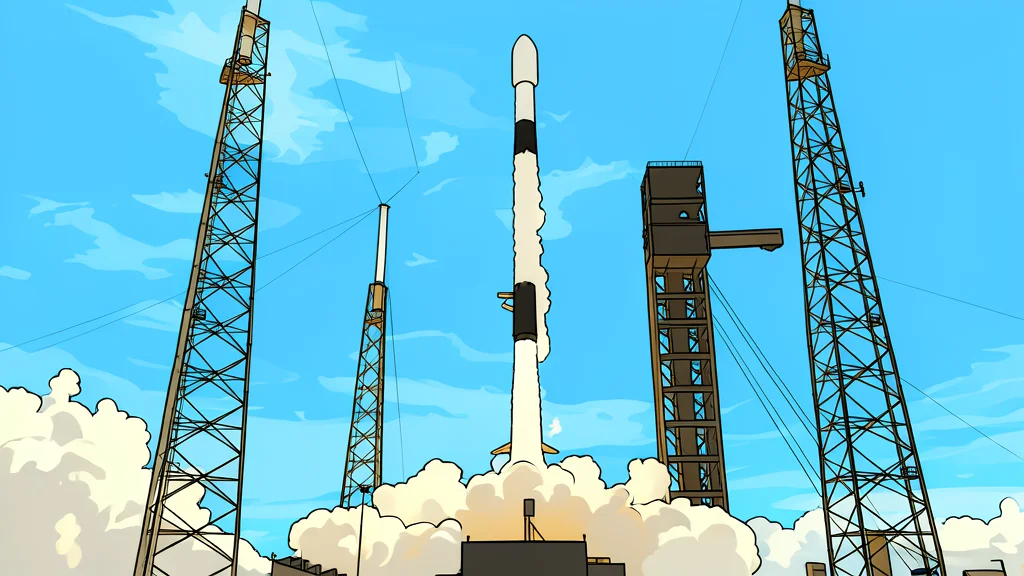
A routine lift-off from Florida marked a significant milestone for commercial spaceflight, delivering the final components of a global communications network.
SpaceX launched three telecommunications satellites into orbit on September 13, completing the O3b mPOWER constellation. The mission represented the 700th flight for the company's Falcon rocket family, a cumulative total that underscores the shift from experimental launches to a high-frequency commercial service. The payload, built by Boeing for Luxembourg-based SES, was designed to provide low-latency connectivity for industries that rely on constant network uptime.
As reported by GN auto tech/science: space discovery, the launch occurred from Cape Canaveral Space Force Station in Florida. The Falcon 9 rocket ascended smoothly, placing the satellites into medium Earth orbit. This specific deployment finishes the constellation, which now consists of thirteen operational spacecraft. The network is engineered to offer predictable performance and flexibility, serving as a backbone for digital infrastructure in various sectors.
Reusable booster lands in Atlantic
The first stage of the rocket, designated B1080, returned to Earth less than nine minutes after liftoff. It landed on the SpaceX drone ship A Shortfall of Gravitas in the Atlantic Ocean. This was the 29th flight for this specific booster, highlighting the company's strategy of reusing hardware to reduce costs. The upper stage continued its trajectory to deploy the satellites at an altitude of approximately 8,000 kilometers.
Satellites finish global coverage network
The three new satellites, each weighing roughly 1,700 kilograms, were released over a 14-minute period starting about 33.5 minutes after launch. SES already operated ten satellites in this orbit, and the addition of these final units completes the system. The network pairs software-defined satellites with a ground ecosystem to manage bandwidth demands. This setup allows for guaranteed performance levels, which is critical for applications where downtime is not an option.
Milestone reflects high launch frequency
This launch was the 107th orbital mission for SpaceX in the current year. The Falcon 9 rocket has accounted for 105 of these flights, while the larger Falcon Heavy conducted the remaining two. The Falcon family has a history dating back to 2006, with the Falcon 1 performing five test flights before the Falcon 9 became the primary workhorse. The high volume of launches demonstrates a mature operational rhythm that supports both commercial and scientific objectives in orbit.
The trade-off for this high frequency is the intense logistical pressure on launch infrastructure and regulatory oversight. However, the successful landing of the booster and the precise deployment of the satellites show that the system can maintain reliability at scale. This mission solidifies SpaceX's position as the dominant provider of orbital access, while SES gains a fully operational network for its global connectivity services.