Kenya Opposition Urges Uganda to Avoid Electoral Interference

Prominent Kenyan politicians have issued a sharp warning to neighboring Uganda, alleging that foreign nationals are being mobilized to influence the upcoming 2027 general elections.
Jack Wamboka, a Member of Parliament for the Bumula constituency, and George Natembeya, the Governor of Trans Nzoia, have cautioned their regional counterparts against any involvement in Kenya’s domestic political processes. The two leaders, who are aligned with the Linda Mwananchi coalition, specifically addressed President Yoweri Museveni of Uganda, urging him to discourage his citizens from crossing into Kenya to participate in the 2027 polls. According to the report from GN auto geopolitics/africa: Kenya elections, the politicians contend that the current administration is permitting foreign actors to entangle themselves in internal affairs, a move they view as a threat to national sovereignty.
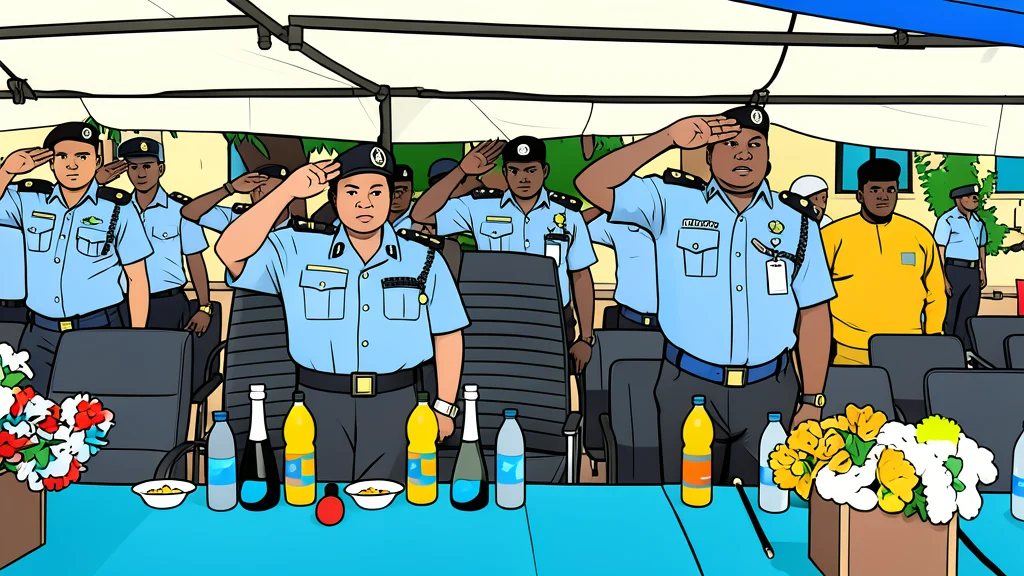
The warnings emerged during a public event in Bumula where local elders were issued uniforms. Wamboka linked the recent government crackdown on Burundian nationals to political motivations, alleging that some foreigners were targeted for refusing to acquire Kenyan identification documents and for declining to support President William Ruto’s re-election bid. He asserted that Kenyans should be the sole arbiters of their leadership, stating that any attempt to use foreign voters would undermine the integrity of the democratic process. The opposition figures maintain that the expulsion of these individuals was not merely an immigration matter but a response to their refusal to align with the incumbent’s political agenda.
Government Denies Political Motive in Removals
The Kenyan government has consistently maintained that actions taken against foreign nationals are strictly rooted in compliance with immigration laws and business regulations. Officials argue that the enforcement of these rules is necessary to protect the rights of citizens and to ensure that the economic benefits of migration are shared equitably. However, the opposition narrative suggests a different interpretation, pointing to the timing and the specific demands placed on the affected communities as evidence of a strategic political operation. This divergence in perspective highlights the ongoing tension between state security objectives and the perception of political maneuvering in the run-up to the next general election.
The debate over foreign influence is further complicated by the broader context of regional political dynamics. While the government emphasizes legal compliance, critics argue that the rhetoric surrounding the removal of Burundians serves to galvanize domestic support by framing the issue as a defense of national identity. The opposition has seized upon this narrative to question the transparency of the administration’s actions, suggesting that the crackdown is a tool to consolidate power rather than a genuine effort to regulate immigration. This dispute underscores the sensitivity of cross-border relations in East Africa, where political allegiances and national interests often intersect in complex ways.
Opposition Consolidates Regional Alliances
Amidst the warnings to Uganda, Wamboka and Natembeya also signaled a significant shift in the opposition’s strategic posture. They formally endorsed Senator Edwin Sifuna as their candidate for the 2027 presidential race, following Natembeya’s decision to withdraw his own ambitions. Wamboka claimed that support for Sifuna is spreading rapidly beyond Western Kenya, with momentum building in Central, Nyanza, and other key regions. He described a growing consensus among opposition leaders who are seeking to present a unified front against the incumbent administration. This consolidation of support marks a pivotal moment in the political landscape, as the opposition moves from a fragmented state to a more coordinated challenge.
Natembeya emphasized that the upcoming election will be shaped by strong regional blocs, citing the influence of leaders such as Kalonzo Musyoka in Ukambani and Rigathi Gachagua in Central Kenya. He questioned the incumbent’s ability to secure a second term if these opposition-led regions maintain their cohesion. The governor argued that the political landscape has changed significantly since the 2022 election, where Ruto’s victory was built on a broad coalition that included Western Kenya. By asserting that these regions are now firmly aligned against the government, the opposition aims to portray the incumbent as increasingly isolated from key voting centers.
Questioning the Incumbent’s Track Record
The opposition leaders have also focused their critique on President Ruto’s performance over his tenure. Natembeya pointed to the fifteen years Ruto spent as a deputy president before assuming the presidency, arguing that this extensive period in office should have been sufficient to deliver tangible change. He challenged the notion that more time is needed for the incumbent to fulfill his promises, suggesting that the lack of progress is a deliberate choice rather than a result of insufficient opportunity. This argument is designed to resonate with voters who have felt disillusioned by the pace of development and economic reforms under the current administration.
As the 2027 election approaches, the interplay between domestic politics and regional relations will likely intensify. The opposition’s strategy of framing the election as a defense of national sovereignty against foreign interference resonates with a segment of the electorate that is wary of external influence. Meanwhile, the government’s insistence on legal compliance in immigration matters provides a counter-narrative that emphasizes order and stability. The coming months will be critical in determining whether these opposing narratives can be reconciled or if they will further deepen the political divide. Observers will closely watch how both sides manage the discourse on foreign influence and regional cooperation in the lead-up to the polls.