Argentina Veterans Unfurl World Cup Flag at Darwin Cemetery
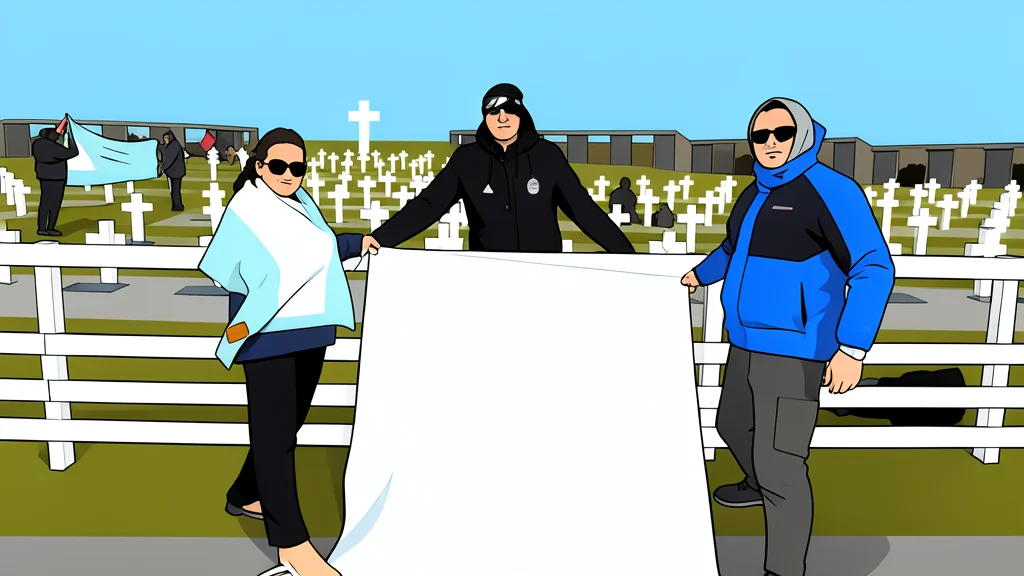
Veterans displayed a flag bearing 'The Malvinas are Argentine' at the Falklands cemetery, a symbol linked to the 2026 World Cup victory.
Key points
- Argentine veterans unfurled a flag with 'The Malvinas are Argentine' at the Darwin cemetery for the first time.
- The flag design mirrors one shown by the national football team after winning the 2026 World Cup.
- 117 of the 122 previously unidentified bodies in the cemetery have been identified as of April 2025.
A delegation of Argentine veterans and relatives of fallen soldiers displayed a flag at the Darwin cemetery in the Falkland Islands, according to reports from MercoPress. The emblem bears the inscription 'The Malvinas are Argentine' and is described by local media as a reproduction of the design shown by Argentina's national football team following their victory over England at the 2026 World Cup. This marks the first instance of this specific symbol being unfurled within the archipelago.
The group spent a week on the islands, visiting Stanley and various sites associated with the 1982 conflict. During their visit, they sang the national anthem and left items such as flowers, football shirts, and rosaries at the graves. For many participants, this was their first return to the location since the war ended, representing a personal and collective act of remembrance in a site that remains a focal point for sovereignty claims.
Identification of remains progresses
The Darwin cemetery contains 230 graves, with 121 plots previously holding unidentified bodies. In December 2016, Argentina and the United Kingdom commissioned the International Committee of the Red Cross and the Argentine Forensic Anthropology Team to identify these remains. Exhumations occurred between June and August 2017, resulting in the identification of 88 bodies by late that year. As of April 2025, 117 individuals have been identified, with five cases remaining outstanding.
Among the visitors was Gramisci, the sister of Donato, who was killed in combat just before the Argentine surrender. His remains were identified in 2018. She expressed that the cemetery is his rightful place, despite its distance from his home. Argentina has historically rejected repatriation of these soldiers, arguing they are buried on what it considers Argentine territory, which has made the site a recurring destination for family visits over the past two decades.
Political and diplomatic context
Ramón Robles, who led the group, described the trip as a humanitarian mission to close personal chapters. He stated that he applies for a new passport after each visit to avoid retaining stamps from the archipelago's authorities, a move he views as a refusal to recognize British administration. According to coverage by EFE, members of the group dismissed recent sovereignty measures by President Javier Milei as inconsequential, though this assessment was presented as a reporter's summary rather than a direct quote.
The 1982 conflict resulted in significant loss of life, with 649 Argentine soldiers, 255 British personnel, and three residents of the archipelago killed. The continued visits by veterans and families highlight the enduring emotional and political significance of the site. The display of the football-inspired flag adds a new layer of cultural symbolism to the ongoing territorial dispute, linking sporting triumphs with national identity in a geopolitically sensitive context.