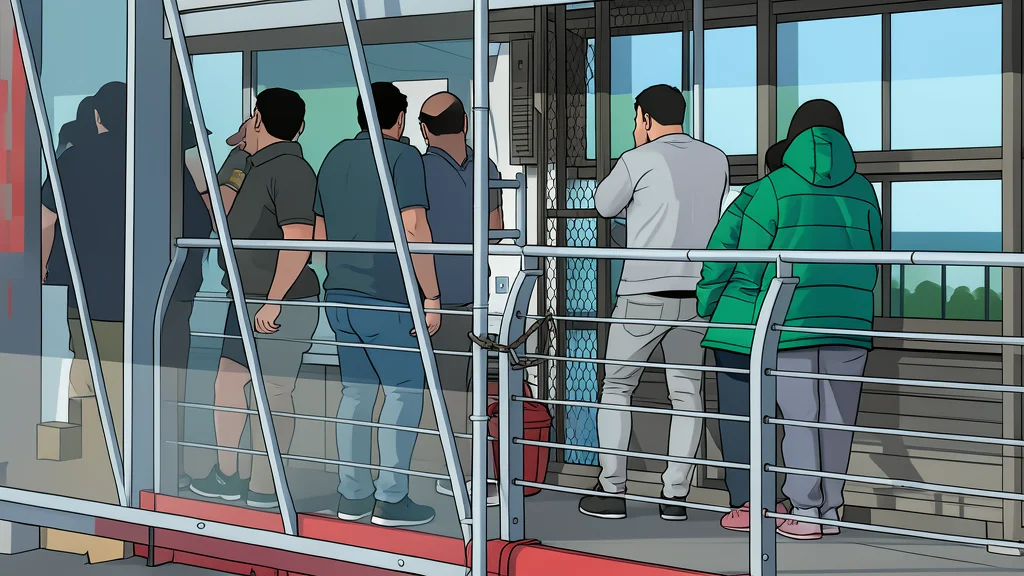
Federal Split Deepens over Mandatory Immigration Detention
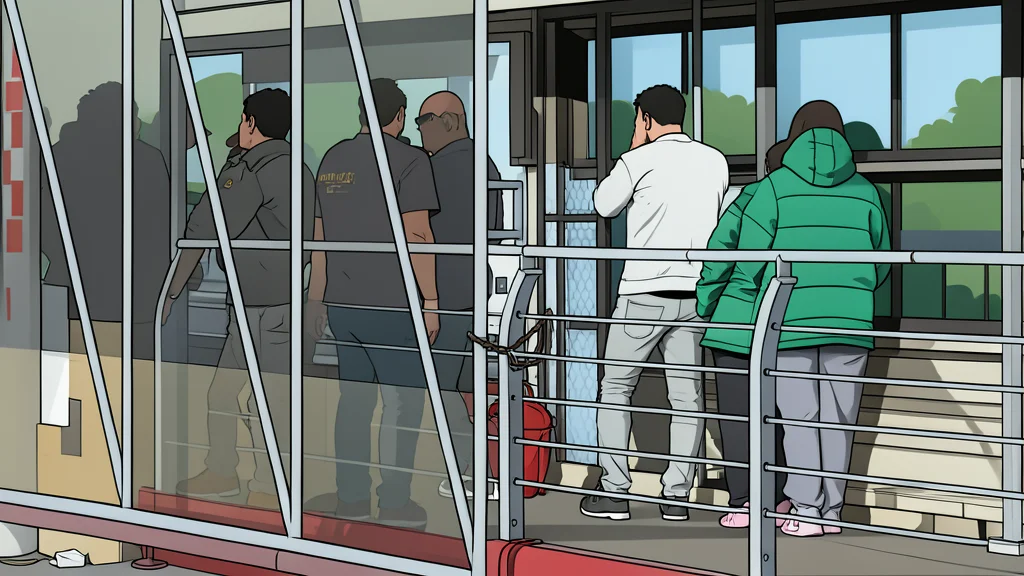
A divided federal appeals court ruled that the administration's mandatory detention policy is illegal, citing historical precedents of mass incarceration. This decision widens a legal conflict that is likely to reach the Supreme Court.
The Fourth Circuit Court of Appeals issued a ruling on Thursday declaring the Trump administration’s policy of mandatory detention for immigrants without bond hearings to be unlawful. In a divided 2-1 decision, the court characterized the practice as reminiscent of some of the most troubling chapters in American history, specifically referencing the internment of Japanese Americans during World War II. This judgment marks the ninth federal appeals court to reject the administration’s interpretation of immigration law, creating a significant legal fracture across the federal judiciary.
According to GN geopolitics/migration (en-US), the ruling intensifies a growing split among federal appellate courts. While most circuits have sided with challengers arguing that mandatory detention violates due process, two other appeals courts have upheld the administration’s position. This inconsistency means that noncitizens facing similar charges may receive bond hearings in some regions while facing indefinite detention in others, including Texas and Louisiana. The divergence significantly increases the likelihood that the U.S. Supreme Court will intervene to resolve the conflicting interpretations.
Legal Arguments Over Statutory Interpretation
The core of the dispute centers on a 1996 immigration law provision. The administration, led by President Donald Trump and Homeland Security Secretary Markwayne Mullin, argues that Congress intended this clause to allow mandatory detention for noncitizens arrested within the interior of the United States. They contend that previous administrations simply failed to enforce the statute as written. However, the majority opinion in the Fourth Circuit rejected this view, stating that Congress would have been more explicit if it intended to authorize the detention of millions of people without individualized hearings.
The dissenting judge, nominated by President Donald Trump, sided with the government’s interpretation. In contrast, the majority judges, nominated by Presidents Barack Obama and Joe Biden, emphasized the constitutional implications of the policy. They noted that the administration’s approach affects due process rights for noncitizens who have lived and worked in their communities for years. The court’s language was stark, describing the policy as more expansive than previous historical instances of mass detention.
Historical Context in Judicial Reasoning
The majority opinion drew direct parallels between current policies and past injustices. Judge Nicole Berner, writing for the majority, cited the detention of Japanese Americans and the mass incarceration of Chinese immigrants in the late 19th century. She argued that the current administration’s policy is even broader in scope than these historically condemned actions. This rhetorical framing serves to contextualize the legal issue within a broader narrative of civil liberties and the rule of law.
Legal advocates have pointed to the government’s inconsistent track record as evidence against the administration’s position. Michael K.T. Tan, a lawyer for the ACLU’s Immigrants’ Rights Project, argued that the government’s own history of enforcement undermines its claim that it is simply following the law. The lawsuit, which originated in the Fourth Circuit, is part of a broader national challenge to the expansion of mandatory detention beyond border crossings.
Administrative Response and Future Outlook
The Department of Homeland Security responded to the ruling with a statement expressing confidence in its legal position. The agency noted that it had recently petitioned the Supreme Court to take up the issue, signaling its intent to seek a definitive national standard. The administration maintains that enforcing mandatory detention is necessary for public safety and is consistent with the statutory language of 1996.
As the legal battle moves toward the Supreme Court, the immediate impact remains uneven across the country. Immigrants in jurisdictions where courts have rejected the policy continue to access bond hearings, while those in other circuits face continued detention. The next critical step will be the Supreme Court’s decision on whether to grant certiorari, which would settle the conflicting circuit opinions and determine the fate of mandatory detention nationwide.