Modi and Xi Reaffirm Commitment to Border Peace
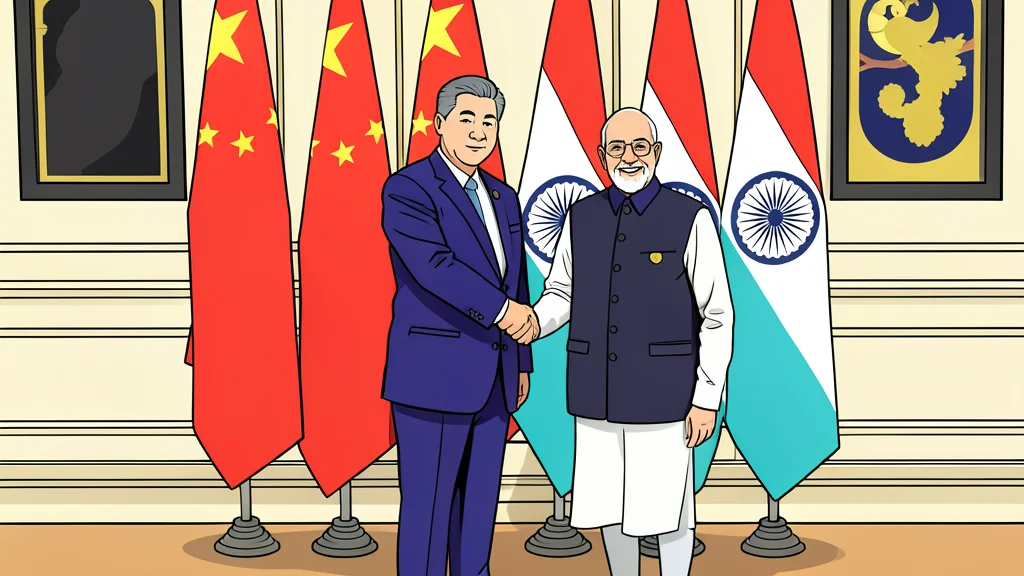
During the BRICS Summit, Indian and Chinese leaders emphasized that resolving boundary disputes is foundational to their broader bilateral relationship.
Prime Minister Narendra Modi and Chinese President Xi Jinping have reiterated their shared commitment to a fair and mutually acceptable resolution of the long-standing boundary dispute between their two nations. Speaking during their bilateral meeting on the sidelines of the BRICS Summit, the leaders agreed that this issue should be viewed through the lens of their overall strategic relationship rather than in isolation. According to reports, both heads of state stressed that a political approach to the boundary question is essential for the long-term stability and development of ties between New Delhi and Beijing.
This engagement marks the second direct dialogue between the two leaders since their previous meeting in Tianjin in August 2025. The formulation of a 'fair, reasonable, and mutually acceptable' settlement reflects a desire to move beyond immediate tactical issues toward a strategic framework. By prioritizing the broader interests of their respective peoples, the leaders aim to ensure that differences do not escalate into broader disputes, thereby maintaining a foundation for continued cooperation in other areas.
Strategic Framework for Bilateral Ties
Modi emphasized that peace and tranquility in border regions serve as an essential basis for the continued development of relations. He urged both sides to strictly observe existing agreements and understandings regarding border-related issues. The Prime Minister articulated a guiding principle for the relationship, citing three key mutuals: respect, sensitivity, and interest. This approach seeks to create a predictable environment where diplomatic channels remain open and functional, even when specific points of contention persist.
The meeting also highlighted the importance of expanding people-to-people connections, cultural exchanges, and business linkages. Both leaders recognized that economic and social integration can reinforce political dialogue. According to GN geopolitics/border, this multifaceted engagement is significant because it builds on the progress made since 2024, when the two sides reached understandings on patrolling arrangements along the Line of Actual Control. These steps have paved the way for a series of high-level engagements that aim to normalize and deepen the bilateral relationship.
Trade and Regional Cooperation
Beyond the boundary question, the leaders addressed structural trade imbalances and supply-chain issues. They underlined the need to facilitate meaningful and predictable market access while addressing each other’s concerns. This economic dialogue is intended to complement the political dialogue, ensuring that commercial interests are aligned with strategic stability. The leaders agreed to continue expanding common ground on regional and global challenges, working together to address emerging issues that affect both nations and the wider international community.
The context of the BRICS Summit adds another layer of significance to these discussions. China is preparing to take over the BRICS chairmanship from India and will host the grouping’s summit next year. Modi appreciated China’s support for India’s current chairship and its contribution to the success of the New Delhi summit. Meanwhile, President Xi, in his address to the BRICS session, called on members to remain sincere and candid, seeking common ground while respecting differences and core concerns. This collective emphasis on dialogue and steady cooperation sets the tone for the upcoming transition of leadership within the bloc.
Looking Ahead to Next Steps
The forward-looking aspect of this agreement lies in the sustained implementation of the agreed-upon principles. Observers will be watching to see how the 'three mutuals' are applied in practice, particularly in managing border interactions and resolving trade friction. The success of these measures will depend on consistent communication and a willingness to handle differences constructively. As China assumes the BRICS chair, the dynamics of this multilateral forum may also influence bilateral interactions, providing additional platforms for dialogue and cooperation.
Ultimately, the commitment to a fair and reasonable settlement signals a desire for stability in a region of significant geopolitical importance. The next steps will involve detailed diplomatic consultations to translate these high-level statements into concrete actions. The focus will remain on ensuring that peace in border areas remains the cornerstone of the relationship, allowing for the expansion of economic and cultural ties. The coming months will likely see increased engagement at various levels, testing the durability of the newly articulated strategic perspective.