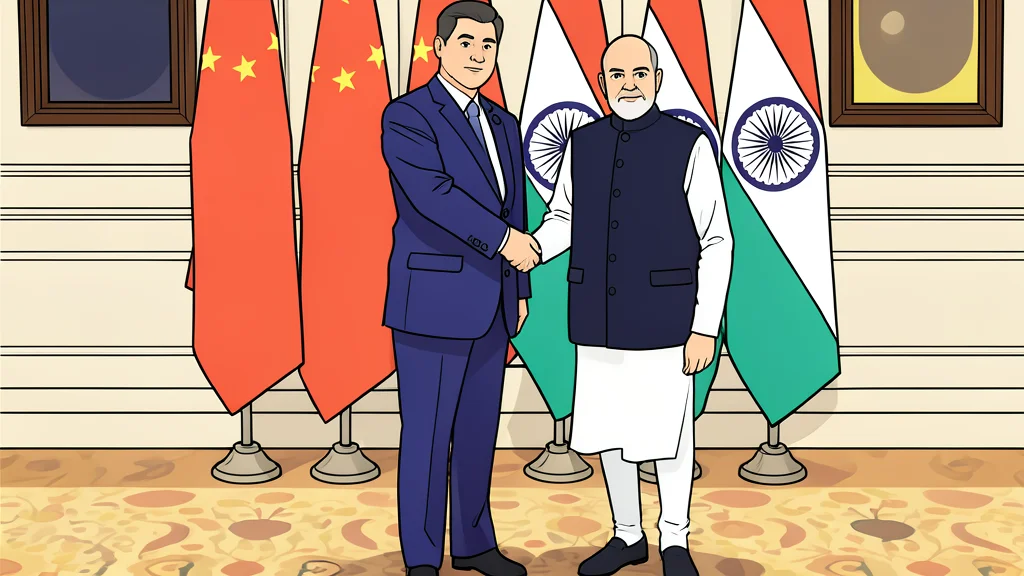
Modi and Xi Reaffirm Commitment to Border Stability
Prime Minister Narendra Modi and President Xi Jinping emphasized that peace along the Line of Actual Control is fundamental to the future of India-China relations, according to statements released after their meeting in New Delhi.
Prime Minister Narendra Modi and Chinese President Xi Jinping have reaffirmed that maintaining peace and tranquility in border areas is an essential foundation for the continued development of bilateral ties. The two leaders met on Saturday in New Delhi on the sidelines of the BRICS Leaders’ Summit, where they agreed that differences should not escalate into disputes and that both nations must adopt a strategic, long-term perspective toward their relationship.
According to the Ministry of External Affairs, the Prime Minister stressed the need for both sides to strictly observe existing agreements and understandings regarding border-related issues. This emphasis on established protocols follows a period of significant tension, particularly the military standoff in eastern Ladakh from 2020 to 2024, which has since eased following a series of diplomatic engagements.
Strategic Continuity in Diplomatic Engagements
The recent meeting in India marks a consistent diplomatic thread connecting this encounter with previous summits in Kazan, Russia, and Tianjin, China. In each instance, Modi has underscored the critical importance of border peace as a prerequisite for broader bilateral cooperation. Analysts note that this consistent messaging reflects a deliberate strategy to ensure that strategic disagreements do not overshadow the potential for economic and political collaboration between the two Asian giants.
During the New Delhi talks, the leaders welcomed the steady progress in bilateral relations observed since their last meeting. They agreed to be guided by the principles of mutual respect, mutual sensitivity, and mutual interest. These frameworks are intended to provide a structured approach to navigating complex geopolitical landscapes while fostering a stable environment for trade and diplomatic exchange.
Ongoing Military Coordination Along the LAC
The high-level diplomatic dialogue comes shortly after senior military commanders from both nations conducted two consecutive flag meetings along the Line of Actual Control in Arunachal Pradesh. These engagements, held on September 6 and 7, were aimed at managing on-ground positions and preventing misunderstandings between the Indian Army and the People’s Liberation Army. According to sources cited by GN geopolitics/border, the Indian military has maintained a firm stance on specific positions in the Upper Subansiri district, reflecting the continued complexity of the de facto boundary.
In August, National Security Adviser Ajit Doval and Chinese Foreign Minister Wang Yi met in Beijing to discuss the political settlement of the disputed boundary. They agreed to continue seeking a resolution that addresses the long-term interests of both sides. This ongoing process highlights the dual-track approach currently employed by New Delhi and Beijing, combining high-level political dialogue with technical military coordination to manage friction points.
Future Outlook for Bilateral Relations
As the two nations move forward, the focus remains on whether the current diplomatic momentum can be sustained despite persistent differences in territorial perceptions. The next steps will likely involve further technical discussions and continued monitoring of the border situation to ensure that the agreed-upon protocols are upheld. Observers will be watching closely to see if the emphasis on strategic patience leads to a more stable and predictable relationship in the coming months.