Latin American Migrants Stranded in West Africa After U.S. Deportations
U.S. immigration authorities have deported individuals from Latin America to Liberia, a destination many did not expect. These migrants describe a state of limbo, separated from families and lacking clear legal pathways to return home or integrate locally.
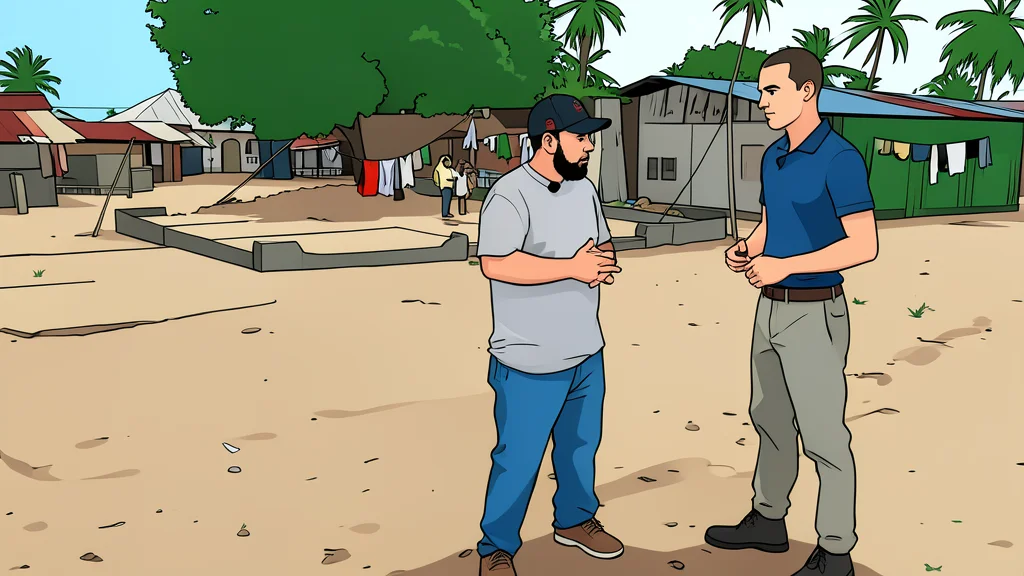
In a remote coastal area of Monrovia, Liberia, a group of migrants find themselves in an unexpected and precarious situation. None are Liberian citizens, and many are not even from the African continent. Instead, they originate from countries across Latin America, including Brazil, Colombia, Guatemala, Honduras, and Venezuela, as well as other African nations like Cameroon and Eritrea. According to GN geopolitics/migration (en-US), these individuals were removed from the United States last month by U.S. immigration officials.
The deportees describe a profound sense of isolation, feeling stranded on the other side of the world. Many have spouses and children remaining in the United States, creating a painful separation. While some had legal protections preventing their return to their home countries due to fears of persecution, they are now in a third country with no established ties, leaving them in a legal and logistical void.
Legal Protections and Third-Country Removal
Most of the individuals interviewed had obtained legal protections in American immigration courts. These protections were intended to prevent deportation to their home countries where they faced risks of harm or torture. However, under the current administration's policy, these individuals are being targeted for removal to third countries because they lack valid permanent immigration status, despite their limited legal safeguards in the U.S.
The deportees report that they were not notified by U.S. Immigration and Customs Enforcement that they would be sent to Liberia. They also state that they were not given the opportunity to challenge their deportation to West Africa. This lack of prior notice has left many shocked and unprepared for the drastic change in their circumstances.
Personal Accounts of Displacement
Elvis Rodriguez Venturas, a Honduran national, expressed deep concern about his situation. He noted that his four children, two of whom are U.S. citizens, ask him daily when he will return to Texas, where he worked in construction. His wife also remains in the United States. Rodriguez Venturas stated that he had previously used his legal protection to work legally in the U.S. before his detention.
Paola Ferreira Dos Santos, a Brazilian immigrant and the only woman among the Latin American deportees in Liberia, shared that she only learned of her destination when the flight landed in Monrovia. She recalled being the first to disembark and being told she was in Africa. Arin Garcia Yepes, a Colombian immigrant, noted that he had never even heard of Liberia before this event. These accounts highlight the disorientation and lack of preparedness experienced by those subjected to this new deportation tactic.
Official Responses and Criminal Records
While U.S. officials have stated that their deportation efforts are primarily focused on individuals they describe as the worst of the worst, a review of the names of those sent to Liberia suggests otherwise. According to reports, the vast majority of these individuals had no criminal charges or convictions beyond immigration violations, such as entering the country illegally. This discrepancy raises questions about the criteria used for selecting deportees for third-country removal.
The Department of Homeland Security stated that individuals in the U.S. illegally could choose to self-deport and receive a stipend. The department added that the administration is utilizing all lawful options to carry out a significant deportation operation. The State Department has declined to provide detailed information on the diplomatic communications with other governments regarding these third-country deportation deals, citing a lack of comment on diplomatic details.
The situation in Liberia presents a complex geopolitical and humanitarian challenge. As a small country with limited resources, it faces the burden of hosting individuals with whom it has no prior connection. The forward question remains how these migrants will navigate their legal status, secure work, and maintain family ties from such a distant location, while U.S. policy continues to evolve in its approach to immigration enforcement.