Lula Warns UN Credibility at Historic Low Amid Global Conflicts
Brazil’s president urged stronger global action on war while defending national sovereignty against foreign interference.
Key points
- Lula warned that UN credibility is at an all-time low due to the failure to prevent rising global conflicts.
- The president rejected U.S. designations of Brazilian gangs as foreign terrorist organizations, citing electoral interference concerns.
- Lula urged the Security Council to reform and restore its capacity for mediation amidst a surge in armed violence.
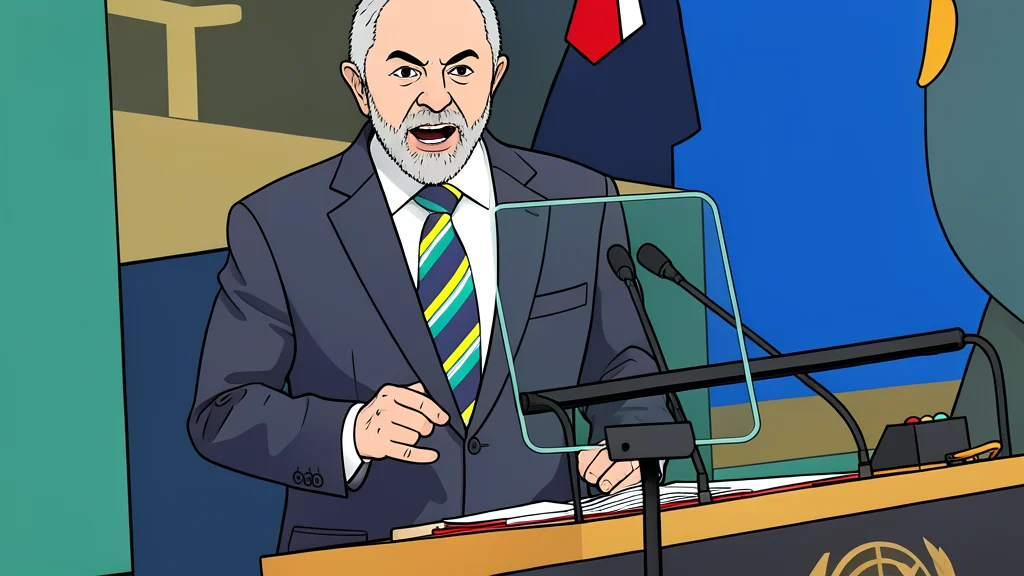
Brazilian President Luiz Inácio Lula da Silva addressed the United Nations General Assembly on Tuesday, delivering a stark assessment of the global order. According to the Pasadena Star News, Lula warned that the international body’s credibility has reached an all-time low as armed conflicts surge worldwide.
The remarks came just before U.S. President Donald Trump took the podium, setting a tone of heightened diplomatic friction. Lula emphasized that nations must refrain from interfering in the internal affairs of others, a point he framed as essential to preserving democratic processes in Brazil ahead of its upcoming elections.
Defending Sovereignty Amid Electoral Tensions
Lula’s speech highlighted growing strains in relations with Washington, particularly regarding allegations of foreign influence in Brazil’s October elections. He asserted that Brazilian democracy belongs solely to its citizens and rejected what he described as external attempts to undermine the popular will. The president noted that Brazil is no one’s backyard and warned against disinformation campaigns that distort public debate.
These comments follow recent U.S. decisions to designate two Brazilian criminal groups as foreign terrorist organizations. Lula rejected the move, arguing that it risks interfering in the electoral process by portraying his administration as weak on organized crime. He maintained that Brazil will not outsource the responsibility of defending its own borders or internal security.
Critique of Multilateral Institutions
Beyond bilateral tensions, Lula directed a sharp critique at the United Nations’ effectiveness. He argued that the organization has failed in its primary mission to prevent war, citing the record number of armed conflicts observed in 2025. The president called for significant reform of the Security Council to restore the institution’s capacity for dialogue and mediation.
Lula described the current geopolitical landscape as a choice between multilateralism and global fragmentation. He warned that concessions to the law of the stronger have surpassed acceptable limits, characterizing the situation as a complete breakdown of political norms. According to him, the world is witnessing a new arms race financed by trillions of dollars, threatening long-term stability.
Forward-Looking Diplomatic Challenges
As Brazil prepares for a pivotal election cycle, the next few weeks will test the resilience of its democratic institutions against external pressure. Observers will watch how Washington responds to Lula’s criticism and whether the U.S. maintains its current posture on trade and security matters involving Brazilian criminal organizations.
The broader international community will also monitor whether the call for UN reform gains traction among other member states. The outcome of these diplomatic exchanges could shape future cooperation on global security issues and the trajectory of multilateral engagement in an era of rising conflict.