Seniors Drive EVs to Ottawa for Climate Policy Push
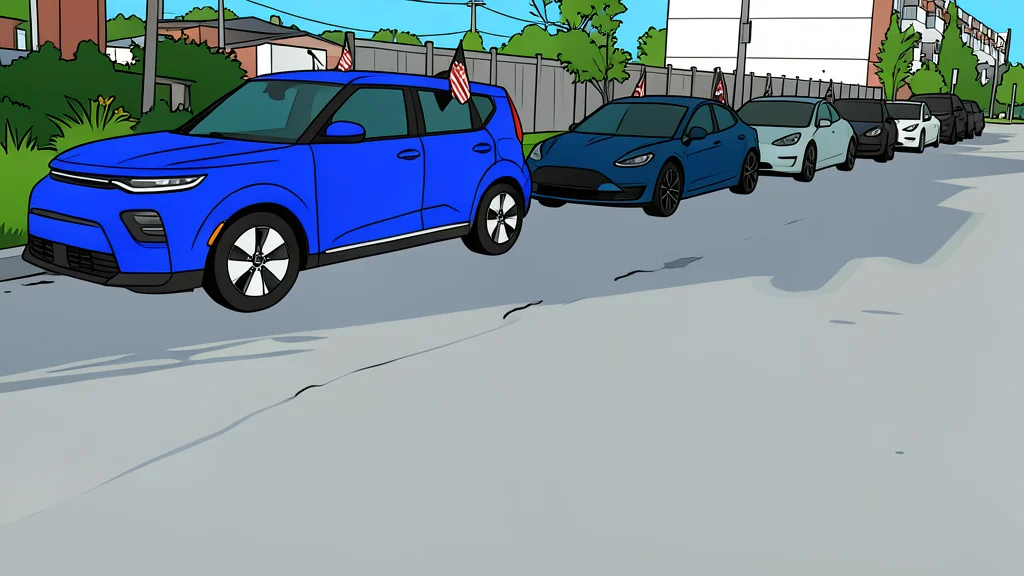
A cross-country caravan of older drivers in electric vehicles is approaching Parliament Hill to advocate for stronger federal climate commitments amid ongoing debates over Canada's net-zero trajectory.
A caravan of senior citizens traveling in electric vehicles has reached the Prairies as part of a cross-country journey aimed at urging the federal government to adopt more aggressive climate policies. The group, organized by the Seniors’ Climate Witness, began its trek in Victoria, British Columbia, and recently made a stop in Regina, Saskatchewan, before continuing toward Ottawa. Participants argue that individual actions like adjusting thermostats are insufficient and that collective political pressure is required to address the climate crisis.
According to GN geopolitics/climate (en-US), the initiative gained momentum during the recent wildfire season, coinciding with federal decisions regarding major fossil fuel infrastructure projects. Co-founder Michael Polanyi stated that the timing highlighted a contradiction between investing in new oil pipelines while communities face extreme weather events. He advocated for redirecting funds toward electric vehicles, renewable energy infrastructure, and critical minerals to better protect future generations.
Arrival coincides with parliamentary session
The caravan is scheduled to arrive in Ottawa on Friday, where it will merge with a similar group coming from Atlantic Canada. This timing aligns with the fall sitting of the House of Commons, providing the activists with a direct opportunity to lobby members of Parliament. The group hopes to secure meetings with politicians to present their case for accelerated emissions reductions and cleaner energy investments.
Canada lags behind emission targets
The advocacy effort comes against a backdrop of recent data suggesting Canada is significantly behind its international commitments. A report from the Canadian Climate Institute indicates the country is more than 20 years off track for its greenhouse gas reduction goals. Rick Smith, president of the institute, described the gap as a mathematical fact, noting that the current trajectory is incompatible with the 2050 net-zero target without substantial policy overhauls.
Government emphasizes pragmatic energy transition
In response to such critiques, the federal government maintains its commitment to reaching net-zero emissions by 2050 through what officials describe as a pragmatic approach. A press secretary for the Minister of Environment and Climate Change highlighted the government's focus on building clean energy projects and driving mass electrification. This includes new targets for electric vehicle sales and a national strategy to expand charging infrastructure, following the recent repeal of the previous zero-emission vehicle mandate.