Malaysia Urges BRICS to Reject Settler Colonialism at Summit
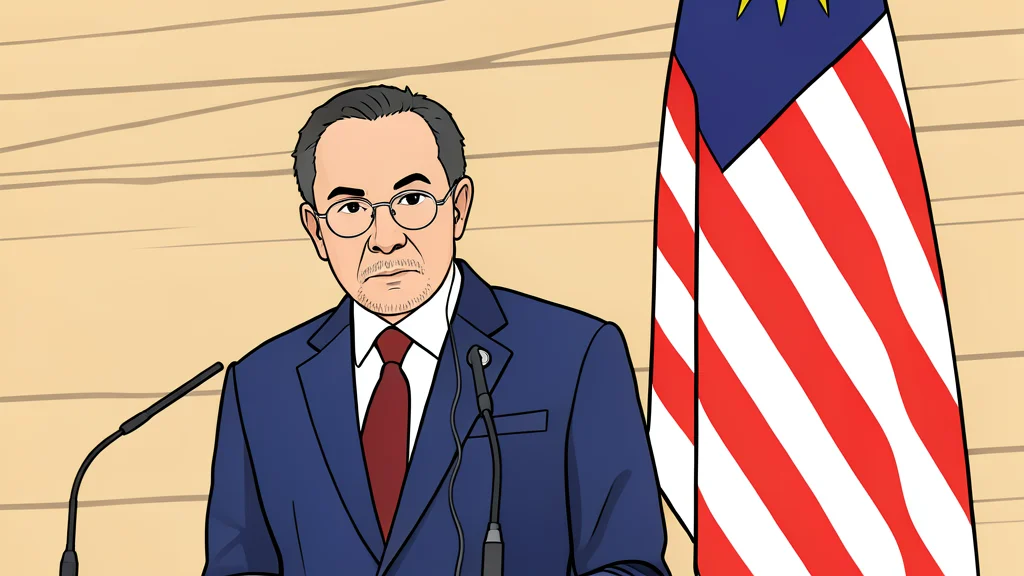
The Malaysian prime minister called for a unified BRICS stance against occupation and settler colonialism, arguing that regional conflicts destabilize global economic stability.
Speaking at the annual BRICS summit in New Delhi, Malaysian Prime Minister Anwar Ibrahim issued a sharp critique of the ongoing geopolitical conflicts in the Middle East. He urged the bloc to explicitly condemn what he described as occupation and settler colonialism, arguing that these dynamics have far-reaching consequences that extend well beyond the immediate region. According to the prime minister, the current state of affairs drives up inflation and introduces uncertainty into global markets, undermining the collective goal of inclusive growth.
Ibrahim emphasized that the bloc cannot champion prosperity while war disrupts critical trade routes and energy supplies. He warned that the economic arteries of the global system are under threat, noting that no life should be valued less based on where it is lived. The remarks were delivered during an open session focused on resilience and sustainable development, where the leader sought to align the bloc’s foreign policy with its economic interests.
Economic stability amid regional conflict
The Malaysian leader highlighted the direct link between geopolitical instability and economic performance. He pointed to the recent escalation involving the United States and Israel, which triggered retaliatory strikes and the closure of the Strait of Hormuz. According to reports, these events caused significant disruption to global energy flows and trade. Ibrahim argued that such disruptions threaten the sea lanes on which BRICS economies depend, making it imperative to keep global economic infrastructure out of the battlefield.
He stated that Kuala Lumpur’s position is rooted in respecting sovereignty and protecting civilians. By maintaining the stability of global trade routes, the bloc can better manage inflation and supply chain risks. The prime minister suggested that the bloc’s combined market strength offers a unique opportunity to diversify trade and reduce reliance on traditional Western markets, thereby insulating its members from external shocks.
Calls for inclusive development measures
Beyond the immediate geopolitical crisis, Ibrahim called for concrete measures to address the economic disparities within the developing world. He warned that while technology advances rapidly, many countries face debt distress and remain unable to share in the economic gains. The prime minister urged BRICS to dismantle unfair trading practices and strengthen technical cooperation in emerging fields such as semiconductors and artificial intelligence.
He emphasized the need for financing mechanisms that meet basic needs without creating unsustainable debt burdens. Initiatives through the New Development Bank, local-currency settlements, and Islamic capital markets were cited as essential tools for achieving this balance. According to the source GN geopolitics/terror, the expanded 11-member BRICS grouping, which includes nations from Asia, Africa, and the Middle East, adopted the New Delhi Declaration pledging to deepen cooperation with emerging markets and partner nations.
Diversifying trade and technological cooperation
The summit provided a platform for the bloc to reaffirm its commitment to a multilateral order. Ibrahim noted that the green transition must reflect the differing circumstances and development stages of member states. He advocated for a pace that allows all nations to participate equitably, rather than imposing a one-size-fits-all approach. This perspective aligns with the broader BRICS objective of creating a more balanced and representative global economic architecture.
As the bloc continues to expand, with new partner countries joining in 2025, the focus on shared development experience and technical training becomes increasingly important. The prime minister’s remarks underscore a strategic shift toward leveraging collective bargaining power to shape international norms. The forward question remains how these political commitments will translate into tangible economic policies and whether the bloc can maintain its unity in the face of divergent national interests.