The Lasting Legacy of Post-9/11 War Powers
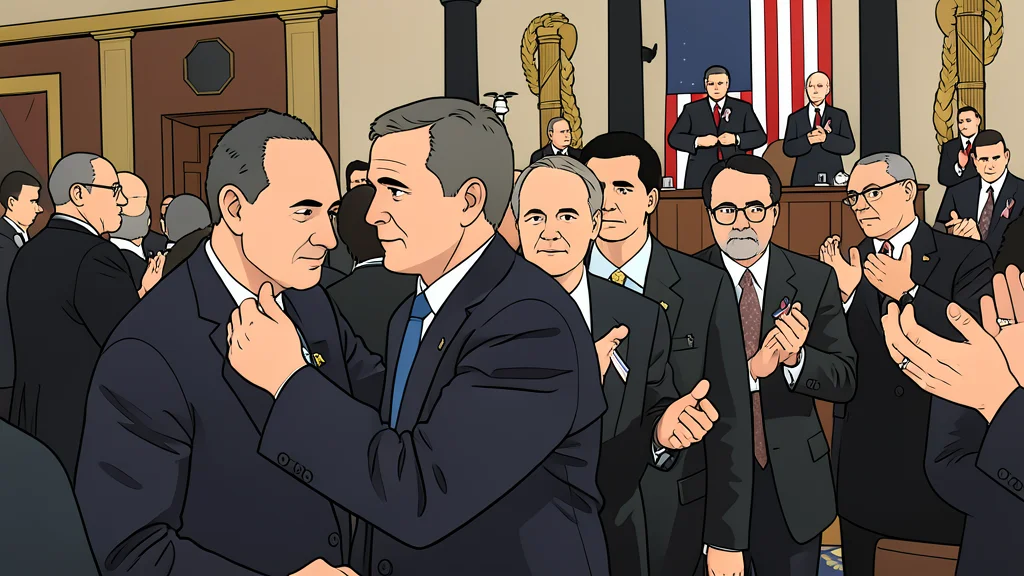
The legislative response to the September 11 attacks established a framework for executive authority that continues to define U.S. national security strategy today.
The United States operates under a persistent state of military engagement, a condition that persists despite the fact that Congress has not formally declared war since 1942. According to Foreign Policy, this enduring reality is not the result of an inevitable drift in executive power, but rather the outcome of specific legislative choices made by lawmakers. At critical junctures in history, Congress has deliberately granted presidents the authority to deploy troops and expand executive reach, creating a structural foundation for a permanent wartime footing.
The most significant of these legislative moments occurred in the immediate aftermath of the September 11 attacks. In the days following the deadliest attack on U.S. soil, Congress passed the Authorization for Use of Military Force (AUMF) with broad bipartisan support. This measure fundamentally altered the constitutional balance, granting the executive branch sweeping powers to respond to threats without the need for additional congressional approval for each subsequent action. While some members sought to narrow the scope of this authority, the final legislation remained sufficiently broad to influence national security policy for decades to come.
Legislative Response to National Trauma
The context for these legislative decisions was one of profound national shock. The destruction of the World Trade Center and parts of the Pentagon shattered the perception of geographic insulation that had long defined American security. Although the threat of nuclear weapons had long rendered global vulnerability a shared condition, the scale of the 9/11 attacks represented a unique trauma for the homeland. This event forced a rapid reassessment of how the nation would address threats that originated abroad but struck directly at the core of its territory.
The Bush administration’s approach to these events contrasted sharply with previous administrations. While the Clinton administration had addressed the 1993 World Trade Center bombing primarily through domestic law enforcement and the criminal justice system, the response to 9/11 was framed explicitly as an act of war. President Bush worked closely with congressional leaders to draft legislation that authorized military force, seeking language that would allow for the broadest possible interpretation of executive authority. This strategy aimed to create a legal framework that would surpass even the expansive powers granted during the Vietnam War era.
Broadening Executive Authority
The AUMF was designed to provide the executive branch with the flexibility needed to address the complex nature of the terrorist threat. By passing this authorization, Congress effectively shifted the burden of decision-making regarding military responses from the legislative to the executive branch. This shift allowed presidents to continue operations and expand the scope of engagement without returning to Congress for specific votes on each new phase of the conflict. The legislation thus created a mechanism for sustained military action that could adapt to evolving threats without the delays associated with traditional legislative processes.
According to Foreign Policy, the consequences of this broad grant of authority have been far-reaching. It has shaped how the nation responds to terrorist threats and has influenced the extent to which constitutional safeguards are weighed against national security imperatives. The deliberate decisions made by elected officials in the weeks following the attacks have resulted in a lasting impact on the balance of power, raising questions about the limits of executive discretion in matters of war and peace.
Constitutional Implications for Security
Understanding the legislative decisions made after September 11 is crucial for comprehending the current state of U.S. national security policy. These choices reflect a trade-off between the desire for robust protective capabilities and the preservation of traditional checks and balances. The AUMF has become a central pillar of the legal justification for military operations, illustrating how specific historical responses can evolve into enduring structural norms. As the nation faces new challenges, the legacy of this legislation continues to inform debates over the proper scope of presidential power in times of crisis.
The forward-looking challenge lies in determining how these established powers will be interpreted and applied in future conflicts. The broad language of the AUMF provides significant flexibility, but it also raises ongoing questions about accountability and the separation of powers. As geopolitical dynamics shift, the principles established in the post-9/11 era will likely continue to shape the relationship between Congress and the executive branch, influencing how the United States navigates its role in global security affairs.