Venezuela's Visual Shift Signals Political Transition
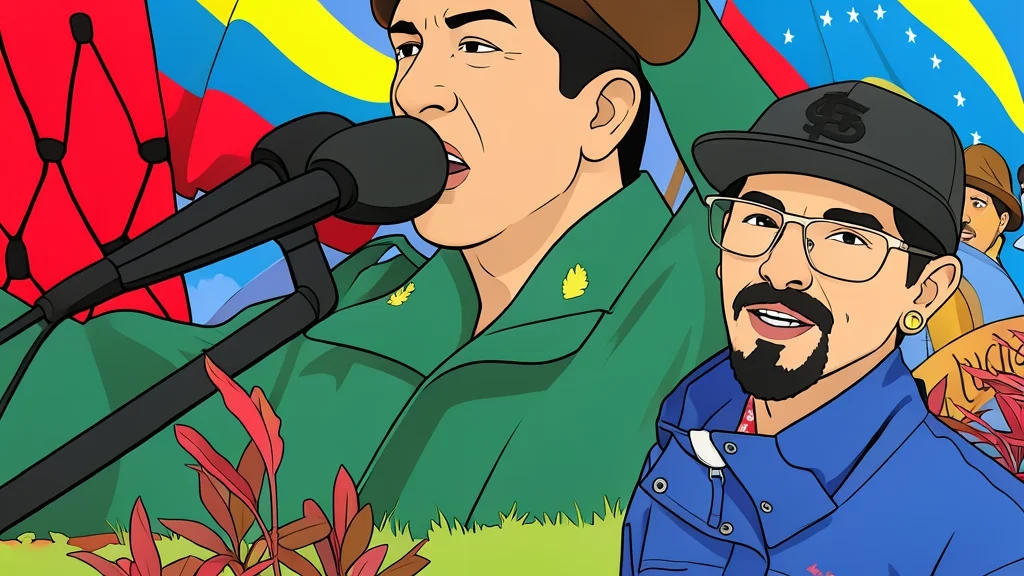
As murals of former leaders are painted over in Caracas, observers debate whether this cosmetic change marks a genuine break from the past or merely a rebranding under external pressure.
In the central squares of Caracas, the visual landscape is undergoing a rapid transformation. Large murals depicting Hugo Chavez and other figures associated with the Chavista movement are being removed or covered with fresh blue paint. This physical erasure accompanies a broader political shift as Venezuela navigates a period of significant change following nearly three decades of rule by the socialist movement.
The changes come at a time of intense domestic and international pressure. According to Al Jazeera English, the removal of these iconic images is part of a wider effort by the interim government to distinguish itself from its predecessors. While some view this as a necessary step toward reconstruction, others see it as a forced alteration of national identity under external influence.
Artists View Removal as Political Statement
For local artists, the disappearance of these portraits carries deep symbolic weight. Victor Rodriguez, who paints under the name Forastero, helped create murals for Chavez’s birthday celebrations. He describes the late leader as a figure who opened cultural spaces for artists from poorer neighborhoods. Rodriguez argues that maintaining these images now serves as a form of resistance against perceived foreign interference in Venezuela’s internal affairs.
The tension is palpable in the capital, where the smell of fresh paint lingers on walls that previously displayed historical figures. The new visual identity features bright blue and yellow billboards bearing the slogan 'Venezuela reborn.' This campaign was launched in the wake of devastating twin earthquakes in June, which killed thousands and exposed weaknesses in the government’s disaster response. The imagery serves to pivot public attention toward reconstruction efforts.
Internal Divisions Over Chavista Legacy
Political scientists suggest this rebranding is an attempt by interim President Delcy Rodriguez to establish a distinct identity separate from the Chavista lineage. Until recently, Rodriguez served as Vice President under Nicolas Maduro, who was himself Chavez’s handpicked successor. Orlando Perez, a political scientist, notes that Rodriguez seeks to be judged on governance and reconstruction rather than revolutionary history. However, he points out that the movement is deeply divided over this break.
Internal conflicts within the Chavista coalition have intensified. In June, Freddy Bernal, the governor of one Venezuelan state, publicly criticized efforts to replace portraits of Chavez and Maduro in government institutions. According to Perez, the core issue is a struggle over who controls the narrative of the movement. The removal of images is thus not just cosmetic but a contested battle for political ownership and legitimacy.
External Pressure Shapes Domestic Policy
The domestic political struggle is inextricably linked to external dynamics. Following the abduction and imprisonment of former President Maduro in January, the United States has exerted significant influence over Venezuelan policy. US President Donald Trump has leveraged this position to push for economic reforms, including greater foreign access to the country’s oil and mining sectors. A recent deal reportedly grants the US a majority stake in vast oil reserves, altering the economic landscape.
As the murals fade, the question remains whether this visual change signals a substantive shift in governance or a strategic adaptation to survive under external constraints. The forward-looking challenge for Venezuela is balancing the imperative for reconstruction with the preservation of national autonomy. Watch for further internal disputes within the ruling coalition and the implementation of economic agreements with the United States in the coming months.