Albanese Links UN Security Council Bid to Cost of Living Relief
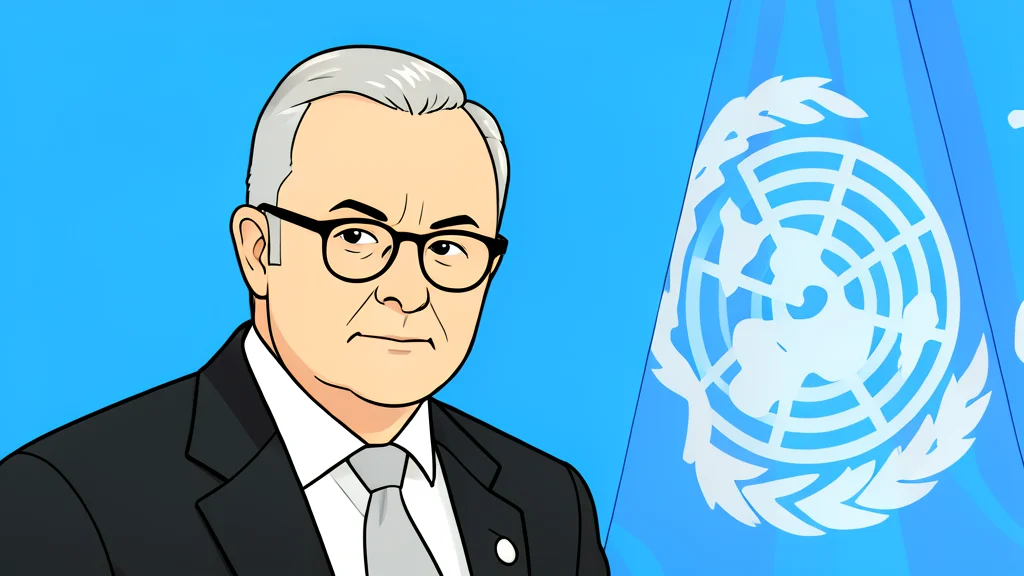
The PM argues that a 2029-30 Security Council term will directly benefit Australian households by stabilizing global markets and inflation.
Key points
- Albanese argues that a 2029-30 UN Security Council term will directly lower inflation and improve Australian living standards.
- Australia must secure a two-thirds majority of 193 UN members, competing against Finland in the Western Europe and Others Group.
- The campaign highlights Australia’s first-in-world social media ban for minors and AI regulations as evidence of its global leadership.
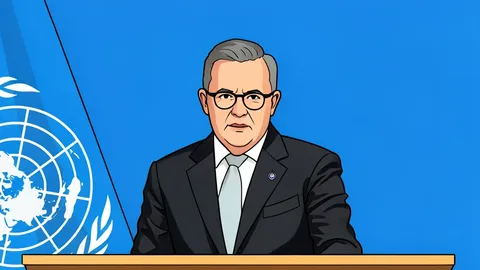
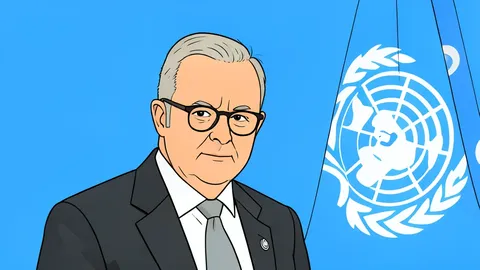
Prime Minister Anthony Albanese has formally launched Australia’s bid for a non-permanent seat on the United Nations Security Council for the 2029-2030 term. While the diplomatic campaign is framed around global leadership and middle-power engagement, the prime minister has explicitly tied the initiative to domestic economic stability.
Addressing reporters in New York ahead of the UN General Assembly, Albanese insisted that active participation in the council’s most powerful body would have a tangible effect on the cost of living. He argued that engagement with global issues directly impacts inflation and the daily quality of life for Australian citizens, suggesting that withdrawal from such forums would be unaffordable.
Connecting Global Diplomacy To Local Costs
According to The Nightly, the government is attempting to bridge the gap between high-level geopolitical maneuvering and household budgets. Albanese cited Australia’s previous term from 2013 to 2014 as a precedent, noting that the country’s role in responding to the downing of Malaysia Airlines flight MH17 demonstrated the tangible benefits of such a seat. He emphasized that Australia’s position as a middle power allows it to shape outcomes in conflicts like Ukraine and the Middle East, which he believes stabilizes the broader environment in which trade and energy prices operate.
The campaign, branded “we listen, we partner, we protect,” will also leverage Australia’s recent domestic regulatory moves. Albanese highlighted that being the first nation to ban social media access for under-16s and implementing guardrails for artificial intelligence positions Australia as a leader in digital safety. These domestic policies are intended to bolster the narrative that Australia is a reliable partner capable of managing modern global challenges.
Navigating The Competitive Election Landscape
Securing the seat requires a two-thirds majority of the 193 UN member states, a high threshold that necessitates broad international support. Australia is currently competing within the Western Europe and Others Group, where it faces opposition from Finland. Although the group only elects two members, the requirement for a supermajority means that even an unopposed bid is not guaranteed. Albanese expressed optimism about securing backing from Pacific Island nations and ASEAN members, aiming to frame the candidacy as a mechanism to amplify the voices of smaller states in global governance.
The final vote is not scheduled until mid-2028, but lobbying efforts are expected to intensify immediately during the General Assembly session. The government is positioning the bid as a long-term strategic asset, arguing that the prestige and influence gained from the council will translate into better trade agreements and security guarantees. This approach seeks to convince skeptical voters that the abstract benefits of diplomacy will manifest in concrete economic advantages.
Strategic Priorities For The Campaign
Beyond the immediate economic argument, the campaign will focus on climate action in the Pacific and the protection of small island states. Albanese has also appointed Siobhan McKenna, former News Corp broadcasting head, as the next consul-general to New York. Her appointment is seen as a move to strengthen Australia’s financial and economic diplomatic presence in the region, reinforcing the message that Australia’s international role is grounded in practical economic and social outcomes.