Australia Formally Bids for UN Security Council Seat in 2029
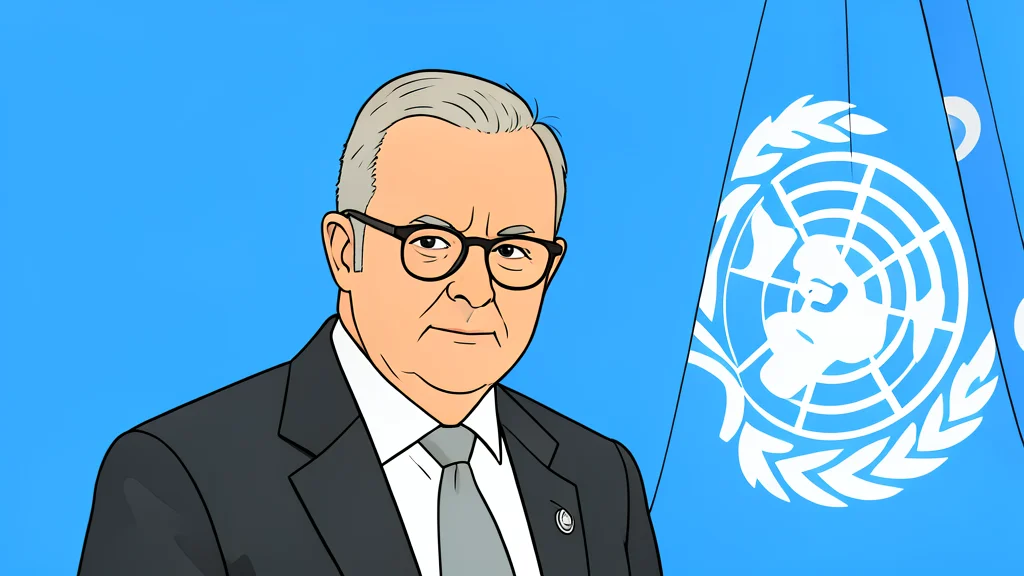
Prime Minister Anthony Albanese announced a formal campaign for a 2029-2030 term, linking global influence to domestic cost-of-living benefits.
Key points
- Australia formally launched a bid for a UN Security Council seat for the 2029-2030 term during the UN General Assembly.
- The campaign links global diplomatic influence to domestic benefits, specifically citing impacts on inflation and cost of living.
- Australia must secure a two-thirds majority of UN member states to win, facing potential competition from Finland.
Australia has officially launched a bid to secure a non-permanent seat on the United Nations Security Council for the 2029 and 2030 terms. According to Yahoo News Australia, Prime Minister Anthony Albanese presented the proposal during a visit to New York, coinciding with the UN General Assembly. The formal nomination marks the beginning of a diplomatic campaign that will intensify ahead of the mid-2028 vote, where Australia will compete against other nations from the Western Europe and Others Group.
The government argues that holding a seat on the influential body will directly benefit domestic economic conditions. Albanese stated that active engagement in global affairs is essential for managing inflation and stabilizing the cost of living for ordinary citizens. He emphasized that Australia’s participation allows it to shape international issues that have a tangible impact on the daily quality of life for Australians.
Diplomatic Path to Council Membership
Securing a position on the council requires significant international support. Two seats are allocated to the Western Europe and Others Group, which includes Australia. While Finland is currently the only other declared candidate from this bloc, other nations may still enter the race. Even if Australia runs unopposed, it must achieve a two-thirds majority vote from the 193 UN member states to be elected.
The campaign strategy aims to leverage Australia’s regional influence, particularly within the Pacific and Southeast Asia. Officials expressed optimism about gaining support from ASEAN nations and Pacific Island states. The initiative, branded as a partnership-focused effort, seeks to amplify the voices of middle powers and smaller nations within the global governance structure.
Historical Precedent and Regional Focus
Australia has previously served on the Security Council five times since the United Nations was established. The most recent tenure, spanning 2013 and 2014, saw Australia lead a response to the downing of Malaysia Airlines flight MH17. Prime Minister Albanese cited this period as evidence of the country’s capacity to play a constructive role in resolving complex international conflicts.
The current bid also highlights Australia’s recent domestic and technological policies. The government plans to showcase its leadership in digital regulation, including the world-first ban on social media use for under-16s and new guardrails for artificial intelligence. These measures are intended to position Australia as a responsible actor in shaping global standards for emerging technologies.
New Leadership in New York
Alongside the council bid, the Prime Minister announced the appointment of Siobhan McKenna as Australia’s next Consul-General to New York. McKenna, a former News Corp executive and current chair of Australia Post, is expected to assume the role later this year. Albanese noted that her background in finance and economics will provide significant capacity to the diplomatic mission.
As the campaign progresses, attention will turn to the broader geopolitical landscape and the alignment of middle powers. Observers will watch how Australia navigates its relationships with major permanent members while advocating for the interests of smaller nations. The coming months will determine whether the government’s diplomatic efforts can translate into the necessary multilateral support for a successful election.