Allies Brace for Potential US Stance Shift on Taiwan Ahead of Summit
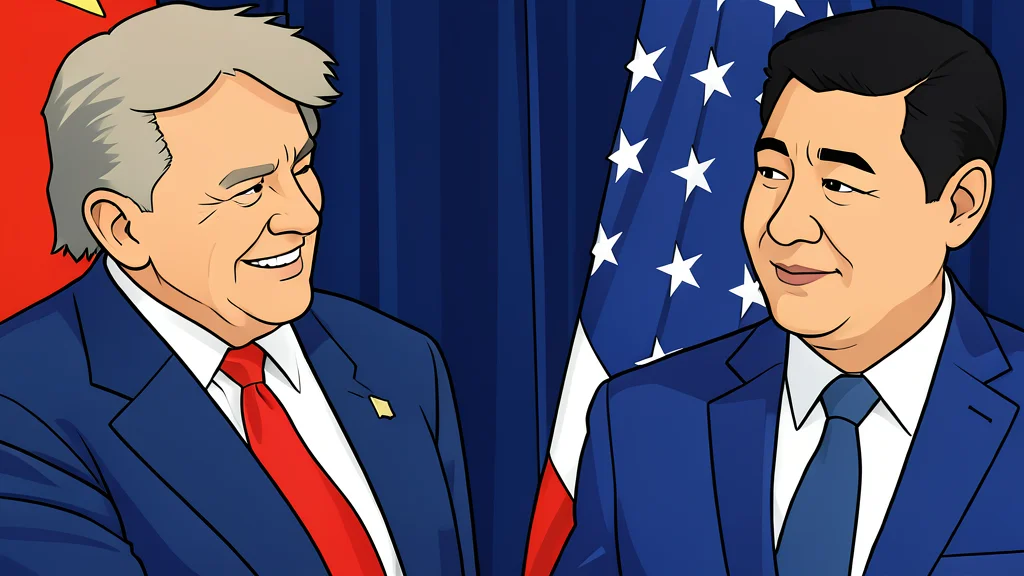
Asian allies are growing anxious that Washington may soften its support for Taiwan to secure a trade deal with Beijing, creating uncertainty in the region's security architecture.
US allies in the Asia-Pacific region are expressing heightened concern that President Donald Trump might dilute Washington’s commitment to Taiwan in exchange for economic concessions from China. These anxieties have intensified in the lead-up to a planned summit with Chinese President Xi Jinping, as officials fear that even subtle shifts in US rhetoric could embolden Beijing and destabilize the region’s fragile security environment.
The apprehension stems partly from Trump’s earlier description of US arms sales to Taiwan as a "negotiating chip," a statement that has unsettled partners in Tokyo and Taipei. According to reporting by GN auto geopolitics/asia-pacific: Taiwan tensions, these concerns coincide with Trump’s efforts to manage domestic approval ratings amid the ongoing conflict in Iran. Analysts warn that any perceived softness in Washington’s posture could be interpreted by Beijing as a signal of reduced resolve, potentially altering the strategic balance in the Taiwan Strait.
Strategic ambiguity fuels regional anxiety
Emma Chanlett-Avery, political-security affairs director at the Asia Society Policy Institute, noted that there is significant trepidation among allies regarding the trajectory of US China policy. She emphasized that any indication of a softer stance on Taiwan would be alarming, particularly given that China views the island as a core interest and has never renounced the use of force to achieve reunification.
While Trump has stated that Xi personally assured him China would not attack Taiwan during his presidency, he has declined to repeat the explicit defense commitments made by his predecessor, Joe Biden. This divergence in diplomatic language has left allies uncertain about the extent of Washington’s backing. Cui Tiankai, China’s former envoy to Washington, recently argued that reunification would bring stability beneficial to the United States, further highlighting the divergent perspectives on the island’s status.
Diplomatic channels seek clarification
Taiwan has actively communicated its concerns to Washington, with senior official Shen Yu-chung stating the hope that no situation arises that harms the island. Taiwan Foreign Minister Lin Chia-lung indicated that he expects Xi to raise the issue during the summit but noted that Washington has repeatedly affirmed that its policy towards Taiwan has not changed.
Japan is also moving to engage with the Trump administration before the US-China summit. Prime Minister Sanae Takaichi, whose previous comments about potential involvement in a Taiwan conflict angered Beijing, is reportedly seeking a meeting with Trump. Japanese government sources indicated that a senior foreign ministry official visited Washington recently to facilitate this contact, with the United Nations General Assembly in New York seen as a likely venue.
Trade and security remain linked
Laws in Japan’s ruling party expressed concern that Trump might signal a softer position on Taiwan to secure Chinese commitments to purchase US goods ahead of the midterm elections. Although Trump frames his engagement with Xi as an effort to rebalance trade relations, he acknowledged that the May meeting in Beijing frequently touched upon Taiwan, including US arms sales and Washington’s resolve to defend the island.
A $14 billion US arms package for Taiwan has been awaiting approval for months, with Trump stating he is holding it in abeyance. Wu Xinbo, a professor at Fudan University who advises China’s foreign ministry, argued that Washington must take Beijing’s concerns over arms sales seriously. Experts caution that even minor changes in Trump’s wording could carry significant strategic weight, underscoring the delicate balance between trade diplomacy and security commitments.