Asia Emerges in Critical Mineral Labor Standards
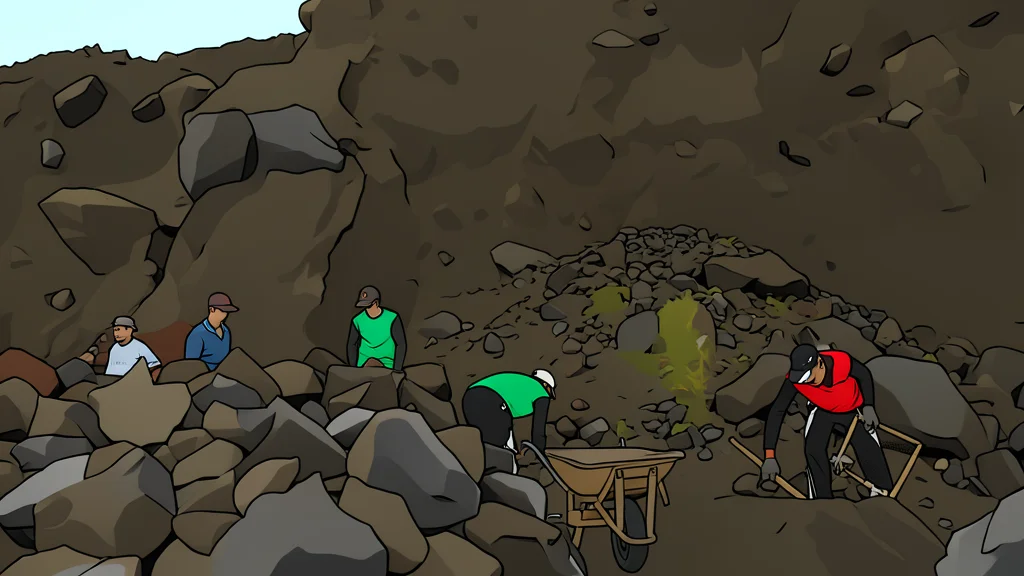
Asian nations are moving to adopt mandatory human rights due diligence, seeking to address forced labor risks in critical mineral supply chains amid increasing Western enforcement pressure.
The global effort to combat forced labor has long been dominated by regulatory frameworks in the United States and the European Union. However, a significant shift is underway as Asian economies, which are central to the production and consumption of critical minerals, begin to engage more actively in setting these standards. According to GN geopolitics/rights (en-US), countries such as South Korea, Thailand, Indonesia, and the Philippines are advancing mandatory human rights due diligence laws, marking a departure from their previous role as observers in this domain.
This regulatory pivot occurs against a backdrop of deep integration between Asian industries and supply chains with documented labor concerns. As Western customs authorities intensify inspections and detentions of goods suspected of using forced labor, Asian manufacturers face a complex landscape where compliance is no longer optional but a prerequisite for market access. The region’s economic reliance on critical minerals makes this transition particularly consequential for both industrial stability and international trade relations.
Deep Integration in Mineral Supply Chains
Asian nations are among the largest consumers of goods manufactured with potential forced labor exposure, creating a direct link between regional growth and upstream supply chain integrity. In sectors like renewable energy and electronics, the dependency is acute. For instance, Australia’s solar capacity relies heavily on panels from manufacturers whose upstream chains have been scrutinized for labor practices in specific regions of China. Similarly, the electric vehicle market in Thailand is dominated by Chinese-made vehicles, highlighting how deeply these supply chains are embedded in local economies.
The dependency extends further into the raw materials sector. South Korea’s net import reliance for critical minerals is nearly absolute, with battery materials sourced primarily from China. In Indonesia, the world’s largest nickel producer, a significant portion of refining capacity is controlled by Chinese stakeholders. These are not peripheral industries but the foundational infrastructure of Asian industrial expansion, meaning that any regulatory tightening in these areas has immediate and widespread economic implications.
Transshipment and Regulatory Pressure
A critical area of concern is the transshipment of goods through Asian manufacturing hubs to reach Western markets. Recent data from US Customs and Border Protection indicates a sharp rise in detentions under the Uyghur Forced Labour Prevention Act, with a majority involving goods from China. Notably, enforcement actions have focused heavily on transshipment countries in Southeast Asia, including Malaysia, Thailand, and Vietnam, rather than solely on the country of origin. This suggests that the routing of goods through Asian facilities is a primary vector for regulatory scrutiny.
The strategy of 'China Plus One,' where companies relocate assembly to Asian countries to diversify supply, has not always resolved the underlying risks associated with upstream inputs. As a result, Asian manufacturers are facing heightened legal and commercial liability if they cannot demonstrate that their supply chains are free from forced labor. The message from regulatory bodies is clear: reliance on tainted supply chains is a significant risk factor that can result in market exclusion.
Competitive Advantage Through Compliance
For Asian producers, the challenge is also an opportunity. Companies that can credibly demonstrate forced-labor-free supply chains are positioned to gain preferential access to global markets. As Western markets become more restrictive, verified compliance becomes a competitive differentiator. This shifts the dynamic from mere cost-based competition to one where ethical and legal compliance is a key determinant of market share.
The window for this transition is open, but time-sensitive. Recent tariff measures imposed by the United States on economies that have not effectively enforced forced labor prohibitions have accelerated legislative activity in several Asian countries. Nations including Cambodia, India, and Vietnam have adopted new prohibitions, while others are in the process of finalizing their frameworks. While these actions are a positive step, experts note that they are not a substitute for comprehensive mandatory human rights due diligence, which requires deeper structural changes in how supply chains are managed and audited.