Australian Migration Caps Proposed as Productivity Debate Intensifies
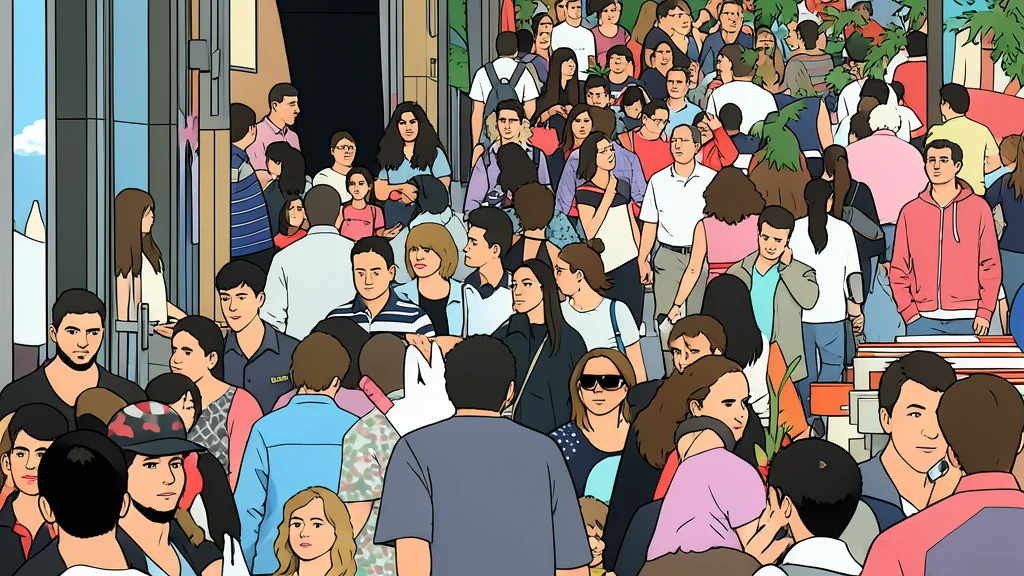
Political parties in Australia are finalizing caps on net overseas migration, ranging from 130,000 to 245,000, amid concerns over housing and productivity.
Key points
- Australian political parties are proposing net overseas migration caps ranging from 130,000 to 245,000 per year.
- Population growth in the year to March was 392,700, contributing to a 23.5 per cent increase in median house prices.
- GDP per capita has grown by only 0.5 per cent annually since 2010, highlighting a gap between aggregate growth and individual income.
The Australian political landscape is undergoing a significant shift as major parties converge on stricter limits for net overseas migration, a move driven by widespread public dissatisfaction with rising housing costs and urban congestion. According to analysis from abc.net.au, this policy pivot represents a departure from traditional economic models that relied on population growth to drive GDP, acknowledging instead that aggregate growth has not translated into improved individual well-being.
Recent data indicates that population growth in the year to March reached 392,700, with migrants accounting for the majority of this increase. This surge has coincided with a 23.5 per cent rise in national median house prices, fueling a political environment where three significant parties are now competing for voters who feel left behind by the current economic trajectory.
Competing Proposals for Migration Limits
The three main political parties have each outlined distinct approaches to managing migration levels. One Nation has proposed a more aggressive stance, suggesting negative net overseas migration for three years before capping intake at 130,000 annually. The Coalition has proposed a cap of 170,000, aligning the figure with the approximate number of new houses being built each year to address housing supply constraints.
In contrast, the Labor government has set a target of 245,000 for the current financial year, with a slight reduction to 225,000 planned for 2027/28. Home Affairs Minister Tony Burke stated that these figures are designed to deliver the forecasts included in the federal budget. However, critics note that these plans rely heavily on the assumption that skilled migration will continue to meet economic needs, while unskilled labor shortages in agriculture and higher education fee structures remain unresolved.
Productivity Gaps Remain Unaddressed
Despite the political focus on migration numbers, underlying productivity issues continue to affect individual incomes. Data shows that while average annual GDP growth has been 2.4 per cent since 2010, GDP per capita has grown by only 0.5 per cent, and real disposable income has increased by just 0.1 per cent. This disconnect suggests that the current strategy of relying on population growth to stimulate the economy is no longer yielding tangible benefits for the average citizen.
The analysis highlights that the political solution of reducing migration numbers may be a reaction to visible crowding rather than an address of the invisible decline in productivity. While all parties agree on the need for skilled workers, particularly in construction and essential services, the reduction in overall migration targets places significant pressure on sectors like farming and higher education that have historically relied on temporary workers and international students.
Canadian Policy Offers a Comparison
As Australia debates its own migration caps, it is worth noting that Canada recently announced policies aimed at lifting productivity while cutting temporary migration. Canada has reduced its temporary migration intake from 6.5 per cent to 5 per cent of the population, a move that contrasts with Australia's current stock of temporary residents, which stands at 10.5 per cent. This international comparison underscores the differing approaches nations are taking to balance economic growth with domestic resource constraints.
The forward question for Australian policymakers is whether reducing migration numbers alone will alleviate public grievance or if broader structural reforms are needed to improve individual economic outcomes. With the next federal election approaching, the effectiveness of these migration caps will be a key issue for voters to evaluate.