Australia’s Temporary Visa Dilemma Deepens
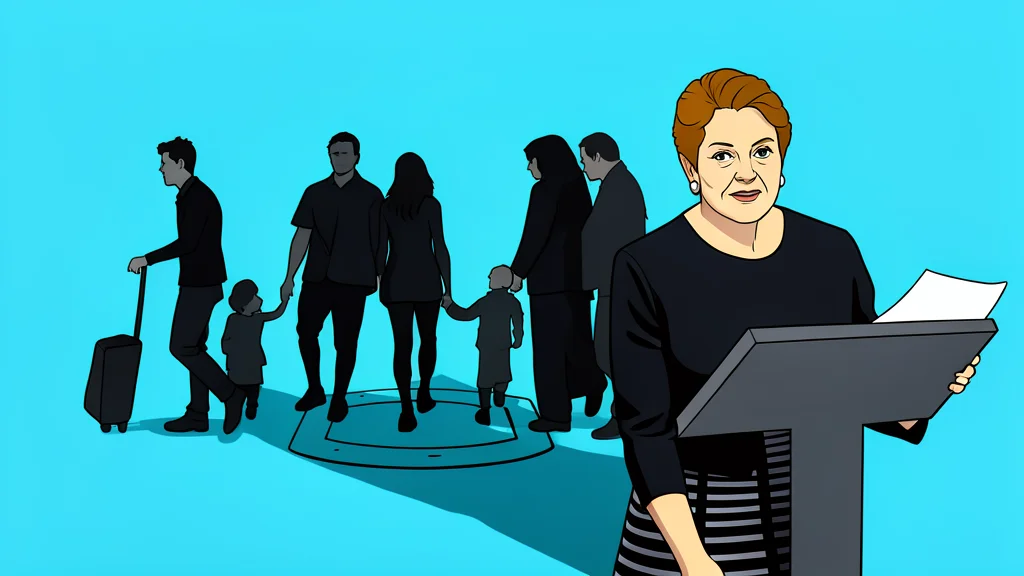
Proposed cuts to temporary migration in Australia are creating a divide between political strategy and the immediate reality for millions of residents, raising questions about the stability of the country's labor market and social fabric.
For many residents in Australia, the recent announcement of sweeping changes to temporary migration has transformed a background administrative process into a source of acute personal anxiety. Jyoti, a secondary school teacher in Melbourne who has lived in the country for nearly a decade, describes a growing sense of uncertainty as she waits for a decision on her permanent residency application. Her situation mirrors that of millions of others who hold temporary visas, a demographic that constitutes a significant portion of the nation’s workforce and student population.
The proposed policy, attributed to One Nation, outlines a plan to reduce the number of temporary visa holders by 750,000 over three years. According to GN geopolitics/migration (en-US), this strategy is framed by its proponents as a necessary measure to restore control over migration and provide economic breathing space for Australian citizens. However, the implementation of such cuts would drastically alter the landscape for international students, graduate workers, and skilled migrants, effectively removing a large segment of the population that currently contributes to the local economy and society.
Political leverage and economic risk
The timing of this announcement coincides with the lead-up to state elections, suggesting a calculated political strategy to mobilize specific voter bases. Jyoti observes that individuals with temporary status are often unable to influence the political decisions that determine their future, creating a disparity in political power. This dynamic raises questions about the long-term sustainability of a political environment that targets non-voters, as the potential loss of skilled labor and students could have unintended consequences for the broader economy.
Government officials have responded to the proposal with warnings about potential economic disruption. Environment Minister Murray Watt, speaking on ABC's Radio National, characterized the plan as a recipe for recession, arguing that such drastic reductions would harm the Australian economy. This official response highlights the tension between political rhetoric focused on national control and the pragmatic concerns of ministers responsible for economic stability.
Human impact of policy shifts
Beyond the macroeconomic figures, the policy has a profound human cost. For families like Jyoti’s, the prospect of visa cuts means that the path to permanent residency feels increasingly precarious. She describes the experience as a race against time, where the stability of her family’s life depends on administrative decisions made by political actors who are not directly accountable to them. This sense of vulnerability is shared by many in her community, who fear that their livelihoods and place in society are at risk due to political momentum.
Looking ahead to the election
As the November election approaches, the outcome will serve as an early indicator of the political winds in Australia. Voters will be weighing the promises of stricter border control against the potential economic and social ramifications of reduced migration. For temporary visa holders, the coming weeks will be a period of heightened uncertainty, as they navigate a political landscape where their future is being debated by those who do not share their immediate vulnerability.