Beijing Builds Unmanned Underwater Drone Carrier
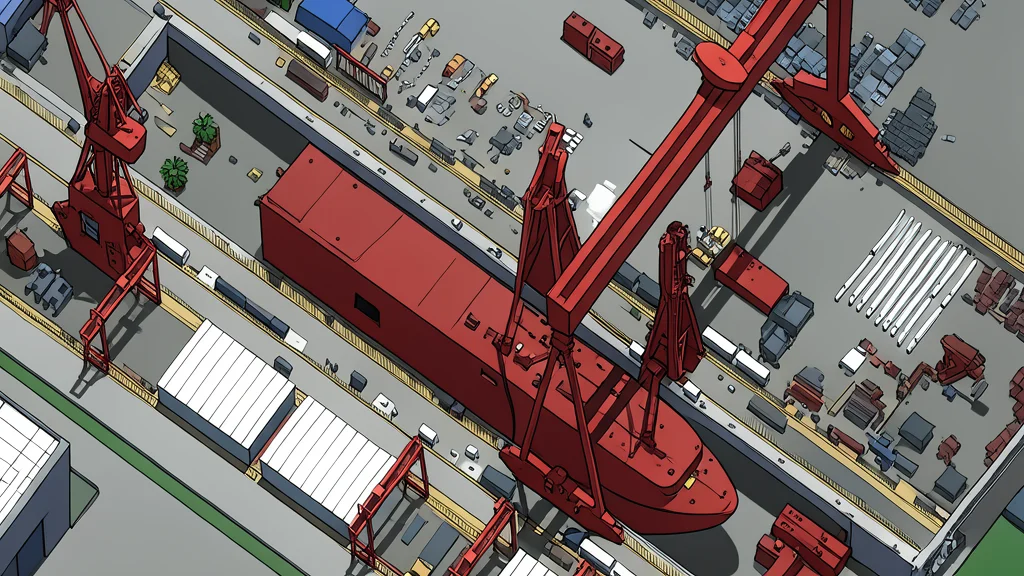
Satellite imagery reveals a massive new vessel in Shanghai, potentially the first purpose-built mothership for large autonomous submarines.
Satellite images have captured a massive new vessel under construction at a Shanghai shipyard, prompting analysts to suggest it is the world's first purpose-built mothership for autonomous underwater vehicles. The ship, which appears to be a specialized amphibious craft, is being assembled at the Hudong-Zhonghua facility, a site historically used for constructing large naval platforms. According to reports from GN auto geopolitics/asia-pacific: South China Sea, the vessel's design features a stern wet well and a lowering cradle, indicating a function distinct from standard warships.
Military experts describe the platform as a potential game-changer for Beijing’s naval capabilities, specifically in the context of the Indo-Pacific. The vessel is estimated to be roughly 200 meters long, large enough to house multiple extra-large uncrewed underwater vehicles. These drones are reportedly significantly larger than existing models used by the United States, with some measurements suggesting lengths exceeding 40 meters. While the Chinese military has neither confirmed nor denied the construction, the sheer scale of the project suggests a strategic shift toward autonomous maritime operations.
Novel Platform Design
Naval historians note that no other nation currently operates a dedicated carrier for such large autonomous submarines. Aditya Ramanathan, a research fellow at India’s Takshashila Institution, described the platform as novel in the global naval landscape. The internal hangar space, estimated from satellite data, could accommodate four of these large drones simultaneously. This configuration allows for the deployment of assets capable of traveling over 10,000 nautical miles, a range that far exceeds current Western counterparts.
The design implies a focus on sustained presence and data collection in contested waters. Unlike manned submarines, these unmanned vehicles can operate in shallower depths and remain submerged for extended periods without crew fatigue. Alessandro Arduino, an associate fellow at the Royal United Services Institute, cautioned that while the imagery is compelling, it does not definitively prove the vessel's sole purpose. However, he noted that the possibility of a dedicated mothership is increasingly difficult to dismiss given the specific engineering features observed.
Strategic Implications in the Pacific
The development coincides with heightened tensions in the South China Sea, where China faces opposing territorial claims from neighbors including the Philippines and Vietnam. Analysts suggest that such platforms could be used to gather acoustic intelligence, creating detailed libraries of ship signatures to improve future detection and targeting capabilities. This capability would allow Beijing to monitor adversary movements more effectively, potentially limiting freedom of navigation for rival navies in the region.
The shift toward autonomous systems represents a change in how naval power is projected and sustained. By using unmanned vehicles, a navy can maintain a persistent presence at a lower cost and with reduced risk to personnel. This approach complements traditional fleet power by adding a layer of persistent surveillance and potential attack capability. The introduction of such technology may force other nations to rethink their detection and countermeasure strategies in the coming years.
Timeline for Deployment
Experts estimate that the vessel is still two to three years away from full operational deployment, pending sea trials and integration of its payload systems. During this period, the technical specifications and intended roles of the onboard drones may become clearer through further intelligence gathering. The next phase of observation will focus on the ship's trials to confirm its range, endurance, and the specific capabilities of the autonomous vehicles it carries. This timeline suggests that the strategic impact of this new platform will be felt in the medium term rather than immediately.